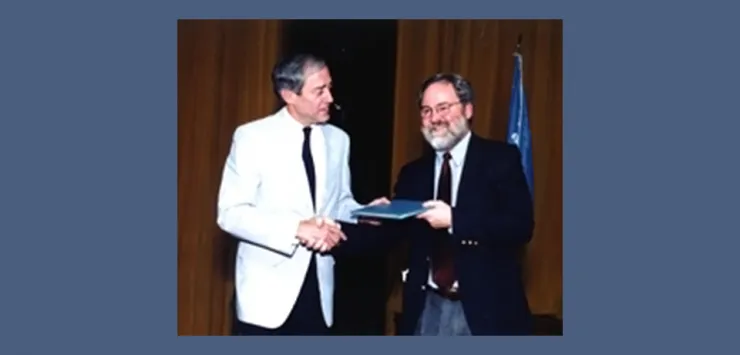
In 2000, a Vermont bill to allow civil unions for gay couples prompted an early legislative debate on marriage equality. David Moats of the Rutland Herald wrote a series of quiet, well-reasoned editorials that helped his paper’s readers consider this issue.
Most of all, however, the editorials sought to guide the thinking of legislators as they decided how to vote. Typical was this March 12 editorial balancing a legislator’s perceptions of public sentiment with the duty to vote his or her conscience based on logic, testimony and judgment.
The bill became law. Moats won the 2001 Pulitzer Prize for Editorial Writing. History marched on.
Yes to civil unions
By DAVID MOATS
The House this week is due to take up the bill establishing legal recognition for the civil union of same-sex couples, and more than a few legislators face the prospect of voting contrary to the expressed view of their constituents.
About 50 towns voted at town meeting on same-sex marriage. Voters nowhere approved marriage for gay and lesbian couples, but 11 towns out of 49 voted in favor of domestic partnerships.
The aggregate vote total on the issue was about 15,000 opposed to benefits for same-sex couples and about 10,000 in favor.
Some opponents have vowed to take revenge against representatives who disregard the vote of the people by voting to support civil unions. It is by no means clear, however, that the margin of difference is so vast that defeat of anyone based on this issue is assured.
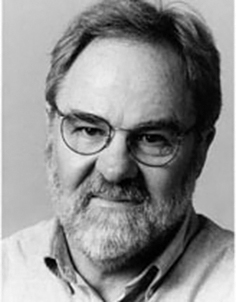
David Moats
Politicians frequently face criticism because they pay attention only to the polls. Those who do so are accused of being followers rather than leaders.
A sort of poll has now been taken on the issue of same-sex marriage. Are our politicians supposed to surrender their judgment so as to mirror the town meeting ballot results? On that question the famous quote from Edmund Burke is in order: "Your representative owes you, not his industry only, but his judgment; and he betrays instead of serving you if he sacrifices it to your opinion."
Moreover, the ballot questions faced by voters on Town Meeting Day were not the best reflection of the realities to be faced by the House members. Voters were asked whether they favored same-sex marriage or domestic partnerships. House members face a different question, which might be phrased as follows: Do you favor civil unions in light of the fact that the Supreme Court has said that civil unions or marriages are necessary to redress injustice and in light of the fact that if you don't approve civil unions the court will probably impose same-sex marriage?
In addition, most of those who voted on Town Meeting Day were probably not aware that the bill before the House contains a paragraph stating that marriage exists only between a man and a woman. Would all those town meeting voters have voted no to a proposal defining marriage in that manner and extending benefits to same-sex couples as well?
These imponderables show only that the town meeting vote was not definitive. Whether or not it was definitive, House members now must do what elected representatives are meant to do. They have listened to testimony and studied the question. And in many cases House members inclined to oppose civil unions were persuaded that the bill before the House is fair and necessary.
The raw numbers may scare some representatives who fear for their political future. Others are determined to vote their consciences, knowing that their duty is not merely to follow the numbers but to exercise leadership. The House should support the bill establishing civil unions. It is an honorable compromise between the requirements of the law and the cherished institutions of the people.