The Newseum in Washington, D.C., is redesigning its popular Pulitzer Prize Photographs Gallery. The gallery celebrates all Pulitzer Prize winners in photography since the first photo prize was awarded in 1942. The Newseum is also updating its traveling exhibit, with both revised exhibits scheduled to open in September 2016.
We talked with Indira Williams Babic, director of visual resources at the Newseum, about the project. Here is an edited transcript of our conversation.
Pulitzer Prizes: How long have you been working on this project?
IWB: The photo curation process started late last year. It is a long, detailed process, because we make sure every single image that’s ever won is considered.
Pulitzer Prizes: Why did you choose the images in the exhibition?
IWB: There’s only so much physical wall space. Tough choices have to be made. Obviously, they are all Pulitzer-winning photos, so the image quality is great. We try to strike a balance between image quality, the newsworthiness of the story, and how each image and story relates to the rest of the images selected.
Pulitzer Prizes: What are you most looking forward to when the exhibition is remounted?
IWB: Adding more printed images to the walls. We will also add new artifact cases to better exhibit Pulitzer-related artifacts, which are always popular and add a new dimension to the Newseum Pulitzer Gallery experience.
Pulitzer Prizes: What about the photos in the selection of photos here stands out to you?
IWB: Several firsts and perhaps not as well known: First time the Pulitzer prize was awarded to a citizen journalist, 1954 to Virginia Schau captures this amazing photo, reminiscent of an action hero movie scene, where a trailer truck cabin is hanging off the edge of a bridge, while two men are pulling the two truck occupants out of the cabin with a rope.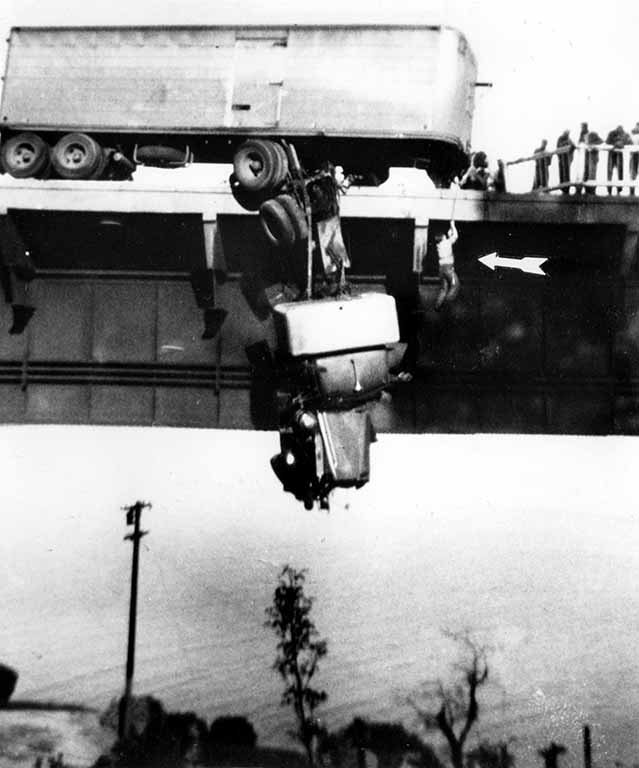
Photo by Virgina Schau
First time the Feature Photography prize was awarded, 1968 to Toshio Sakai, working for UPI. Vietnam news was about the battles and the spot news, but it also had to be about the soldiers and the people. You can almost feel the relentless rain and the deep misery when you look at this photo.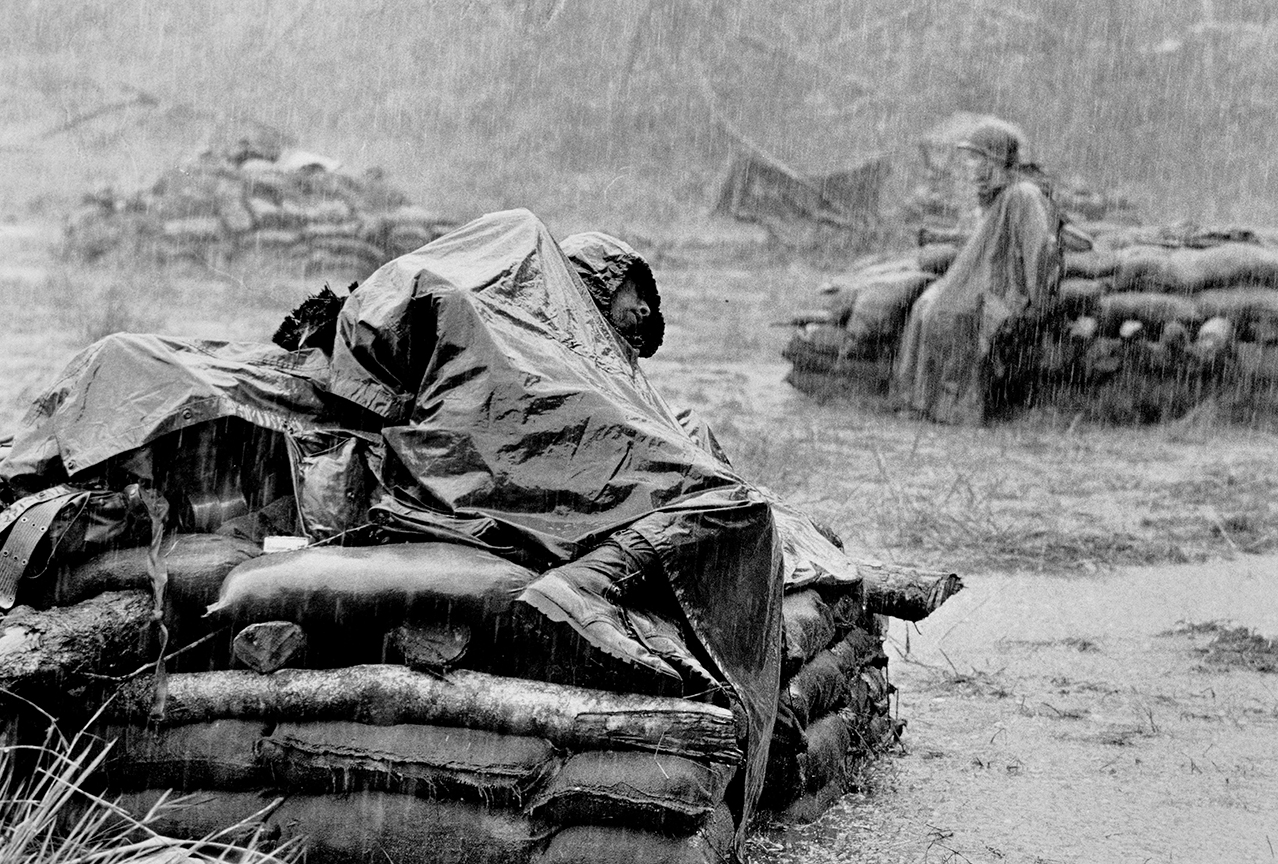
Photo by Toshio Sakai
First time the prize was awarded to a portfolio including color photos, 1975 to Matthew Lewis. 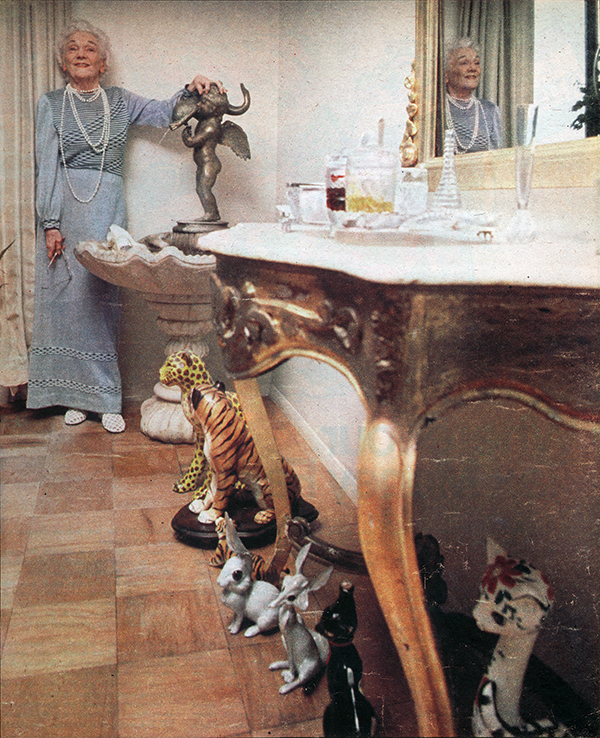
This is a photo from Matthew Lewis's 1975 entry, the first by a Washington Post photographer to win a Pulitzer Prize.
The Pulitzer gallery at the Newseum is like a history lesson. By looking at the images displayed chronologically, it is easy to grasp what was happening when in the news. The Vietnam War images give you a glimpse of what the American people were seeing at that time. They show how powerful images help shape people’s opinions. Nick Ut’s photo of the little girl running, burnt by napalm, must have hit a visceral cord with parents who could imagine something so horrific happening to one of their own children.
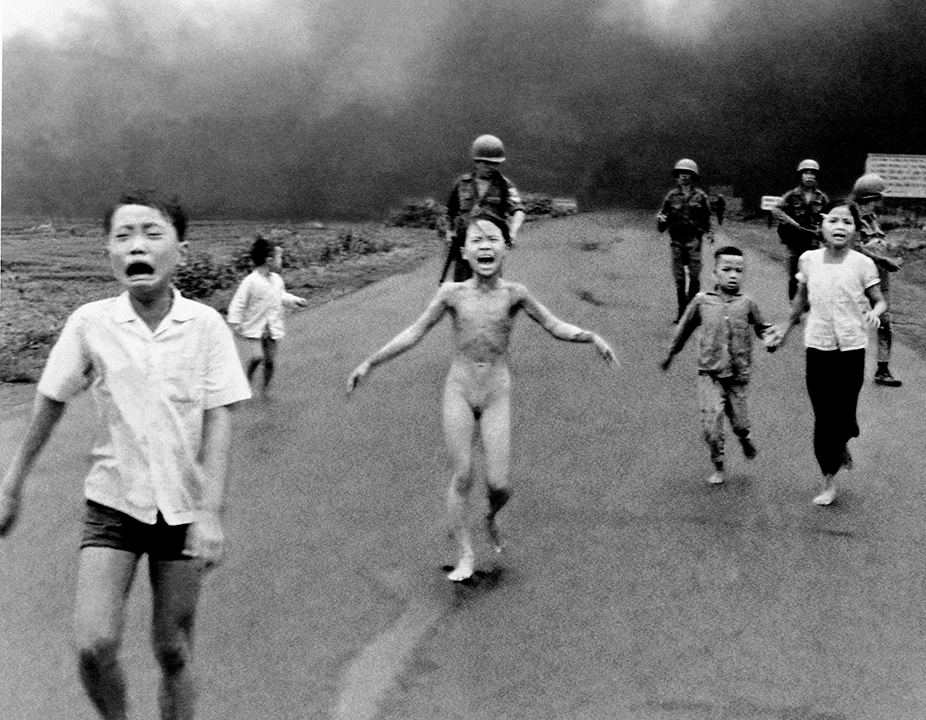
Photo by Nick Ut
First and only time the prize was awarded to an anonymous recipient: Jahangir Razmi’s identity remained secret until 2006, when it was revealed with his consent. He won the prize in 1980. 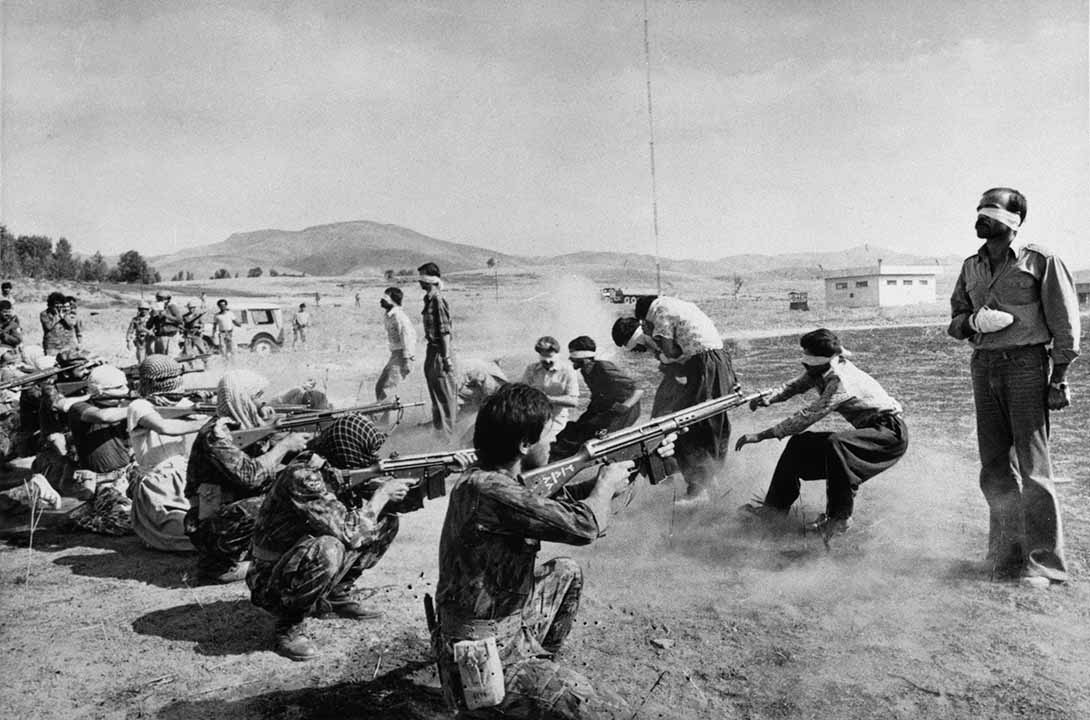
Photo by Jahangir Razmi
Pulitzer Prizes: Are audiences tolerant of the intensity of some of the images?
IWB: They are, absolutely. A significant percentage of our visitors are schoolchildren, so we do have a warning on the wall at the entrance of the gallery. However, I think visitors understand that these are news photographs and that we live in a troubled world. Still, there are images depicting hope and joy, like Ken Geiger’s Barcelona Olympics photo and Carol Guzy’s photo of the child being passed through barbed wire fence to visit with relatives in Albania that elicit great positive response.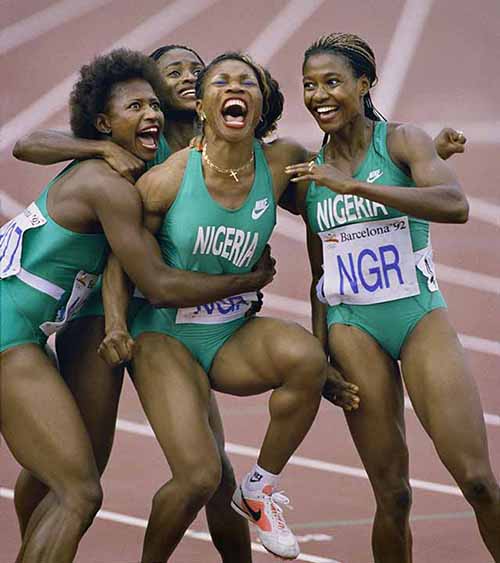
Photo by Ken Geiger
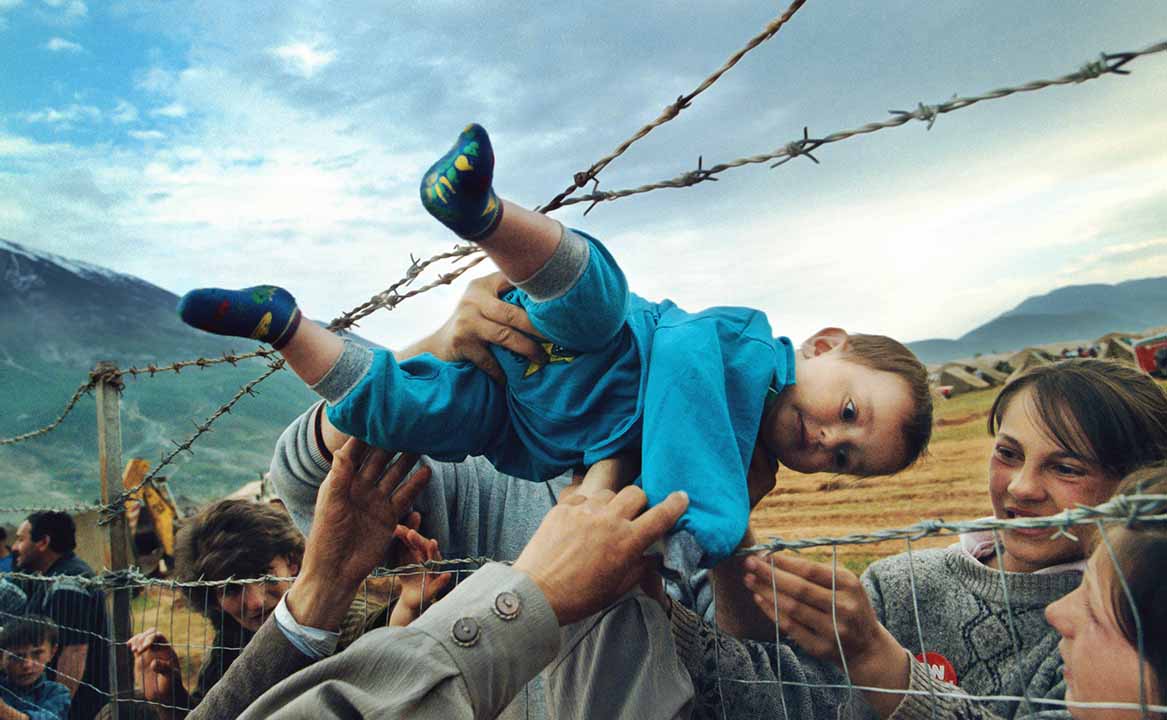
Photo by Carol Guzy
Pulitzer Prizes: Has the exhibition caused controversy?
IWB: No. It is rated No. 1 in all visitor surveys every single year.
Pulitzer Prizes: Have you seen changes in the way visitors view the images as we’ve become a world of amateur photographers?
Pulitzer Prizes: Is there one image that solicits the most reaction from visitors?
IWB: The current winners are often popular because the news events they depict are fresh in the visitor’s mind. Daniel Berehulak’s image of the young Ebola victim being carried by men in bright yellow plastic suits is so colorful and vibrant, it’s immediately attractive in a non-threatening way. But then you dive in and start considering that this is a human being carried like a rag doll, that he is ill with a deadly disease and that everyone around him, including the photographer, is in mortal danger, and the reaction shifts.
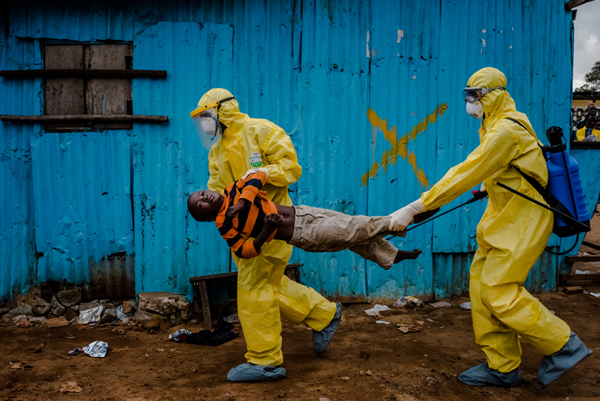
Photo by Denial Berehulak
Pulitzer Prizes: Have you changed your own photo-taking techniques since being immersed in this exhibition?
IWB: I am a very amateur photographer so I am humbled by the wealth of visual information I get to experience working with Pulitzer photography. The biggest impact has been in my editing, as I work on curating images for our own Newseum exhibits. One’s bar soars pretty high when working day in and day out with such amazing visual content of visual information I get to experience working with Pulitzer photography. 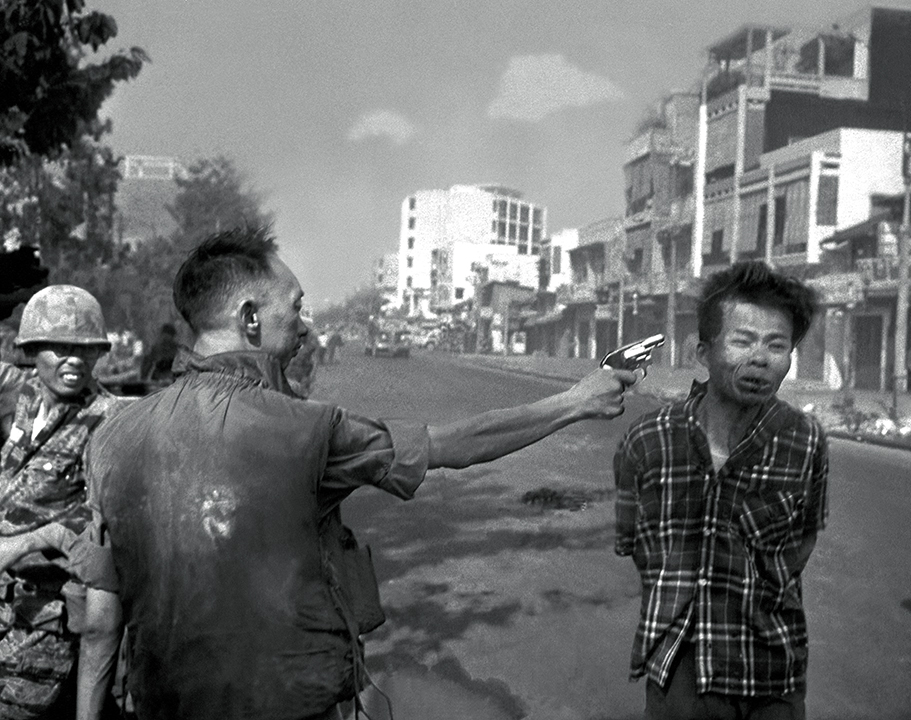
Eddie Adams's 1969 prize-winning spot news photo shows Brig. Gen. Nguyen Ngoc Loan, chief of the South Vietnamese police, executing Nguyen Van Lem, a Vietcong prisoner, in Saigon.
-END-