For the Record


Condé Nast Agrees to Contract With New Yorker Union, Averting Strike

Condé Nast Reaches Deal With New Yorker Union:


Condé Nast "has agreed to its first contract with unionized employees at the New Yorker and two other publications, marking the media company’s first labor agreement in its history and averting a threatened strike after 2½ years of negotiations," Lukas I. Alpert of The Wall Street Journal reported Wednesday. The three-year contract, which also governs employees at music news site Pitchfork and the technology-oriented Ars Technica, "raises the salary floor to $60,000 in the final year of the contract, places a cap on healthcare cost increases and establishes a defined 40-hour workweek." The deal "also includes stipulations that employees can be fired only for cause," a key stipulation of the bargaining unit. "Throughout two and half years of negotiations, our union remained steadfast in our commitment to improve the quality of life for ourselves and for future employees." said Natalie Meade, chair of the New Yorker Union. (New Yorker Editor David Remnick is a member of the Pulitzer Prize Board.)
Andreessen Horowitz launches content site called Future

Andreessen Horowitz Launches Publisher:


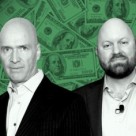
Following months of speculation, venture capital firm Andreessen Horowitz launched publisher/content site Future Tuesday, according to Dan Primack of Axios. The site "is expected to provide what a firm spokesperson calls an 'optimistic' view of technology, in contrast to what it believes is excessively negative coverage in the traditional tech media." It also will eschew opinion journalism and investigative reporting, with most pieces slated to be written by members of the firm and outside contributors drawn from academia, industrial research and business. Although most content will be written, the firm will incorporate its podcasts and Clubhouse rooms into the site. Seven staffers currently work for the publisher, including four editors.

Why we’re no longer naming suspects in minor crime stories

AP Will No Longer Name Suspects in Minor Crime Stories:


The Associated Press "will no longer name suspects in minor crime stories, which we sometimes cover and pick up from member news organizations as one-off briefs because they are 'odd' and of interest to our customers," Pulitzer Prize Board member and Vice President/Editor at Large for Standards John Daniszewski announced Tuesday. "These minor stories, which only cover an arrest, have long lives on the internet," added Daniszewski. "AP's broad distribution network can make it difficult for the suspects named in such items to later gain employment or just move on in their lives." The news organization also will "stop publishing stories driven mainly by a particularly embarrassing mugshot, nor will we publish such mugshots solely because of the appearance of the accused." However, AP will continue to identify suspects by name "in stories on significant crimes, such as murder, that would merit ongoing news coverage," while the guidelines will not apply to "stories about active searches for fugitives." 

Union condemns new Dow Jones policy on Wall Street Journal employees' outside work

Union Condemns Wall Street Journal Outside Work Policy:


The union "representing journalists at Dow Jones & Co. publications on Friday condemned a policy change from the company that would give it greater authority over books and other external projects by Wall Street Journal (WSJ) employees," according to Celine Castronuovo of The Hill. "We have several concerns about the policy, which appears to depart from industry standards, and believe the company cannot lawfully impose it on its own,” the union, IAPE 1096, said in a statement. Under the new policy, personnel "must receive permission from the editor in chief for sending a proposal or engaging in talks with a book agent or publisher or production company," while journalists also will be "required to execute an appropriate licensing agreement with Dow Jones for the use of their own reporting" if the proposal is approved. "We think that's an overreach," said IAPE Executive Director Tim Martell.

Justice Dept. Will Toughen Rules for Seizing Lawmakers’ Data, Garland Says

Justice Department Strengthens Data Rules, Meets Media Representatives:


The Justice Department "will tighten its rules for when law enforcement officials may seize information about members of Congress and their aides, Attorney General Merrick B. Garland said on Monday amid a backlash to the disclosure of a 2018 subpoena that swept in data from the Apple accounts of Democratic lawmakers and staff," according to Charlie Savage of The New York Times. Following his speech, Garland also met off-the-record "with leaders of The New York Times, CNN and The Washington Post after the disclosure that the Trump Justice Department had secretly seized phone records of reporters at each outlet" in an attempt to uncover sources. "In today's meeting, we once again sought a full accounting of what happened and requested that the Department of Justice codify that it will no longer seize journalists' records during leak investigations," Publisher A. G. Sulzberger said in a statement. "We were encouraged by Attorney General Garland’s statements, but we will continue to push until our concerns are addressed." 

Sony Music to Pay Royalties to Unrecouped Legacy Artists and Producers in Major Policy Change

Sony Pays Royalties to Unrecouped Artists:


Sony Music Entertainment announced in an internal letter Friday that it "will no longer apply existing unrecouped balances to artist and participant earnings generated on or after January 1, 2021 for eligible artists and participants globally who signed to SME prior to the year 2000 and have not received an advance from the year 2000 forward," thus "writing off/disregarding unrecouped balances going forward for qualifying artists," according to Tim Ingham of Music Business Worldwide. The decision, "a continuation of Sony Music Group boss Rob Stringer‘s determination to 'do the right thing' when it comes to major-league decisions regarding his company’s relationship with artists," comes three years after the conglomerate "memorably dismissed unrecouped artist balances when distributing profits reaped from its sale of $768 million in Spotify shares." 

Can Quartz become a scrappy media startup?

Quartz CEO, Membership Editor Discuss Independence:


In interviews with Simon Owens's Media Newsletter, Quartz co-owner/CEO Zach Seward and Membership Editor Walter Frick discussed the digital news organization's business strategies in the aftermath of its divestiture by Uzabase last year. "We can’t release the terms of the transaction, so it makes it a little hard to fill in the gaps, but it is as straightforward as it sounds; I and [Editor-in-Chief] Katherine Bell bought the company," said Seward. "Suffice it to say, I haven't been sitting on some vast wealth. We were able to negotiate terms to make it possible to buy the thing outright, and doing that, we would plan to seek out further financing for our ongoing billing operations." Frick, a former Harvard Business Review editor, has developed such member-exclusive content as newsletters and field guides, which are "essentially weekly themed 'issues' that contain about a half dozen articles" anchored by a single, longform feature. "The majority of them are written by our internal reporters," he said. "Occasionally we’ll get a freelancer. We’re planning between five and 10 weeks out, assigning stories to reporters. Ideally it’s building on work they're already doing."

Facebook to end special treatment for politicians after Trump ban

Facebook Recalibrates Political Standards:


Facebook "plans to end its controversial policy that mostly shields politicians from the content moderation rules that apply to other users, a sharp reversal that could have global ramifications for how elected officials use the social network," Alex Heath of The Verge reported Thursday. The change, which may be formally announced within the day, follows the independent Facebook Oversight Board's decision to critique the platform's standards toward politicians in its suspension of former President Trump. Additionally, the website "plans to shed light on the secretive system of strikes it gives accounts for breaking its content rules" as part of the change. A Facebook spokesperson declined to comment.

The Washington Post opinion section is leaning into local with “Voices Across America”

Washington Post Launches "Voices Across America" Initiative:


The Washington Post has "announced the launch of Voices Across America, a platform within the current opinion section for 'on-the-ground viewpoints and local angles on national issues,'" Hanaa’ Tameez of NiemanLab reported Thursday. It will feature pieces from contributing columnists in various locales, including Lizette Alvarez in Miami; Kate Cohen in Albany, N.Y.; Fernanda Santos in Phoenix; and Bill Whalen in Silicon Valley. Editorial Page Editor Fred Hiatt "said Voices Across America is one of a few ways the Post has tried to reach new audiences and gain new writers" in recent years, as exemplified by the 2016 launch of its Global Opinions section and the 2019 launch of "Post Opinión," a Spanish-language section that publishes original and translated material. "We want writers in these places to be writing about any subject, not just their region," Hiatt added, "but from a point of view that reflects where they live, so that we’re not just reading about politics from Washington, or immigration or deindustrialization or Covid or any other topic from the inside-the-Beltway perspective."

The Rolling Stones, Tom Jones and Yoko Ono urge UK to change music streaming laws

Stones, Yoko Ono Sign U.K. Streaming Letter:


The Rolling Stones, Yoko Ono, Tom Jones, Pet Shop Boys, Van Morrison, Barry Gibb, Emeli Sandé and Jarvis Cocker are among 227 signatories to a letter "[calling] on the U.K. government to change the way musicians get paid when their songs are streamed online over platforms like Spotify and Apple Music," Sam Shead of CNBC reported Monday. The letter, which calls for an amendment to the 1988 Copyright Act that would put streaming royalties on par with conventional broadcast royalties, "[argues] that songwriters are struggling as a result of the 'extraordinary power' being wielded by multinational corporations." The U.K. Department of Culture, Media and Sport "has been investigating how music streaming revenues are distributed and whether this is done in a fair manner"; Apple, Amazon, Google and Spotify did not immediately respond to Shead's request for comment.