For the Record


WaPo quietly suspended one of its top reporters last spring
Politico: Post Suspended Longtime Reporter Last Spring:


Longtime Washington Post media reporter Paul Farhi received a five-day unpaid suspension "on or about March 10" according to an arbitration complaint recently filed by the Washington-Baltimore NewsGuild in D.C. federal court, Max Tani of Politico reported Friday. The complaint alleges that The Post claimed that Farhi "jeopardized the safety of a colleague as well as the ability of [the newspaper] to report in a foreign country." According to sources interviewed by Tani, the suspension "revolves around a tweet that Farhi shared in March noting that the paper announced internally that it would be removing bylines from stories about Russia in order to protect the safety of its reporters. [...] On March 4, just days before the suspension, Farhi had tweeted that the Post was removing 'bylines and datelines from stories produced by our journalists in Russia' in response to Vladimir Putin's 'threats against reporters in Russia.'" Farhi, who has been a staff writer at the newspaper since 1988, immediately protested the suspension, resulting in the NewsGuild filing a grievance on March 14. The Post "disputed the grievance and, in a communique issued two weeks ago, argued that it was not arbitrable on grounds that the union's collective bargaining agreement had expired." Tani added that the complaint "is, in part, an attempt to get a declaration that the case is arbitrable under the past collective bargaining agreement." While The Post declined to comment, the union "said staff had the right to contest disciplinary action and arbitrate, adding that the Guild was 'deeply disappointed by The Post’s unwillingness to respect that right or engage fairly with the Guild on disciplinary issues.'"


Mexico records deadliest year yet for journalists, with 18 murders so far -report

Article 19 Report: Mexico Records Deadliest Year for Journalists:


2022 "will be the deadliest on record for journalists in Mexico, with 18 killed so far, human rights organization Article 19 said" in a report released Thursday. According to a Reuters staff report, Article 19 has "identified a potential link to their work" in nine of the cases. "2022 could be the worst year in a century for the press," said Leopoldo Maldonado, a regional director for the organization. The wave of homicides "has already outpaced the 13 murders recorded last year and the 14 recorded in 2020" (constituting a 51.83% year-over-year increase), with Article 19 determining that roughly half of those murders were tied to the victims' work in the journalistic profession. Additionally, "four journalists had been forcibly displaced within the country while two went into exile in the first half of the year." The report also determined that "the role that the authorities have in the violence against the press clearly reflects a breach of the state's obligations to guarantee the rights and integrity of journalists and the media." Although Mexican President Andres Manuel Lopez Obrador "has said repeatedly that his government does not attack the press and that recent murders were by criminal groups," Article 19 has alleged the state "was behind most attacks on the press, with 128 cases recorded in the first half," continuing a trend that has remained consistent since 2007. 

Google wins defamation battle as Australia’s high court finds tech giant not a publisher

Google Wins Australian Publishing Suit:


The High Court of Australia "has ruled Google is not a publisher of the websites it links to in search results, finding search engine hyperlinks do not amount to publication," according to an Australian Associated Press report published in The Guardian. "A majority of [...] justices on Wednesday found Google was not the publisher of a defamatory article by the Age about a Victorian lawyer, as it was a search engine that only provided hyperlinks to such content," the report continued. In a joint statement, Chief Justice Susan Kiefel and Justice Jacqueline Gleeson characterized a hyperlink as "merely a tool which enables a person to navigate to another webpage." Google brought the case to the High Court last year after Victoria's state-level court of appeal "refused its attempts to overturn a defamation finding in favor of George Defteros," a lawyer. The state court "found Google was the publisher of a defamatory article by the Age in 2004 because its search results were instrumental in communicating the content to readers," contrary to the platform's assertion that "providing a hyperlink to a story did not amount to publication and it, therefore, could not be liable for any defamatory material contained in the story." Prior to the ruling, Google "warned it could be forced to censor its search results if the higher court upheld the court of appeal’s decision, which would have a 'devastating' impact on the functioning of the internet." In addition to determining that Google] "had not participated in the writing or disseminating of the defamatory matter," the High Court "rejected Defteros' claim that search results 'enticed' the person searching to open the website, finding a person would already be looking for particular information before the result was received." 

Gannett lays off journalists after dismal second quarter results

Gannett Executes Layoff Round:


Gannett "executed a round of layoffs Friday, a week after the company announced its second quarter results: a loss of $54 million on revenues of $749 million," according to Angela Fu of Poynter. "That same day, Gannett Media President Maribel Perez Wadsworth told staff in an email that the company would make 'necessary but painful reductions to staffing' and eliminate certain open positions," Fu continued. "Those layoffs began Friday, and it remains unclear exactly how many people were let go." Spokesperson Lark-Marie Anton "declined to answer questions about how many employees were laid off, which departments and/or newsrooms they worked in, and whether Gannett had any additional rounds of cuts planned" while maintaining that the publisher has been "transparent about the need to evolve our operations and cost structure in line with our growth strategy while also needing to take swift action given the challenging economic environment." Journalists at the Athens (Georgia) Banner-Herald, St. Cloud (Minnesota) Times, Monroe (Louisiana) News-Star, Billerica (Massachusetts) Minuteman, Panama City (Florida) News-Herald and The Courier Journal (Kentucky) reported being laid off, with a former St. Cloud Times sports writer "[noting] that years ago, the paper’s sports department had six full-time and four part-time journalists. [...] Now the paper only has one." The layoffs also extended to non-journalistic personnel, with the Pueblo (Colorado) Chieftain losing its only customer service representative, a 16-year veteran who earned "less than a dollar above minimum wage." The NewsGuild "has called on Gannett to reduce executive pay and 'frivolous spending' instead of cutting jobs," according to Fu. "Last year, CEO Mike Reed made $7.7 million while the median salary at Gannett was $48,419. The company also instituted a $100 million stock buyback program in February. Earlier this week, Reed bought 500,000 shares of the company's stock, worth $1.22 million. Gannett has also invested in anti-union lawyers to counter union drives and delay contract negotiations, according to the NewsGuild. The company currently faces 14 open Unfair Labor Practices charges, according to a National Labor Relations Board database." Union members at Gannett newspapers "held a one-hour lunchtime walkout Thursday" in protest of the layoffs, marking "the first major nationwide coordinated effort among the Gannett caucus" of the NewsGuild. "When you lose a job, a lot more things in your life are thrown into uncertainty," Palm Beach News Guild member Katherine Kokal said. "It’s not just, 'OK, I’m not going to log on for work Monday.' It’s, 'I need to pay my rent,' or 'I might not be able to afford food,' or 'How on earth am I going to keep health insurance for my family?'" Kokal "also created a Google Form for people who wish to help those affected." (Nicole Carroll, editor in chief of the Gannett-owned USA Today, is a member of the Pulitzer Prize Board.)

Author Salman Rushdie attacked on lecture stage in New York

Rushdie Attacked in Western New York:


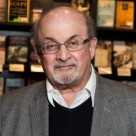
Novelist and essayist Salman Rushdie "has been removed from a ventilator and is on the mend, his agent said Sunday," according to Elizabeth A. Harris of The New York Times. "The road to recovery has begun," Andrew Wylie said in a text message to The Times. "It will be long; the injuries are severe, but his condition is headed in the right direction." 24-year-old New Jersey man Hadi Matar "was arrested at the scene and charged with second-degree attempted murder and assault with a weapon," Harris continued. "In court on Saturday, prosecutors said that the attack on the author was premeditated and targeted. Matar traveled by bus" to the Chautauqua Institution, a nonprofit educational center 55 miles southwest of Buffalo, and "purchased a pass that allowed him to attend the talk Rushdie was to give on Friday morning, according to the prosecutors. Nathaniel Barone, a public defender, entered a plea of not guilty on his behalf. Matar was held without bail, and his next court appearance is scheduled for Friday at 3 p.m." Rushdie was stabbed roughly ten times (resulting in arm, eye and liver damage) as he prepared to give a lecture at the intellectual retreat, according to Harris. "An Associated Press reporter witnessed a man storm the stage at the Chautauqua Institution and begin punching or stabbing Rushdie as he was being introduced," added Joshua Goodman of the aforementioned news organization. "The 75-year-old author was pushed or fell to the floor, and the man was restrained. Rushdie was quickly surrounded by a small group of people who held up his legs, presumably to send more blood to his chest." The New York State Police confirmed that Rushdie "suffered an apparent stab wound to the neck and was transported by helicopter to an area hospital," while the interviewer "suffered a minor head injury." A State Trooper "assigned to the event immediately took the suspect into custody." Hundreds of attendees at the lecture were immediately evacuated. "Rushdie’s book 'The Satanic Verses' has been banned in Iran since 1988, as many Muslims consider it to be blasphemous," Goodman wrote. "A year later, Iran's late leader Ayatollah Ruhollah Khomeini issued a fatwa, or edict, calling for Rushdie's death," forcing him to accept police protection and momentarily adopt the alias of Joseph Anton; the pseudonym later served as the title of a 2012 memoir about the period. While Iran "has long since distanced itself from Khomeini’s decree, [...] anti-Rushdie sentiment has lingered," with the writer reporting in 1999 that he still received annual cards reminding him of the edict. Ten years ago, "a semi-official Iranian religious foundation raised the bounty for Rushdie from $2.8 million to $3.3 million." Although there is "no evidence Iran was involved in organizing the attack," European and Middle Eastern intelligence officials alleged that Matar was "in direct contact with members of Iran’s Islamic Revolutionary Guard Corps on social media" in interviews with Mitchell Prothero of Vice World News. U.S. Secretary of State Antony Blinken also emphasized Rushdie's history with Iran in public statements. "Iranian state institutions have incited violence against Rushdie for generations, and state-affiliated media recently gloated about the attempt on his life," Blinken said Sunday. "This is despicable." Nasser Kanaani, a spokesperson for Iran's Foreign Ministry, "said that Rushdie had crossed 'red lines' and 'exposed himself to the anger and ire of the people,'" Euan Ward of The New York Times reported Monday. "He said that Tehran had no information on the attacker beyond what was being reported in U.S. news media." A history graduate of King's College, Cambridge, Rushdie worked as a copywriter before rising to prominence with "Midnight's Children" (1981), which received the Booker Prize.

New York Times Is Targeted by Activist Investor Pushing for Subscriber-Only Bundles

Activist Investor Acquires Times Stake:


San Francisco-based hedge fund ValueAct Capital "said in a letter to investors Thursday that it now owns a 7% stake" in The New York Times Company while also contending the publisher "could improve digital sales and margins through an aggressive rollout of its subscriber-only bundles," according to Scott Deveau of Bloomberg. "Key to this growth will be a more aggressive rollout of all its subscriber-only products," the activist firm said. "Those products include [subscription-based sports news site] the Athletic, as well as crosswords and games, cooking and news." Although the Times Company's shares "had fallen about 32% this year," the announcement triggered an 11% gain as of Thursday afternoon. "Our research suggests that most current readers and subscribers are interested in the bundle and would pay a large premium for it but are not aware the offering even exists," ValueAct said in the letter, which was obtained by Bloomberg. "This is an opportunity we believe management needs to drive with urgency, as it is the biggest lever to accelerate growth, deepen NYT's competitive moat, and ensure the long-term strength and stability of the platform." The fund added: "We believe NYT may be one of the few consumer subscription businesses well positioned for the current environment. They are in the early innings of penetrating a large, addressable market, can sustainably increase their customer lifetime value, are already solidly profitable, and have a much more attractive competitive environment. [...] A generational shift is underway where U.S. consumers prefer to consume high quality news digitally –- across websites, social medial channels, mobile apps, podcasts, email newsletters, push alerts, and other surfaces –- which can only be satisfied by a scaled franchise with a trusted brand like NYT."  While ValueAct declined to comment to Bloomberg, a Times spokesperson confirmed the investment, also noting that the Times Company routinely hosts strategic discussions with shareholders: "Members of our management team have had conversations with ValueAct to hear their views and share ours. The board and management team will continue to make decisions that we believe are in the best interest of the company and all company shareholders." In early August, the Times "said second-quarter digital advertising revenue decreased 2% and it expects total advertising sales in the third quarter to be flat or down low single-digits" amid robust subscriber growth, exemplified by a target of 15 million subscribers by 2027. Since 1896, it has been controlled by the Ochs-Sulzberger family, "which owns a majority of the company’s Class B shares, giving them 70% of the voting rights in the company." Founded in 2000, ValueAct has invested in such disparate companies as Citigroup, Nintendo and Japanese retail group Seven & i Holdings. 

Biden says U.S. knows that Syria has held Austin Tice, again calls for journalist’s release

U.S. Calls for Return of Austin Tice:


President Biden "demanded that the Syrian government release" freelance journalist, Washington Post contributor and Marine Forces Reserve officer Austin Tice in a Wednesday statement, adding that "the United States knows that he has been held by their government," according to Matt Viser of The Washington Post. Tice, who turned 41 today, was kidnapped ten years ago. "We know with certainty that he has been held by the Syrian regime," Biden said. "We have repeatedly asked the government of Syria to work with us so that we can bring Austin home." An Eagle Scout and 2002 graduate of the Edmund A. Walsh School of Foreign Service at Georgetown University who served in the U.S. Marine Corps as an infantry officer before pursuing a career in journalism, Tice "was abducted in Damascus on Aug. 14, 2012, days after his 31st birthday," Viser continued. "Syrian leader Bashar al-Assad has not acknowledged that his government detained Tice, and other top Syrian officials have denied having custody or any information about him. But Biden made clear in his statement that the United States believes the Syrian government has the ability to release Tice," noting that there is "no higher priority in my Administration than the recovery and return of Americans held hostage or wrongfully detained abroad." The statement follows Biden's recent meeting with Saudi Crown Prince Mohammed bin Salman, "who is accused of being behind the killing of Washington Post contributing columnist Jamal Khashoggi" in 2018. He previously met with Tice's parents in May. "The Tice family deserves answers, and more importantly, they deserve to be swiftly reunited with Austin," Biden said. "We stand with Austin's many loved ones, and we will not rest until we bring Austin home. Ten years is far, far too long. So is every additional day."

Axios agrees to sell to Cox Enterprises for $525 million

Axios Acquired by Cox Enterprises in $525 Million Deal:


"Smart brevity"-oriented news organization Axios has signed a $525 million cash deal "to sell to its most recent lead investor, Cox Enterprises, the companies announced Monday," according to Axios media reporter Sara Fischer. "A big part of this investment is to expand the number of local markets we serve," said Alex Taylor, chairman and chief executive of Cox. "Local watchdog journalism is so important to the health of any community, and no one is more focused on building that out nationally than Axios." Launched in 2017 by by former Pulitzer Prize Board member Jim VandeHei, Mike Allen and Roy Schwartz following their respective departures from Politico, Axios operates a local news division that "currently operates in 24 cities and plans to expand its coverage to 30 U.S. cities by the end of 2022," Fischer continued, with the ultimate goal of expanding to hundreds of cities. The news organization also will "spin off its software arm, Axios HQ, into a separate, stand-alone company led by Axios president Roy Schwartz." VandeHei, who currently serves as Axios' chief executive, lauded the deal as a "great" development "for Axios, for our shareholders and American journalism [...] It allows us to think and operate generationally, with a like-minded partner — and build something [...] durable that lives long after we are gone." Under the terms of the agreement, Cox will control the board of Axios' publishing component with four seats, while the co-founders will retain their seats. Additionally, Axios' management "will maintain control of the company's editorial direction and day-to-day operations," with deal structures to "incentivize Axios' management and current employees to stay with the outlet and continue growing its business." The agreement follows thwarted 2021 acquisition talks with Axel Springer, while Cox "sold a majority stake in its local TV and radio businesses to private equity firm Apollo Global Management in 2019," retaining control of such brands as the Atlanta Journal-Constitution and the Kelley Blue Book (the latter through its Cox Automotive subsidiary). Axios "has over 500 employees, with nearly 100 who work for Axios HQ and over 75 who work for Axios Local [...] Axios HQ plans to more than double in size next year and triple its revenue." The deal "is expected to close within the next few weeks, following regulatory approvals."

David McCullough, Best-Selling Explorer of America’s Past, Dies at 89

David McCullough (1933-2022):


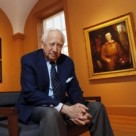
1993 and 2002 Biography winner David McCullough died Sunday at his home in Hingham, Mass., according to Daniel Lewis of The New York Times. He was 89. In addition to receiving Pulitzer Prizes "for two presidential biographies, 'Truman' (1992) and 'John Adams' (2001)," McCullough also "received National Book Awards for 'The Path Between the Seas: The Creation of the Panama Canal' (1977) and 'Mornings on Horseback' (1981), about the young Theodore Roosevelt and his family." The latter book also was nominated for the 1982 Biography Prize. "Deep research and lively readability were hallmarks of his books, and so was their tendency to leap off the shelves," Lewis continued. "'Truman' topped The New York Times’s best-seller list for 43 weeks; 'John Adams' was No. 1 in its first week and has since gone through dozens more printings," precipitating a resurgence of interest in the divisive second president that culminated in a 2008 HBO miniseries adapted from McCullough's text. "His readers got a lot of work for their money: The Adams project took [...] McCullough seven years, 'Truman' took him 10 (and when at last he showed his wife the massive typescript, he said, she was amazed that it hadn’t taken longer)," added Lewis. "'The Great Bridge' (1972), his exhaustive account of the technology, personalities and politics involved in building the Brooklyn Bridge, was hailed as a monument in its own right. Yet there was hardly anything in his writing to suggest that he had ever staggered under the weight of his homework. Critics saluted him as a literary master, adept at imbuing the familiar with narrative drama and bringing momentous events to life through small details and the accounts of individual witnesses. A prime example was his rendering of the Third Continental Congress in 1776, central to the Adams book, in which he captured not only the frustrating day-to-day wrangling over declaring independence as the British fleet approached, but also the sights and smells of a mucky Philadelphia summer, the quality of local architecture and local beers, and the contrasting personalities of two brilliant allies and future enemies." Born in Pittsburgh amid the Great Depression on July 8, 1933, McCullough studied under the likes of three-time Pulitzer winner Robert Penn Warren and 1945 Novel winner John Hersey at Yale University, where he received a B.A. in English as a member of Skull and Bones in 1955. Following a peripatetic writing and editing career that included stints at Sports Illustrated and the now-defunct United States Information Agency, he published his first book, "The Johnstown Flood" (a history of the 1889 Pennsylvania great flood) in 1968. "With the success of 'The Johnstown Flood' and the support of his wife, Rosalee McCullough, he took a leap of faith, quitting his day job to write history and biography full time while the couple raised five children," Lewis wrote. "They survive him: in addition to Dorie, another daughter, Melissa McDonald; three sons, David Jr., William and Geoffrey; a brother, George; 19 grandchildren; and two great-grandchildren. Ms. McCullough died in June at age 89." In 2003, McCullough reflected on his long career after being chosen by the National Endowment for the Humanities to deliver the Jefferson Lecture in the Humanities in Washington, D.C. "The reward of the work has always been the work itself, and more so the longer I've been at it," he said. "The days are never long enough, and I've kept the most interesting company imaginable with people long gone."

Albert Woodfox, Black Panther who spent decades in solitary confinement, dies

Albert Woodfox (1947-2022):


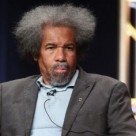
2020 General Nonfiction finalist Albert Woodfox died Thursday in New Orleans from complications of COVID-19. He was 75. A former Black Panther, Woodfox was best known for "spending almost half a century in solitary confinement in a Louisiana jail before championing prison reform," according to Adela Suliman of The Washington Post. He "had been part of the 'Angola Three' — a group of male inmates, including Robert King and Herman Wallace, known for their long stretches in solitary confinement at the notorious maximum-security Louisiana State Penitentiary — a former plantation using enslaved people that was turned into a prison known as Angola," Suliman added. "The men said they believed they were targeted for institutional cruelty because of their political beliefs after they set up a prison chapter of the Black Panther Party at Angola in 1971. Woodfox spent 43 years and 10 months in solitary confinement and is thought to have served more time in solitary confinement than any other prisoner in U.S. history, according to his attorneys." In a 2020 interview, he characterized his sentence as "a horrible experience," noting that he drew upon his previous association with the Black Panthers to persevere. Throughout his incarceration, Woodfox "would study history and law, teach other inmates how to read and write and play games made up in cells," Suliman continued. Along with fellow inmates, Woodfox "also organized strikes and protests about prison conditions, racial injustice, sexual abuse in jail, work hours and clothing," he recalled to interviewers. "They put me in a cell … for the sole purpose of breaking my spirit," he continued. "Our cells were meant to be death chambers. We turned them into high schools, universities, debate halls, law schools." Initially jailed on armed robbery charges in 1965, Woodfox was placed into solitary confinement in 1972 after he was accused of murdering prison guard Brent Miller. He "consistently maintained his innocence in Miller’s death, and Amnesty International and other human rights organization have long decried the case against him as evidentially flawed." Following his release at the age of 69 in 2016 — King had been released in 2001, while Wallace was released three days before his death from cancer in 2013 — Woodfox wrote the memoir "Solitary" with his partner, Leslie George. The memoir also was nominated for a National Book Award. "I still had moments of bitterness and anger. But by then I had the wisdom to know that bitterness and anger are destructive," he wrote. "I was dedicated to building things, not tearing them down." At least 80,000 prisoners (including children) "remain in solitary confinement in jails across the United States," according to the American Friends Service Committee. "That figure has probably substantially risen during the coronavirus pandemic, says the nonprofit Penal Reform International, which documents the devastating mental and physical impacts of confinement and prolonged isolation."