For the Record


Cormac McCarthy (1933-2023)
Cormac McCarthy (1933-2023):


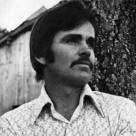
2007 Fiction winner Cormac McCarthy died Tuesday at his home in Santa Fe, N.M. He was 89. Born in Rhode Island, McCarthy (who took on a family nickname in lieu of his birth name of Charles) was primarily raised in Knoxville, Tennessee (a milieu that would greatly inform his early oeuvre) after his father took a staff attorney position with the Tennessee Valley Authority. Although he briefly studied physics and engineering at the University of Tennessee in 1951 and 1952, he maintained that he did not become an avid reader until completing a four-year enlistment in the U.S. Air Force. Thereafter, he returned to his hometown university to study English and creative writing from 1957 to 1959; despite twice earning the Ingram Merrill Award for creative writing (conferred by a foundation established by 1977 Poetry winner James Merrill) in the process, he soon dropped out in earnest. Over the next twenty years, he wrote four "bleak" novels, all "set in the Appalachian South, related in tangled prose that owes an acknowledged debt to" two-time Pulitzer winner William Faulkner, according to Dwight Garner of The New York Times. (Indeed, McCarthy was edited by Albert Erskine, who worked on the Pulitzer-winning "The Reivers" and other books with Faulkner, throughout this period.) Unabashedly reticent in the pursuit of additional employment, McCarthy often lived in "total poverty" (according to second wife Anne DeLisle) in a variety of unusual abodes, including a renovated dairy barn in Louisville, Tenn. and a "barely habitable" stone cottage in the periphery of an El Paso shopping center. Upon receiving one of the first "genius grant" MacArthur Fellowships in 1981 (largely conferred at the behest of 1976 Fiction winner Saul Bellow, who lauded the younger author's "absolutely overpowering use of language, his life-giving and death-dealing sentences"), McCarthy began to travel to the Southwest, where he would ultimately spend the remainder of his life. Suffused with wrenching violence and hitherto atypical minimalist diction, the ensuing "Blood Meridian" (1985) initially divided critics before emerging as the key fulcrum point in his career, with gadfly Yale literary scholar Harold Bloom citing the work as "the greatest single book since Faulkner's 'As I Lay Dying.'" (At the time of his death, McCarthy reportedly was drafting on a screenplay adaptation of the novel.) Moving from Random House to Alfred A. Knopf at the dawn of the 1990s, he enjoyed a belated commercial breakthrough with "All the Pretty Horses" (1992), which also received the National Book Award. After completing the saga that commenced in "Blood Meridian" with two sequel novels, McCarthy reached his improbable commercial apogee in the mid-2000s with the mordant visions of "No Country for Old Men" (2005; a nihilistic neo-Western framed by the early 1980s) and "The Road" (2006; a post-apocalyptic tragedy set years after an unspecified extinction event); immediately resonating with the eschatological mien of early 21st century America, both works spawned prominent film adaptations (directed by the Coen Brothers, "No Country..." received the 2008 Academy Award for Best Picture, bringing a project initially envisaged for the screen full circle), while "The Road" also was awarded the Fiction Prize in 2007. Following a long hiatus occasionally punctuated by screenwriting and science writing forays, a long-awaited diptych ("The Passenger" and "Stella Maris," published a month apart in the autumn of 2022) was strongly influenced by his longstanding trusteeship at the Santa Fe Institute, an independent, nonprofit theoretical research facility centered around the multidisciplinary study of complex adaptive systems; according to the late physicist and Nobel laureate Murray Gell-Mann, a colleague at the Institute, "There isn't any place like the Santa Fe Institute, and there isn't any writer like Cormac, so the two fit quite well together." While never a recluse in the archetypal sense, McCarthy seldom granted interviews, was resolutely apolitical and remained a teetotaler after 1976. He regarded writing as a "subconscious process" and disdained formal outlines. Fluent in Spanish from his long sojourns in Ibiza and the Southwest, he often included untranslated dialogue in his novels. All three of his marriages ended in divorce. He is survived by his two sons, two sisters, a brother and two grandchildren.

‘Kimberly Akimbo’ Wins Best Musical Tony and ‘Leopoldstadt’ Best Play

Parks, Lindsay-Abaire Receive Tony Awards:


2002 Drama winner Suzan-Lori Parks and 2007 Drama winner David Lindsay-Abaire were among the winners at an "unusual Tony Awards ceremony that almost didn't happen because of the ongoing screenwriters' strike," Michael Paulson of The New York Times reported Sunday. He added: "The basic elements of the awards show — acceptance speeches by prize winners and songs performed by the casts of Broadway musicals — remained more or less intact. But the introductions to the shows and performances were mostly sleekly shot videos, rather than descriptions by celebrities; presenters kept their comments extremely spare, which left more time for unusually well-filmed production numbers." Nearly 22 years after its original production, Parks' Pulitzer-winning "Topdog/Underdog" (characterized by Paulson as a "tour de force about two Black brothers weighted down by history and circumstance") received the Tony for Best Revival of a Play. In her acceptance speech, Parks "praised actors Yahya Abdul-Mateen II and Corey Hawkins for 'living large in a world that often does not want the likes of us living at all' and added, 'Theater is the great cure.'" Along with such luminaries as producer David Stone and composer Jeanine Tesori, the Brooklyn-based Lindsay-Abaire shared in the "coveted" Best Musical award for "Kimberly Akimbo," which chronicles the arc of a "teenage girl coping with a life-shortening genetic condition and a comically dysfunctional family." Venerable Czech-born British playwright Tom Stoppard's "Leopoldstadt" received the Best Play award (edging out a troika of Pulitzer-winning works, including Stephen Adly Guirgis' "Between Riverside and Crazy," Martyna Majok's "Cost of Living" and James Ijames' "Fat Ham"), while Wendall Pierce also was nominated for the Best Performance by a Leading Actor in a Play award for his acclaimed portrayal of Willy Loman in a revival of Arthur Miller's 1949 Drama Prize-winning "Death of a Salesman." Conferred annually by the American Theatre Wing and The Broadway League, the Tony Awards recognize excellence in live Broadway theater.

Publishers’ group warns that generative AI content could violate copyright law

Publishers' Group: Generative AI Possibly Violates Copyright Law:


A publishers' trade organization that counts The New York Times, The Washington Post and NBCUniversal among its members "is reminding members that AI tools built on their archives could break copyright laws," Ryan Barwick of Marketing Brew reported Monday. A draft of guidelines from Digital Content Next that was shared with Marketing Brew (but which has not been shared with member organizations or ratified by the group) states that "copyright laws protect content creators from the unlicensed use of their content," while the "use of copyrighted works in AI systems are subject to analysis under copyright and fair use law." Additionally, the document asserts that "most of the use of publishers' original content by AI systems for both training and output purposes would likely be found to go far beyond the scope of fair use as set forth in the Copyright Act and established case law [...] [The] use of original content by [generative AI] systems for training, surfacing, or synthesizing is not authorized by most publishers’ terms and conditions, or contemplated by existing agreements." According to Barwick, "While the ad industry goes gaga for generative AI, many publishers have raised red flags about the impact these tools could have on the media ecosystem. They've expressed concerns around whether responses generated by AI are gleaning information from behind paywalls and how these tools could potentially cut into site traffic." In an interview with Barwick, Chris Pedigo, DCN’s senior vice president for government affairs, said that "any sort of unauthorized use of it undermines their business model and is a violation of copyright law." In March, OpenAI CEO Sam Altman "told The Wall Street Journal that the company has 'done a lot with fair use,' the legal doctrine that lets copyrighted material be used without permission under certain circumstances," while acknowledging that the company "has made deals for content." While DCN CEO Jason Kint "declined to say if any of its members were considering legal action over generative AI-related copyright issues," he believes that "publishers should have a seat at the table and an opportunity to discuss potential compensation and how any information pulled from their archives will be credited." Representatives from OpenAI "attended a DCN board meeting in April" that included member representatives from Fox News, the Associated Press, and Warner Bros. Discovery, while the News Media Alliance trade group also has "held meetings regarding AI with its members recently."

Is Local News Failing To Hold Public Officials Accountable?

Northwestern Poll: 'Lack of Trust' in Local Reporting Possibly Complicated by Television News:


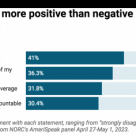
Only 31.5% of Americans "believe that local news media hold public officials accountable, a finding that calls into question whether local journalism is fulfilling one of its primary missions, according to national poll commissioned by the Medill School at Northwestern University," Mark Caro of Medill's Local News Initiative reported Tuesday. He added: "The survey, conducted on behalf of Medill by the National Opinion Research Center (NORC) at the University of Chicago, collected responses from more than 1,000 Americans about their consumption of and attitudes toward local news sources. In response to the statement 'My local news media hold public officials accountable,' only 3.9% replied 'Strongly Agree' and 26.5% replied 'Agree,' a total of 30.4% supporting the premise. On the negative side, 11.3% responded 'Strongly Disagree' while 18.8% responded 'Disagree' for a total of 30.1%. In the middle were 38.7[%] in the 'Neither' category." Tim Franklin, a senior associate dean and the John M. Mutz chair in local news at the Medill School, believes that the tenor of the response may be partially attributable to a "lack of trust in institutions in general" in the United States. "But I think that given how critical this role is to democratic institutions and communities and to the state of our democracy, this is a red flare," he continued. "Maybe it’s not being communicated to the public as to how local news media hold public officials accountable, what their job is in doing that, or how local journalists are present at City Hall meetings," said Stephanie Edgerly, the associate dean of research who oversaw the survey. "The public just sees the story that's written up but does not understand what role local journalists played in covering it. In general, journalists have not been great at communicating the behind-the-scenes work of their reporting process to the public." However, Tom Rosenstiel, the Eleanor Merrill visiting professor on the future of journalism at the University of Maryland, noted that "respondents indicated that the most common way they consume local news is through television (31.8% daily), followed by social media (30.8% daily), with radio (including podcasts) and newspapers (including print and digital readers) lagging behind at 19.7% and 14.8%, respectively." According to Rosenstiel, many media consultants "steer [local TV news organizations] away" from local government coverage, perceiving it as a "ratings loser." He added: "If the primary source of local news [for many people] is local television, it’s not a shock that less than a third of people would say they think local news is holding public officials accountable." Yet "local television news consumption had the biggest age-group split among four media options, with 56.9% in the 60+ demographic getting their daily local news from TV compared with only 13% in the 18-29 age group," according to Caro. This reliance is "a huge red flag for local TV," said Rosenstiel. "You can cut the cable cord and still have access to local TV news, but if you have no relationship with local TV news when you’re 29 or 20 or 25, it’s unlikely you’re going to forge that unless they create some new product or introduce themselves in a significant way to those audiences on social platforms."

Announcement from Publisher and CEO Fred Ryan on The Post’s next steps in AI innovation

Washington Post Announces AI Teams:


Washington Post Publisher and CEO Fred Ryan has announced the establishment of "two cross-functional" artificial intelligence teams to "drive innovation" at the newspaper, according to an Wednesday open letter published by the WashPostPR blog. The AI Taskforce "will include senior leaders from across the organization charged with establishing the company's strategic direction and priorities for advancing [its] AI capabilities," Ryan added. It also will "meet regularly to provide governance, direction, and insights about AI usage throughout The Washington Post," he wrote. Representatives on the team include Executive Editor Sally Buzbee and Editorial Page Editor David Shipley alongside other staffers from myriad departments, including Engineering, Product and Legal. Led by Director, Zeus Technology and AI/ML Sam Han, the AI Hub team will "expedite [...] AI initiatives and foster cross-functional cooperation" alongside the Taskforce. In addition to "[spearheading] [...] experimentation, collaboration, and proof-of-concept AI initiatives company-wide," it will "[ensure] alignment of [...] AI projects with the strategies, guardrails, and priorities established by the AI Taskforce, while also focusing on future innovation." Ryan continued: "This is only the first step in establishing AI as a priority opportunity for The Washington Post. As we learn more, we will adjust team structures and allocate resources that will deliver value and results. We are thrilled to be embarking on this exciting journey, and we are confident that our efforts will help transform the way consumers receive news and information. We look forward to collaborating with all of you as we drive this initiative forward."

Supreme Court Rules Against Andy Warhol in Copyright Case

Supreme Court Rules Against Warhol Estate in Fair Use Case:


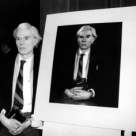
The United States Supreme Court "ruled on Thursday that Andy Warhol was not entitled to draw on a prominent photographer's portrait of Prince for an image of the musician that his estate licensed to a magazine, limiting the scope of the fair-use defense to copyright infringement in the realm of visual art," according to a report by Adam Liptak. In an opinion for the majority following the 7-2 vote, Associate Justice Sonia Sotomayor said that photographer Lynn Goldsmith's "original works, like those of other photographers, are entitled to copyright protection, even against famous artists." She continued: "To hold otherwise would potentially authorize a range of commercial copying of photographs, to be used for purposes that are substantially the same as those of the originals. As long as the user somehow portrays the subject of the photograph differently, he could make modest alterations to the original, sell it to an outlet to accompany a story about the subject, and claim transformative use." Associate Justice Elena Kagan and Chief Justice John G. Roberts Jr. dissented in the case, citing its potential abrogation of creativity. "It will impede new art and music and literature," Kagan wrote. "It will thwart the expression of new ideas and the attainment of new knowledge. It will make our world poorer." Sotomayor also asserted that Kagan's opinion was characterized by "a series of misstatements and exaggerations, from the dissent's very first sentence to its very last." Kagan, who "responded that Justice Sotomayor wholly failed to appreciate Warhol’s art," added: "The majority does not see it. And I mean that literally. There is precious little evidence in today's opinion that the majority has actually looked at these images, much less that it has engaged with expert views of their aesthetics and meaning." The original portrait was taken by Goldsmith in 1981. In 1984, recently revived magazine Vanity Fair "hired Warhol to create a work to accompany an article titled 'Purple Fame,'" Liptak wrote. "The magazine paid Ms. Goldsmith $400 to license the portrait as an 'artist reference,' agreeing to credit her and to use it only in connection with a single issue." Warhol then "altered the photograph in various ways" in 16 images, "notably by cropping and coloring it to create what his foundation’s lawyers described as 'a flat, impersonal, disembodied, masklike appearance.'" One of the altered photos was subsequently published by the magazine. Following Warhol's 1987 death, the Andy Warhol Foundation for the Visual Arts "assumed ownership of his work," eventually licensing a different image from the series for $10,250 when Prince died in 2016. Goldsmith "received no money or credit" in the retrospective, prompting the litigation. Sotomayor "wrote that a crucial factor in the fair-use analysis — 'the purpose and character of the use, including whether such use is of a commercial nature or is for nonprofit educational purposes' — weighed in [...] Goldsmith’s favor," noting that "Warhol himself paid to license photographs for some of his artistic renditions [...] Such licenses, for photographs or derivatives of them, are how photographers like Goldsmith make a living. They provide an economic incentive to create original works, which is the goal of copyright." She juxtaposed this theory against Warhol's iconic paintings of Campbell's soup cans, opining that "the soup cans series uses Campbell's copyrighted work for an artistic commentary on consumerism."

The Philadelphia Inquirer’s operations continue to be disrupted by a cyber incident

Philadelphia Inquirer Disrupted by Cyberattack:


The Philadelphia Inquirer and a team of cybersecurity experts "have yet to determine the full extent of a cyberattack on the news organization last week, but the disruption won't affect coverage of the hotly contested mayoral primary election Tuesday," the newspaper's Jason Laughlin reported Monday. Although Publisher/CEO Lisa Hughes "declined to say how seriously the cyberattack affected The Inquirer’s systems while the investigation continues," the security breach has had a significant affect on operations, "[preventing] the publication of the regular Sunday print edition; subscribers received the early edition composed on Friday evening." Laughlin continued: "The attack is The Inquirer's most significant publication disruption since a blizzard in 1996. With Inquirer offices closed as a precaution, staffers worked from home Monday as they did through the pandemic. But this time, they had to use workarounds to access publishing software and business systems. The Inquirer published a print edition Monday, but without classified ads, including death notices, which are expected to return to the newspaper Wednesday." In the meantime, staffers covering the election will work from a temporary newsroom in the Center City district. While other leading news organizations (including the Los Angeles Times and The Guardian) have been subjected to ransomware attacks, Hughes "declined to say Monday whether The Inquirer received a ransom demand or whether the individual or group responsible for the attack contacted the news organization." The Inquirer apprised the FBI (which "typically does conduct an investigation when notified of a cyberattack but declined to comment further Monday"), while longtime corporate investigation and risk consulting firm Kroll is conducting a separate investigation. Addressing concerns from the NewsGuild of Greater Philadelphia that employee data may be at risk, Hughes "said that this issue is being investigated," with the newspaper pledging support to potentially affected individuals. The attack "was first identified Thursday by Cynet, a vendor that handles The Inquirer's network security" amid a weekend suffused with significant news events, including an NBA game and a Taylor Swift concert. (Philadelphia Inquirer Editor and Senior Vice President Gabriel Escobar is a member of the Pulitzer Prize Board.)

DeSantis wanted to rewrite press laws. Conservative media helped kill the effort.

Florida Press Measure Stalls in Committee:


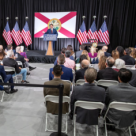
Florida Governor Ron DeSantis' (R) "push to rewrite defamation law and challenge press rights failed to advance beyond a committee vote" in the state's legislature due to opposition from "conservative media and lawmakers," Lori Rozsa and Elahe Izadi of The Washington Post reported Thursday. "He pushed his luck and he was doing so well, pushing everything and getting it," said Javier Manjarres, publisher of The Floridian, a conservative state political news site. "He got stung and a slap on the wrist from his supporters." Known for his "combative relationship with much of the press," DeSantis often eschews the mainstream media and has accused prominent news organizations of "legacy media defamation practices." After issuing a "call to lawmakers to rewrite defamation law," Republican legislators soon drafted related bills in both state houses. According to Rozsa and Izadi, the House bill "would have lowered the threshold for defamation and made it easier to sue — and prevail — in libel lawsuits brought against media companies," while "reporting cited to anonymous sources would have been presumed to be false." The reporters added: "The legislation appeared to go after protections afforded under a landmark 1964 Supreme Court case, New York Times v. Sullivan. For years, conservatives in political and legal circles have called for scaling back the defamation protections [...] and in recent years, [U.S. Supreme Court Associate Justices] Clarence Thomas and Neil M. Gorsuch have signaled a desire to reconsider the standard." However, the proposed measures soon elicited opposition from an ideologically diverse array of publishers "who argued it could put media outlets — particularly smaller ones — out of business with staggering costs." Brendon Leslie, who serves as editor in chief of the "DeSantis-friendly outlet" Florida's Voice, noted that the "boomerang effect" of the "'own the libs'" legislation would have amounted to a "lose-lose situation" for publishers. Additionally, First Amendment scholars said that conservative broadcasts "often [feature] commentary and opinion, which could have made them especially vulnerable to legal challenges under the proposed law." During the legislative session, "conservative media publishers quietly lobbied lawmakers to warn them about the bill's provisions," while several Republican legislators argued that the bill was unconstitutional and could "open the door to frivolous lawsuits." State Rep. Alex Andrade (R), who introduced the bill in the Florida House, said that there was "no heavy participation" from DeSantis or his office in the measure. "We're a part time legislature. We have 60 days to get everything we want done,” he continued. "We made the call to kind of sideline it for the rest of the session once it got a little bit too late to commit the resources needed to pass it." Andrade plans to reintroduce "a similar bill" next year.

As Reach warns of traffic slowdown: How Facebook referrals to publishers have plummeted

Facebook News Traffic Plummets:


Facebook referral traffic "has plummeted for news publishers amid Meta's ongoing turn away from the news industry," Aisha Majid of PressGazette reported Thursday. An analysis by analytics firm Chartbeat "confirms a warning issued by the UK's biggest local and national news publisher Reach on Wednesday," she continied. "With digital revenue down 14.5% year-on-year in the first four months of 2023, Reach blamed a page-view slowdown on 'recent changes to the way Facebook presents news content.'" Indeed, for "1,350 global publishers" included in the firm's data, "27% of page views coming from external, search and social in January 2018 came from Facebook (2 billion page views)." But by April 2023, "this was down to 11% (1.5 billion)." Although all sizes have been affected by the decline, "smaller publishers have been most affected," with Facebook referrals now representing as little as 2% of volume for 486 publishers with fewer than 10,000 average daily page views. "The closure of BuzzFeed News last month highlights the precarious position of publishers whose strategy depends on referrals from social media platforms," Majid added. While Similarweb's social referral data "applies to desktop visits only which account for a minority of web traffic, the direction of travel is clear [...] In just two years, the number of visits to BuzzFeed News from Facebook fell from 261,669 in April 2021 to 124,825 this March - a fall of 110%." BuzzFeed's non-journalistic content "saw a similar dip, with Facebook referrals falling by 70% in the same period." She continued: "A 2014 change to its algorithm aimed at reducing 'clickbait' affected the traffic of viral publishers such as Upworthy and Buzzfeed while another update in 2018 designed to prioritize content from 'family and friends' over that from publishers in its News Feed hit the news industry further. In 2022, Facebook announced that it would be dropping Instant Articles, which allows news links to open in a quicker-to-load, mobile-friendly format within the Facebook app. Last month Facebook owner Meta commissioned a report that claimed that news content plays a "small and diminishing role" on its platform. The report, which was published shortly before the introduction of new UK legislation designed to force Meta and Google to pay publishers for the use of their news content, claimed that links to news stories account for less than 3% of what Facebook users around the world see in their feeds. The report authors made a "rough estimate" that publishers derive on average 1% to 1.5% of their total revenue from referrals back to their websites from content shared on Facebook."

He wrote a book on a rare subject. Then a ChatGPT replica appeared on Amazon.

AI Text Generators Become Ubiquitous on the Internet:


A Mumbai-based educational technology firm called inKstall has "listed dozens of books on Amazon" on a variety of recondite technical topics, "each with a different author, an unusual set of disclaimers" attesting to their origins in artificial intelligence language models "and matching five-star Amazon reviews from the same handful of India-based reviewers," Will Oremus of The Washington Post reported Friday. "Experts say those books are likely just the tip of a fast-growing iceberg of AI-written content spreading across the web as new language software allows anyone to rapidly generate reams of prose on almost any topic," Oremus continued. "From product reviews to recipes to blog posts and press releases, human authorship of online material is on track to become the exception rather than the norm." Jonathan Greenglass, a New York-based technology/e-commerce investor, believes that the fulcrum has already pivoted. "If you have a connection to the internet, you have consumed AI-generated content," he said in an interview with Oremus. "It's already here." Margaret Mitchell, chief ethics scientist at the AI start-up Hugging Face, added: "The main issue is losing track of what truth is. Without grounding, the system can make stuff up. And if it’s that same made-up thing all over the world, how do you trace it back to what reality is?" According to Oremus, "a raft of online publishers" have employed automated writing tools based on ChatGPT predecessors, GPT-2 and GPT-3 "for years," demonstrating that "a world in which AI creations mingle freely and sometimes imperceptibly with human work isn't speculative; it's flourishing in plain sight on Amazon product pages and in Google search results." He continued: "Semrush, a leading digital marketing firm, recently surveyed its customers about their use of automated tools. Of the 894 who responded, 761 said they've at least experimented with some form of generative AI to produce online content, while 370 said they now use it to help generate most if not all of their new content, according to Semrush Chief Strategy Officer Eugene Levin." Additionally, in a recent report, news credibility rater NewsGuard identified at least 49 sites across seven languages "that appeared to be mostly or entirely AI-generated." Chris Cowell, a Portland, Ore.-based software developer whose specialized book was forced to contend with competition from an AI-generated inKstall volume with the same title, said that the experience will likely preclude him from writing additional books. "My concern is less that I'm losing sales to fake books, and more that this low-quality, low-priced, low-effort writing is going to have a chilling effect on humans considering writing niche technical books in the future," he said. "[Any] text I write will inevitably be fed into an AI system that will generate even more competition."