For the Record


Could Threads kill Twitter? (Like, for real?)

Journalists Assess Threads Launch, Possible Impact:


Following this week's launch of Threads (a Meta Platforms-owned social media and social networking app that may "[threaten] Twitter's place as the short-text pulse of the internet" amid recent "technical missteps"), a team of Poynter writers and producers spoke to prominent journalists and media figures now gauging its potential utility as a professional tool. "It’s buggy and so far it feels to me like the algorithm seems poised to replicate the Instagram experience — which is not what people go to Twitter for," said Brandy Zadrozny, an NBC News senior reporter who covers political radicalization and digital disinformation. "Having said that, it’ll probably be a success — Meta already had the users and Twitter gave them the blueprint. But. Twitter was special in part because of the communities it created around interests and events and the ability to search out and find reliable information during real-time events, emergencies and breaking news. I don't see Threads doing this yet." Axios Senior Media Reporter Sara Fischer, who speculated that the program "is likely moving in the direction of successful apps that Instagram has created and integrated, like Boomerang and Layout," added that it may ulrimately pose a genuine threat to Twitter's dominance: "Yes — not because the advertising dollars will move over immediately, but because it will eventually put a dent in Twitter's engagement. Once the flywheel begins, and prominent voices start to break news on Threads, it will be harder for Twitter to chase that momentum. They won't introduce ads to Threads until it reaches much larger adoption." NewsGuild-CWA President Jon Schleuss affirmed his belief that the app could be a "Twitter killer" but also urged caution, citing Meta's history of "[signaling] hostility towards journalists with its threats to remove news from its platforms if certain legislation passes [...] Journalists produce valuable labor and should be compensated for it. We have to be smart about what we put on platforms by huge companies that do not share our values." Taylor Seely, a Phoenix-based city hall reporter with The Arizona Republic, predicted that the app may destabilize the traditional bifurcation between text-oriented Twitter and visual-heavy Instagram: "My hope is Instagram users who didn’t engage much with Twitter will join Threads, and I can sort of blend the audiences of political insiders from Twitter with everyday Arizonans who want to know what's going on in their neighborhoods from Instagram. I might adopt a more explainer-style, news-you-can-use tone. I want the information to be accessible and easy to understand. That’s truly what I’m most excited for — engaging with new locals." However, David Cohn, the senior director of Advance Digital's Alpha Group, was more circumspect. "The rivalry between Zuckerberg and Musk hasn’t become blood sport (yet) but Threads leans into something that Meta is famous for: ripping off rival products and leveraging pre-built network effects to muscle its own success into existence," he wrote to Poynter. "Combine this with Twitter's various headwinds and Threads has a jiu-jitsu fighter's chance of dealing a real blow to Twitter [...] [Whenever] an app launches with a big fanfare and is declared an 'X Killer,' that’s a red flag. I don’t see Threads as a Quibi repeat and I do see us entering a world where audiences are split among various social networks. As a product, Threads is a bit cumbersome, but I also try to give leeway for launches [...] Personally, I enjoy having my Twitter separate from my Instagram and I semi-resent the idea that where I've sent pictures of my kids could be tied to the kind of network I've built on Twitter, which has been more professional."
Grammys CEO on new AI guidelines: Music that contains AI-created elements is eligible. ‘Period.’

Grammys CEO Reflects on Artificial Intelligence-Related Eligibility Changes:


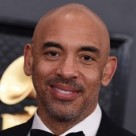
In an interview with Maria Sherman of the Associated Press, National Academy of Recording Arts and Sciences CEO and President Harvey Mason Jr. reflected on a "series of changes to the Grammy Awards" (administered by the Academy since 1959) "to better reflect an evolving music industry," including "protocols involving technological advancements in machine learning" that bar "[works] that contains no human authorship" from receiving the award. "Here's the super easy, headline statement: AI, or music that contains AI-created elements is absolutely eligible for entry and for consideration for Grammy nomination. Period." Mason said. "What’s not going to happen is we are not going to give a Grammy or Grammy nomination to the AI portion." Mason maintained that song containing a lead vocal derived from an "AI or voice modeling program" would be eligible in the program's songwriting categories but could not be considered for performance awards. "Conversely," he added, "if a song was sung by an actual human in the studio, and they did all the performing, but AI wrote the lyric or the track, the song would not be eligible in a composition or a songwriting category." He continued: "As long as the human is contributing in a more than de minimis amount, which to us means a meaningful way, they are and will always be considered for a nomination or a win. We don’t want to see technology replace human creativity. We want to make sure technology is enhancing, embellishing, or additive to human creativity. So that’s why we took this particular stand in this award cycle." Before establishing the guidelines, Academy representatives "engaged in extensive research, including holding tech summits," Sherman wrote. The new guidelines were unveiled days before Paul McCartney announced that "the last Beatles record" had been completed by using machine learning to "extract" John Lennon's voice from a heretofore unreleased solo demo. "We'll see what it turns out to be," Mason said of the song's potential eligibility. "But I would imagine from the early descriptions that I've heard there would be components of the creation that would be absolutely eligible." The next Grammy Awards ceremony will be held at Los Angeles' Crypto.com Arena on February 4, 2024.

Twitter has started blocking unregistered users

Twitter Appears to Block Access to Unregistered Users:


Users attempting to access Twitter without an account Friday found that they will "likely be met with the Twitter window that asks you to either sign in to the platform or create a new account, effectively blocking" users "from viewing tweets and user profiles or browsing through threads unless you're a registered Twitter user," according to Jess Weatherbed of The Verge. "Several members of The Verge team have been able to replicate the issue, and it appears to be affecting web access on both desktop and mobile devices," Weatherbed continued. "Prior to this change, Twitter allowed people limited access to the platform without an account — you could view public tweets and user profiles, for example, but couldn't like or leave comments. A window that prevented readers from viewing additional posts until they signed in also previously appeared after the viewer had scrolled past an undisclosed number of tweets, though that at least allowed some access to the platform. Now, regardless of how you try to access the website — be that the homepage or a direct link to a tweet or profile — you're immediately met with a sign-in prompt that completely obscures your view. It doesn't even tease the content with a swift redirect. You simply can't see anything." The social media platform has "yet to make a public announcement" codifying the change, with Weatherbed noting that such an announcement would "both contradict and support other actions that owner Elon Musk has taken in the past year [...] In 2022, Musk hired noted iPhone hacker George Hotz to fix its search feature and get rid of the login prompt that prevents unregistered users from browsing the website. Hotz resigned less than halfway through his 12-week internship with the company, claiming he 'didn’t think there was any real impact I could make there.'" However, in April, Twitter "eliminated the platform's search feature for unregistered users entirely." Weatherbed speculated that the change may signal that Twitter "is nudging visitors harder to become official users — and, by extension, potential Twitter Blue subscribers."

Google Violated Its Standards in Ad Deals, Research Finds

Researchers: Google Violated Internal Advertising Standards:


In a new report, brand analytics company Adalytics has alleged that Google "violated its promised standards when placing video ads on other websites" as often as 80% of the time, instead "placing ads" brokered via its Google Video Partners program "in small, muted, automatically-played videos off to the side of a page's main content [...] on sites that don’t meet Google's standards for monetization," Patience Haggin of The Wall Street Journal reported Tuesday. Google denied the allegations in a statement to the newspaper. "[The report] makes many claims that are inaccurate and doesn’t reflect how we keep advertisers safe," the technology company said. "As part of our brand safety efforts, we regularly remove ads from partner sites that violate our policies and we'll take any appropriate actions once the full report is shared with us." Although The Journal "independently observed invalid ad placements such as those the research identified," the newspaper "couldn't confirm the extent of the phenomenon." Other ad-buyers and engineers "vouched for the research findings," Haggin said. According to the report, "the major brands whose Google video-ad placements weren't in line with the promised standards were Johnson & Johnson, American Express, Samsung, Sephora, Macy's, Disney+ and The Wall Street Journal," while a number of governmental agencies (including Medicare, the U.S. Army and the Social Security Administration) also were affected. Google "sells ad placements on third-party sites as part of bundles that include ads on" its YouTube subsidiary itself but hasn't disclosed "how much revenue came from Google Video Partners," Haggin continued. "Brands and ad agencies often aren't aware that their ads have run on third-party sites. For every brand in Adalytics' sample, more than half the budget they spent on the bundles went to non-YouTube properties, the research found." A Google spokesperson said "the overwhelming majority of the video ads it sells are served on YouTube—not third-party sites [...] Advertisers can clearly see that their ads might run on third-party sites, and how much is spent there." Giovanni Sollazzo, founder, chairman and chief executive of digital-ad agency AIDEM, expressed disappointment in a conversation with The Journal. "I feel cheated," he said. "What I requested to buy was not what I got. This should entitle me to a refund for invalid traffic." Advertising "appeared on low-quality sites that trafficked in misinformation or 'clickbait' content, as well as those that appeared to publish pirated content, contrary to the promises of the Google Video Partners program," Haggin wrote. The Adalytics report "proves the lie in Google's assertion that it has made digital advertising better for all involved," said Sen. Mike Lee (R-Utah), who reviewed the research. "Advertisers and consumers will continue to suffer from Google’s rampant conflicts of interest and fraudulent conduct."

The “passive news consumer” is on the rise

Reuters Institute: 'Active Participators' Retreat in News:


Passive consumers "who use news but do not participate with it" now constitute a majority of U.S. news readers, with only 24% of consumers functioning as active participators "who post and comment about news," according to a Monday summary of the 2023 Reuters Institute Digital News Report written by researcher Kirsten Eddy for NiemanLab. "As the group of active participators — who make up much of what the public sees when it comes to news participation — continues to shrink, it also increasingly looks like the unrepresentative traditional news audience," Eddy added. "These participators are more likely to be men, higher educated, more politically partisan, and more interested in news. In a world with digital subscriptions, news organizations risk listening too much to this group and not enough to the silent majority of readers." Active news participation (which remains strong in African, Southeast Asian and Latin American markets) often correlates with social media use; more than a third of news consumers are active participators in Thailand and India, where social media continues to disseminate news to most readers, while only 11% of Germans and 6% of Japanese actively participate in markets where enduring brand loyalty continues to function as a key prerequisite for consumption. "Perhaps the nature of participation is simply changing," Eddy speculated. "Publishers continue to shut down online comments sections, often noting the difficulty of moderating discussions in these spaces and pushing audiences toward engagement on social media. Social media platforms like Meta, meanwhile, have steadily shifted resources — and users' interactions — away from news. Alongside these shifts have come broader changes in which platforms people, and particularly younger audiences, are using in general and for news. This includes the rise of less 'social' platforms like TikTok, which emphasize content broadcasted by creators over peer-to-peer interactions." A notable exception is the sharing of news via private messaging apps (as exemplified by WhatsApp and Telegram), a practice that continues to gain traction in several notable markets (including Southeast Asia, Latin America and Southern Europe). "Publishers should be aware of these trends and consider new ways to broaden and deepen engagement with a more passive or reactive majority," Eddy wrote. "Given the connection between users' perceptions of their news experiences and their willingness to actively participate in them, one means of building and connecting with audiences may be to invest in fostering healthy digital spaces."

Sheldon Harnick, ‘Fiddler on the Roof’ Lyricist, Dies at 99

Sheldon Harnick (1924-2023):


Lyricist-composer and 1960 Drama winner Sheldon Harnick died Friday at his home in Manhattan, according to spokesperson Sean Katz. He was 99. Best known for his collaboration with composer Jerry Bock (who shared the 1960 Drama Prize with Harnick and book writers Jerome Weidman & George Abbott for "Fiorello!", which charts longtime New York City Mayor Fiorello La Guardia's early ascent and vociferous opposition to the city's entrenched political machines), Harnick's lyrics "could be broadly funny, slyly satirical, lushly romantic or poignantly moving," wrote Robert Berkvist of The New York Times. "He gave voice to a broad range of characters, including starry-eyed young lovers, corrupt politicians, a quarreling Adam and Eve and, in 'Fiddler on the Roof,' struggling Jews in early-20th-century Russia." Although "Fiddler" was an epochal "phenomenon" that spawned a blockbuster 1971 Norman Jewison film adaptation and "became the longest-running musical in Broadway history, a record that stood for a decade," the Bock-Harnick collaboration collapsed amid a directorial dispute surrounding "The Rothschilds," a 1970 adaptation of "Frederic Morton’s biography of the Jewish family that rose from the ghetto to become a financial powerhouse," Berkvist added. In a 1990 interview, Harnick reflected on the schism. "Jerry felt that [original director Derek Goldby] had gotten a raw deal," Harnick said. "For a while, the feelings between us were very bad.” While they did not work on new material prior to Bock's 2010 death, a 1985 Connecticut revival of "Fiorello!" led to something of a rapprochement, and the team appeared with the equally august theatrical duo of Fred Ebb and John Kander at a 2004 joint announcement of the donation of their respective archives to the New York Public Library for the Performing Arts. Born to a dentist and homemaker in Chicago, Harnick attended local public schools (where he began writing music) and completed a wartime service obligation in the U.S. Army before graduating with a B.M. degree from the Northwestern University School of Music in 1949. While at Northwestern, Harnick befriended future singer and character actress Charlotte Rae, who encouraged him to move to New York and subsequently included one of his songs in her Village Vanguard revue act. This led to a formative meeting with lyricist and librettist Yip Harburg, who advised Harnick to focus on non-ballad material. Following his break with Bock, Harnick worked on myriad opera librettos (ranging from new translations of such canonical works as Bizet's "Carmen" to an adaptation of "The Phantom Tollbooth," the popular Norton Juster children's adventure novel) and on Broadway productions with such luminaries as Mary Rodgers and Michel Legrand. He is survived by his wife, a daughter, a son and four grandchildren.

Bookforum Is Returning, Months After Its Closure Was Mourned in the Literary World

Bookforum Returns Under Nation Agreement:


The defunct literary criticism magazine Bookforum will relaunch in August "with a new publishing partner: The Nation," Kate Dwyer of The New York Times reported Thursday. The new iteration "marks a return to form," said Bhaskar Sunkara, president of The Nation, who initiated negotiations in the spring. Under the terms of the agreement, Bookforum "will remain a quarterly print publication with the same branding and aesthetic, helmed by the staff at the time of its closure." Longtime contributors to the magazine "have signed on to write for the relaunch issue," Dwyer added. “I always knew that it was a fairly unique outlet, and one that paid attention to a lot of contemporary trends and competing publications in a way that older literary publications didn't," said Sunkara, who began reading the magazine in college as he prepared to found Jacobin magazine. "The economics of a relaunch seemed feasible, especially if it was supported by the infrastructure of an existing publication." Returning members of the Bookforum staff espoused confidence in the agreement. "They know how to run magazines," said Michael Miller, Bookforum's editor in chief. "Bhaskar himself has worked on a number of magazines, and The Nation has been around since 1865." Notable writers who have contributed to the magazine include 2011 Fiction winner Jennifer Egan, former Rolling Stone editor Greil Marcus and 2023 Criticism winner Andrea Long Chu. Although Bookforum was launched in 1994 as a quarterly supplement to Artforum (which was sold to Penske Media Corporation in tandem with Bookforum's closing), the revived Bookforum "will have to develop a much larger direct subscription base" to augment advertising sales, Sunkara said. "We need to stubbornly try to make these institutions sustainable on their own," he continued. "It's somewhat defeatist to just say that these entities can't be profitable, or that in a country of 330 million people — and in a much bigger language market — you can't find enough people to sustainably produce a quarterly print magazine."

ProPublica, lauded journalism nonprofit, is latest newsroom to unionize

ProPublica Staffers Announce Intent to Unionize:


Reporters at investigative nonprofit newsroom ProPublica "announced Wednesday they are unionizing, bringing an industry-wide wave of labor organizing to a somewhat unexpected corner of the media world," according to  Will Sommer and Lauren Kaori Gurley of The Washington Post. The announcement (which coincides with the news organization's 15th anniversary) "comes as its corporate peers have been grappling with layoffs and cutbacks that have stoked employee discontent," Sommers and Kaori Gurley added. "By comparison, ProPublica — a donor-supported nonprofit that counted more than $57 million in assets on its most recently available tax forms — has been comparatively insulated from the economic challenges of the industry." In a statement, ProPublica staffers said the proposed bargaining unit "is essential to preserving the best parts of working at ProPublica and ensuring our values do not waver regardless of leadership changes or turbulence within the industry." In a memo to staff, ProPublica President Robin Sparkman and Editor in Chief Stephen Engelberg (a former Pulitzer Prize Board co-chair) "acknowledged the notice it had received from the new union and that 'once the details are worked out, we plan to recognize the union.'" The executives also "noted that Sparkman told the staff two years ago that they are welcome to seek union representation if they wish" while also acknowledging the news organization's "long history of productive collaboration on core issues notably diversity, equity, inclusion and retention." The staff " said that they are unionizing to preserve the newsroom’s standards and values as it expands across the country, including the launch of a regional hub in the Pacific Northwest," Sommers and Kaori Gurley wrote. "They also want to establish guidelines around staffing levels and workloads on big investigative projects that often ramp up in the final months of the year — a time when many newsrooms are under pressure to finish projects to qualify for major journalism awards." (For example, the deadline for the Pulitzer Prizes in journalism generally falls on January 25.) Veteran ProPublica tax reporter Paul Kiel "said productivity crunches leading up to the publication of major investigations have been a concern among ProPublica reporters since the early days of the newsroom," with many colleagues working "insane hours October through December [...] Enough hours that burnout becomes a concern." Although "management has spoken directly to reporters about these issues," Kiel believes that a union contract "could outline clear expectations." He added: "I don't know many larger newsrooms that aren’t unionized at this point. The question is not so much, 'why unionize,' but 'why not?'" (ProPublica Chief of Correspondents Ginger Thompson is a member of the Pulitzer Prize Board.)

Outrage in Guatemala as crusading journalist given six-year prison term

Zamora Sentenced to Prison Term:


Venerable Guatamalan journalist José Rubén Zamora "has been sentenced to six years in prison for money laundering" by his country "in a case widely condemned as politically motivated," Nina Lakhani of the Associated Press reported Wednesday. The 66-year-old industrial engineer and founder of El Periódico "was convicted on Wednesday by a three-judge panel in Guatemala City, who ruled that there was 'no doubt' the outspoken critic of government corruption masterminded the laundering of almost $40,000 in 2022," Lakhani wrote. "The court absolved Zamora of blackmail and peddling influence charges." Zamora, who said he is "innocent" and will appeal, was immediately escorted back to Mariscal prison, which houses former President Otto Pérez Molina and "numerous other high-profile politicians and army officers convicted of corruption, drug trafficking and war crimes." He spends 23 hours a day in solitary confinement. "My wife left the country for the U.S. on Tuesday night, because we are worried that she could be the next target of this dictatorship," said Zamora. The now-defunct El Periodico cultivated an international reputation "for its investigative reporting exposing corruption, including alleged cases linked to the current president Alejandro Giammattei, whose justice system has targeted independent journalists, lawyers and human rights activists." Two former columnists and six former reporters "are under investigation for alleged obstruction of justice linked to their reporting of the case against Zamora," Lakhani continued. She added: "The money-laundering charge stems from Zamora receiving a donation from a businessman and friend to keep the newspaper running, rather than depositing the cash and cheques himself. The court rejected Zamora’s claim that the donor wanted to keep his support discreet, in order to avoid being targeted by Giammattei." Zamora faces additional criminal cases, including one centered around signature discrepancies on customs documents. A past recipient of the Maria Moors Cabot Prize from Columbia University and the International Press Freedom Award from the Committee to Protect Journalists, Zamora was named as one of the World Press Freedom Heroes of the 20th century by the International Press Institute in 2000.

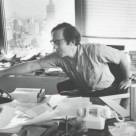
Robert Gottlieb, editor of literary heavyweights, dies at 92

Robert Gottlieb (1931-2023):


Writer and editor Robert Gottlieb died Wednesday at a hospital in New York, according to Michael S. Rosenwald of The Washington Post. He was 92. Knopf Doubleday announced the death but "did not provide a cause." Considered a "virtuoso in his field," Gottlieb worked on a disparate array of projects, running the gamut from bestselling novels by Anne Rice and Michael Crichton to a litany of Pulitzer-winning books, including Toni Morrison's "Beloved," Katharine Graham's "Personal History" and the voluminous output of two-time Biography Prize winner Robert A. Caro. Rosenwald added: "Though Gottlieb thought it was undignified for editors to seek or receive credit — 'Shut up, do the work,' he would say — the literary world viewed him as a towering virtuoso at his craft. In a 1987 column praising Gottlieb's stewardship of Knopf, one of publishing's gemstones, Post book critic Jonathan Yardley wrote that 'at least a half dozen people described him to me as a 'genius' — overstatement, no doubt, but perhaps just barely.'" He would liken editing to a "service job," often playing a crucial background role in the literary process. "Bob said to me, 'You can loosen, open up. Your writing doesn’t have to be so contained; it can be wider,'" Morrison recalled to The Paris Review in 1994. "The consequence of the remarks was that I did relax and begin to open up to possibilities. It was because I was able to open up to those possibilities that I began to think things like, What would happen if indeed I followed this strange notion or image or picture I had in my mind of this woman who had no navel." Although it had been intended as the first third of a long novel about the Black experience in the United States, Gottlieb enjoined Morrison to publish "Beloved" as a discrete work, instantiating a newfound prominence that would lead to her receiving the 1993 Nobel Prize for Literature. In contrast to his philosophical discussions with Morrison, his editing of Caro often consisted of "fights [...] at the sentence level"; according to Rosenwald: "Caro loved semicolons; Gottlieb hated them. Caro tended to repeat points he made 30 or 40 pages earlier to make sure they stuck with readers, which Gottlieb thought was annoying and insulting." Although their longtime association was eventually commemorated in the 2022 documentary "Turn Every Page" (directed by Gottlieb's daughter, Lizzie), both men would only acknowledge that "they had become something like friends" decades into their collaboration. Raised in the frayed affluence of Manhattan's Upper West Side amid the Great Depression and World War II, Gottlieb graduated from the East Side's Birch Wathen Lenox School in 1948 and Columbia University in 1952. After pursuing graduate work at Cambridge, he joined Simon & Schuster as a junior editor in 1955. An early discovery was Joseph Heller's bestselling "Catch-22" (1961), which presaged the black humor and encyclopedic verve of American literature in the long Sixties. In 1968, he joined Knopf (which he characterized as "the great literary house of the century"), remaining as editor-in-chief until 1987. That year, he became "editor of The New Yorker, replacing William Shawn in what became one of the city’s biggest media stories in decades." Rosenwald continued: "Newsstand sales were slowing amid criticism the magazine had become stale, but New Yorker writers were fervently devoted to Shawn and they threw a fit over his sacking. They sent a letter to Gottlieb begging him to not take the job. Gottlieb's tenure as New Yorker editor lasted five years. He had told the magazine’s owner, S.I. Newhouse, that he only wanted to be a curator. Seeking more radical changes, the owners turned to former Vanity Fair editor Tina Brown." Thereafter, he returned to Knopf as an editor at large. An accomplished author in his own right, Gottlieb was a frequent contributor to various journals and served as dance critic of The New York Observer. He "also wrote biographies of movie star Greta Garbo, theater actress Sarah Bernhardt and New York City Ballet co-founder George Balanchine." Gottlieb is survived by his wife, actor Maria Tucci, three children and twin grandsons.