The Washington Post, by Meg Greenfield
Winning Work
"At no point has he shown a keen or impressive grasp of the complexities of hard questions. Pedestrian, partisan, dogged — he has been the very model of a second-level party man. It is no accident that over his quarter-century of unremarkable service in the House, he has never been put forward for the Presidency..." So we spoke in this space a little over three years ago upon learning that Gerald Ford was about to ascend to the office of Vice President. We do not cite our respondent appraisal because we think it was on the money, but rather because we think it was not. Having been forced to replace his Vice President, and being in not-so-secure condition in office himself, Richard Nixon had just informed a waiting world that Gerald Ford was the one. Frankly, it did not occur to us that Gerald Ford was the right one.
But we were wrong; he was. The President who will leave office this week brought precisely the needed temperament, character and virtues to the high offices he has temporarily held. These qualities are regularly subsumed under the familiar general heading of “decency,” a word that does indeed fit the man. What is so revealing about the times in which we live — and the horrendous political circumstances surrounding Mr. Ford’s accession to office — is the vaguely condescending way in which this particular tribute is paid to him: Well, you have to admit he is a decent human being ... or ... Don’t get me wrong: Of course I think he’s a decent person ... and so on. Decency, in this context, becomes as an attribute something roughly comparable to good posture or punctuality. How odd that so few of us have been willing to acknowledge that decency in the White House can be regarded as a luxury or bonus or fringe benefit only at our peril.
It is central. And its absence was central to the sorrows this country endured in the years preceding Mr. Ford’s Presidency. In his first days and months, it was as if he had liberated Washington — from its personal fears and hostilities and suspicions, from the dark and squalid assumptions that people had come reflexively to make about one another and the way things "really" worked. God knows who was (and is) still listening in on whose line and who is plotting what gruesome revenge against what political foe. Our point is merely that Gerald Ford brought to the White House an open, unsinister and — yes — decent style of doing things that altered the life of the city and ultimately of the country.
We have found many of the President’s programs and positions (and lack of both in some cases) dismal news indeed. But that is yesterday’s laundry list. Our summing up of the Ford Presidency draws us only to the overriding legacy he leaves.
Will this city under the Carter Democrats be able to preserve that political and personal civility that Gerald Ford did so much, so unexpectedly, to revive? The Carter administration, more activist and energetic, we would guess, than its predecessor, faster-paced, more intellectually self-certain and combative, is almost by nature destined to put some of these homely but hard-won virtues at risk. We can only hope that the new administration will understand their indispensability. Mr. Ford has left it an incomparable gift in the detoxified political atmosphere of the capital and the institutions it is about temporarily to inherit.
The outgoing President has also done a great deal for the honor of his party, although you wouldn’t necessarily know it to listen to the samurai-like grunts and howls coming out of the struggle for party control. But Gerald Ford did indeed redeem the Nixon moral disaster. His two and a half years gave point and purpose and respectability to those innumerable straight-arrow Republicans who had come to work in Washington and who had been let down, in fact betrayed, by their own White House. And the exceptional quality of Mr. Ford’s own high-level appointments — John Paul Stevens, Edward Levi, William Coleman, to name just a few — went a long way to erase the memory of earlier indictment and disgrace.
We will leave it to others to tote up the pluses and minuses of the Ford administration in strict program and/or policy terms. We can frankly do without reviewing it ourselves. We think it is enough to point out that Gerald Ford had an all but impossible assignment — and that he did a hell of a job.
(Courtesy of The Washington Post.)
The UPI dispatch appeared in this paper last week, and we were transfixed by a single line in it. Idi Amin, it said, had established "one of the most brutal regimes ever witnessed..." So far so good, but then: "on a continent already noted for past cases of savagery." A continent already noted for past cases of savagery? By whom? We wondered. Surely not by anyone who had contemplated, let us say, European or Asian history — or even one or two things known to have gone on in the Americas in the past few hundred years.
We would not, of course, wish to dismiss the claim of any continent to this particular distinction — with the possible exception of Antarctica. But fair is fair, and it seems to us to be rankly unfair for UPI or anyone else to bestow savagery ratings on entire continents that they do not deserve. What, after all, does Africa have to put up against the ravages of the Crusades or the Thirty Years War or the Holocaust? To the best of our knowledge and belief, neither Attila nor Genghis Khan nor Joseph Stalin was an African, any more than Auschwitz or Gulag Archipelago was an African invention.
That black Africans have been known to be vicious to each other on a grand scale is not open to dispute. What is open to dispute is whether their depredations have somehow been distinctive in the sorry march of history. We think they have not come anywhere near such distinction, and that is the point to be kept in mind about the ineffable Idi Amin. He is dishonoring his continent, rather than honoring its traditions, in his attempt to win the savagery championship for this decade.
(Courtesy of The Washington Post.)
Do you remember the good old days of civil defense? The sinking of fallout shelters in suburban backyards? The helpful feature stories on how to decorate your shelter and make it an attractive, fun place? The gripping philosophical debate over whether it might not be both practical and justifiable to have a shotgun on hand to kill anyone who tried to intrude into your special space? Ah, those were the days. But don't despair — if your friendly House of Representatives has anything to do with it, they may come back. For Monday, the House, in its wisdom, authorized the administration to spend $44.8 million more on civil defense in fiscal 1978 than the Pentagon had even asked for. The total sum, $134.8 million, would amount to the nation's biggest civil-defense expenditure in well over a decade.
The brief debate on the House floor was wonderful. There is no other way to describe the manner in which the advocates of civil defense discussed — in Rep. G. William Whitehurst's words — the prospective effects of "the nuclear cookout, as sometimes it is called." The nuclear cookout? Well, no one exactly argued that nuclear war would be just one prolonged marshmallow roast, but it certainly was argued that nuclear war was much more manageable than a lot of nervous Nellies among us seem to think. Mr. Whitehurst himself cited a report prepared by the Boeing Aerospace Company, which cheerfully observed that "the day after the explosion, bridges into downtown Hiroshima were open to traffic, and electric service was restored in some areas." How about that, sports fans?
Naturally, Mr. Whitehurst and his like-minded House colleagues did not think that the Hiroshima model, encouraging as it was, was good enough. For which reason they support the extra funds for building fallout shelters. And according to testimony they took in committee and in which they have positively touching faith, it seems that such shelters can actually be of great help to our big cities when push comes to cookout. As Mr. Whitehurst put it: "We were told ... if we had an adequate shelter program for people to be able to walk to and within walking distance of about a day of our major urban areas that we could hold the casualties down."
The idea of a day's walking distance, Mr. Whitehurst explained, was based on "a three-day notice of nuclear attack." We were wondering whether there might be something in the bill that required the Russians to give three days' notice — and perhaps also file an environmental impact statement — before launching a nuclear attack. But it turned out that the three days had merely been borrowed by Mr. Whitehurst from the Russians, whose own civil defense, he said, was based on the three-day rule.
In fact the whole thing is a preposterous mirror-image play with the Russians whose own civil defense effort the members of the House are trying to ape. Never mind that that effort makes little sense and that its principal effect is merely to suggest to people in this country that the Soviets are planning nuclear war, a suggestion that logically leads to more weapons production over here. Defense Secretary Harold Brown has recently put it exactly right: "Should they continue to build up their civil defense activity, we would probably have to take some action to assure that our strategic forces were augmented or that their targeting was changed..." In other words, civil defense against nuclear war is a mugs' game; the offense can overcome it. With luck the members of the Senate will keep that in mind when the House handiwork comes before them.
(Courtesy of The Washington Post.)
That was good television and history when David Frost and Richard Nixon grappled for 90 minutes on Channel 5 Wednesday night. Mr. Nixon has revised his interpretation of the Watergate events that caused him to leave office in August of 1974. He no longer explains his own errant actions as the behavior of a President seeking to limit the "national security" damage to the nation and one who was abysmally ignorant of what had been going on. His emphasis now is on what he describes as an early attempt to limit the political damage of Watergate and on his own large-heartedness as a kind of tragic flaw. He could not help trying to act as a defense lawyer for Bob Haldeman and John Ehrlichman, he said. He had let his heart get the better of his head. He did not have the instincts of a "butcher."
In a way this line of defense is more tawdry than what had gone before. It puts it all on Mr. Nixon’s friends and associates whom he was allegedly trying to help, and it implies that had it not been for this excess of human decency Richard Nixon would not now be the lonely exile of San Clemente. That, of course, is exactly wrong. Mr. Nixon’s efforts to save himself were what got him in trouble. His closest aides had been acting in his name and, with his authority, presumably carrying out what they took to be his purposes. He tried to conceal his own involvement as well as theirs. He told a lot of lies. He finally got thrown out of office. This is what happened.
We do not mean to be too cut-and-dried about it. There were some very emotional moments in Wednesday night’s interview — Mr. Nixon’s account of the strain of firing Messrs. Haldeman and Ehrlichman and his recollection of his last evening in the White House, accompanied by the concession that he had "let the American people down." But these were pitiful moments, not ennobling ones. And perhaps the most pitiful moment of all was that in which the former President asserted that he would not "grovel," which he seemed to equate with admitting that he had knowingly done wrong. But Mr. Nixon has already "groveled" in this sense — although he doesn’t seem to recognize the fact — in accepting the pardon offered by Gerald Ford.
What the former President evidently does not understand is what people are asking of him now. As we perceive it, what is being asked is some acknowledgement on Mr. Nixon’s part that he in fact understands what happened to him — and not incidentally to the country — in the two-year Watergate drama. This he either will not or cannot give. He still sees twisting swords and fifth columns and partisan excesses as the engine of his downfall. And this is so, even though Mr. Nixon now says he has only himself to blame — because what he is blaming is some extravagance or compassion he purportedly felt for the sinners around him.
We don't for a moment suppose that the impulses of all those demanding more from Richard Nixon are pure or that there isn't a large dose of sanctimony and even sadism on the part of some who keep insisting that he must "confess." But we do think that most people who are unsatisfied with the Nixon post-presidential performance so far are asking something reasonable: evidence that Richard Nixon will accept the moral responsibility for his actions, not just the political responsibility. This, as he made plain Wednesday night, he is still unwilling to do.
(Courtesy of The Washington Post.)
If you wait long enough, someone will finally say something sensible. That's one of our cheerful premises, anyway, and it was borne out last Sunday on "Meet the Press" when Sen. Gary Hart of Colorado got into the raging argument over whether or not Jimmy Carter is a liberal. Merely to state the subject of the dispute, you will notice, is somehow to reveal, in all its majesty, the absolute foolishness of it. A lot of people seem to think this folly lies in trying to pin down the politically undefinable Mr. Carter. But Sen. Hart understands that this is only a small part of the problem. The tough part is trying to pin down — if, in fact, it really matters — the meaning of the term "liberal."
We will be frank to say that we don't see that it really matters. Any term that takes that much trouble and contention to define is not much of a standard to measure people by anyway. As Sen. Hart observed, what is really going on in the internal strugglings of the Democratic Party, which have engaged in the White House, the Congress, the labor unions and various other participants, is in large measure a generational dispute. Thus:
I think it's between those who have espoused the traditional New Deal approaches to social problems and economic problems, as opposed to those who are coming into public office in the Congress, in governorships, in state legislatures around the country who are attempting to question some of the premises upon which the Democratic Party has operated ... and by and large this country has operated for the last 30 or 40 years and I think that is where the division is coming. It does not fit in the traditional liberal-conservative categories.
Sen. Hart described one of the issues dividing the political generations as "whether government in fact can solve all the problems." Another is how government should spend — how much it should spend on what... and in what order of priority. There was a time, and not so long ago, either, when great numbers of people who identified themselves as liberals regarded it as vaguely illiberal even to entertain these questions. Government was assumed by them to be overwhelmingly benign in its social ministrations, and there was plenty of money for it to use to put society right, if only a right-wing Congress would let it.
If you want to make a useful division among Democrats and do a little relevant categorizing, you could do worse than worse than to make a distinction between those who do and those who don't recognize that there are limits to both the money available to spend and the wisdom with which the government can spend it. Is the intervention of government in peoples' lives, even for a benign purpose, always so benign in the way it works? Have we not learned that there can be a streak of ugly authoritarianism in even the most well-intentioned government programs? Can liberals afford to be as contemptuous as they traditionally have been of those who regard inflation as the principal public enemy? Surely, these are the questions that serious-minded Democrats are thinking about just now — not whether it is illiberal of Jimmy Carter to have delayed the prospective legislation until early in 1978.
Jimmy Carter tried to answer some of the criticisms in his speech to the United Auto Workers convention in Los Angeles yesterday. He listed an impeccable array of social and economic goals he hopes to meet. But he also refused to back off the central premise of his domestic effort so far. "We cannot afford to do everything," he said, by way of explaining the obvious — namely, that the country must make some "hard choices." On that, we think he is dead right. We also think it would be the final and complete ruination of liberalism — whatever that may mean any more — if its self-professed minions refused to face up to the difficult domestic choices and just kept on asking for it all.
(Courtesy of The Washington Post.)
It wasn't an energy-careless exercise of air conditioning that suddenly chilled our blood in Wednesday's awful heat. No, it was a little something our paper printed from the Los Angeles Times — a story about how the Carter administration is considering a plan to mobilize the nation's youth as energy inspectors. The key paragraph went like this:
Under the voluntary program, high school students or other youths would start outside a house, checking off energy problems on a government-prepared list. The volunteer would then knock on the door to tell the occupant his or her outside energy conservation score and offer to go through the inside of the house to complete the survey.
Among the things these young folks would be checking would be the pressure in your car's tires, the quality of your weather-proofing, and so forth.
We were not surprised to read that the White House was aware that "people could misconstrue [the program] to be like Hitler's youth." Actually, our own first impression hovered somewhere between the 13-year-old Chinese cultural revolutionaries of another age and that swell gang from "Lord of the Flies." Yes ... we understood that the whole thing was to be "voluntary." But when you get right down to it, what's so voluntary about having somebody else's kid poking around your premises, inspecting your weatherstripping and busying himself with your car tires — uninvited? Maybe it is an advance over the day when you would have had to reckon with the physical threat to young energy inspectors from gun-toting citizens who will suppose that hubcap stealing or something more felonious is actually what's afoot.
In defense of the plan, it has been pointed out that here and there around the country Boy Scouts are already at work on a similar survey, that nobody would be turned in for anything, that the information wouldn't be sent anywhere, that generally the program would only be a way of provoking energy-saving hints to grateful householders and that it would, in any event, also provide a a fine and bracing dose of moral uplift to the young people involved. In addition, Greg Schneiders, the White House man in charge, points out that reporting of the plan has skewed its intent, making a local voluntary thing sound like a national lockstep mobilization and given tentatively considered features of the plan an aspect of settled policy. For instance, he insists it is not fixed that the young energy-doctors would do their preliminary outdoor diagnosis without the consent of the would-be patient.
That is good news, and we can only hope that mild and moderating influences will prevail. For our part, however, we still don't see why communities can't be left alone to figure out their own individual ways helping householders to calculate the prudence of their energy expenditures. Not to put too fine a point on it, it occurs to us that there might even be jobs there — for youths and adults — who would be retained by a local jurisdiction to answer the questions of people who solicit help in taking the measure of their own energy use and misuse. Our problem with the concept of kid-inspectors going from door to door and passing judgment on whether the water levels in Mrs. McGillicuddy's toilet tanks are in the national interest. We are reassured to learn anyway that whatever the White House has in mind at the moment, it isn't quite that.
(Courtesy of The Washington Post.)
There is, in the first place, the Bakke case itself — a set of conflicting "facts" and competing principles that the Supreme Court has agreed to adjudicate. It concerns whether Allan Bakke, a white would-be medical student at the University of California at Davis was unconstitutionally denied a chance to compete for one of the places at that school "solely" because of his race. Mr. Bakke's charge is that Davis maintains a rigid racial quota for certain non-white students who are not required to meet the general standard for admission. Then, there is the intense controversy concerning political, legal, moral and cultural values that has sprung up around the Bakke case. Because the second of these — the public debate — has broken loose from the rather homely, humdrum and inconclusive record of the case, the two need to be discussed separately. That is a way of saying, among other things, that we do not believe the future of affirmative-action and other programs designed to remedy the effects of old and pervasive racial wrongs must hang in the balance of the Bakke case.
The point is worth insisting on. There is a difference between the kind of thinly disguised, uncomplicated one-note racial quota program Mr. Bakke alleged existed at Davis and the kind of affirmative-action program that is educationally and constitutionally sound and eminently worth fighting to save. Starkly put, it is the difference between simply setting aside a fixed number of places for people whose skin is a designated color, on the one hand, and, on the other, choosing an entire medical school class in such a way as to make race one factor — but not the only factor — in the creation of a desirable combination of students. Such a combination would reflect the school's perceived obligation to help overcome the effects of past racial discrimination against certain classes of Americans. It would also reflect the school's essential right to exercise discretion in deciding how background, character, interest, geographical distribution and the rest combine to make up a class of prospective doctors whose impact will be beneficial on one another and ultimately on the practice of medicine. But it would not reflect a simple throwing of the racial gear into automatic, as Mr. Bakke claims Davis has done. We believe the Court in fact could end up ruling either for or against Mr. Bakke in a way that would preserve this distinction.
Actually the trouble with the Bakke case as it was delivered to the Supreme Court's doorstep is a little more complicated than it may look at first glance. It's not just that the Davis medical school appears to have contrived a program, which, in its clumsy racialism, was a sitting duck for a legal attack such as Mr. Bakke made. In addition, and extremely important, the California Supreme Court, which ruled for Mr. Bakke, appears to have judged the Davis program by an excessively severe standard of what is allowed in racially sensitive programs, one not only bound to topple a program of this apparent vulnerability, but also at least capable of threatening some more soundly organized affirmative-action programs. So that would seem a crucial matter for certification by the Court. Finally, there is the fact that one must make overlavish use of the awkward locution "seems" in discussing all this because the factual record concerning what really went on and why has been put forward in very murky form. All this suggests to us, anyway, that there is good and sufficient reason for the Supreme Court to deal with the Bakke case in a less than sweeping way. So far as we have been able to judge, the university was in error in some respects — and so was the court that went beyond what was needed to rectify those errors.
It follows from this that we do not regard the Bakke case as an appropriate vehicle for the impassioned and often eloquent argument that is shaping up over the merit of programs designed to reverse the effects of this country's historical indulgence in racial discrimination and repression. But there are reasons besides the ambiguity of the available case record for being disturbed by the way the debate is taking form. What is at issue should not be construed as something pitting the interests of blacks against those of whites. Racial justice, which is at heart what it's all about, can hardly be considered as the exclusive concern of one or the other group. Soundly based affirmative-action programs are in the interest of white and nonwhite Americans. And so is the maintenance of a distinction between going forward with such programs and lapsing into lazy and dangerous, if momentarily convenient, programs that effectively build racial discrimination back into law.
This latter point has been rejected by many of our friends and colleagues in the name of liberalism. Increasingly they argue for a stark, across-the-board approach to racial preferences in our society, saying that these are the only means of getting the job done, that to take account of race as one of several factors in an affirmative-action program is simply a subterfuge and an hypocrisy and that any discrimination in favor of blacks or other minority racial and ethnic groups is by nature a benign and socially useful thing. We find the arguments condescending toward those who are meant to be their beneficiaries and also in some measure reckless. The tension between individual rights and group entitlements that is raised, however imperfectly, by the Bakke case is neither trivial nor secondary. We hope and expect the Court can resolve it in a way that will not do violence to the nation's commitment to take race into account to redress generations of racial wrongs or its commitment to preservation of the individual's right to be seen by the state as something more than a racial statistic. That is what the Bakke case is about. That is why the administration has been so tortured and torn in trying to contrive a brief that will express its dedication to all the most important values at issue. And that is why the case doesn't lend itself, in our judgment, to the kind of cheering section polemics it is now inspiring in such profusion.
(Courtesy of The Washington Post.)
Everybody collects something, and we collect sentences that appear in this newspaper. Certain sentences, that is — sentences that are a comment on the legal and social structure of our times and which we like to imagine a baffled, beleaguered posterity trying to figure out.
One of these leapt out of the Sunday paper at us. It contained this most arresting, even transfixing phrase: "Washington, the nation's premier black city, with a minority population of more than 70 percent..." A “minority" population of more than 70 percent? Well, yes. But that, as you might say, wasn't the half of it, since it presumably left the nation's capital with a "majority" population of less than 30 percent. To read that is to know you are in the presence not just of a collector's item but also and more importantly of the new (racial) math.
For once we are not blaming a journalistic colleague here: You can hardly blame the press for using a term that is the self-definition of choice of so many people and that, in addition, has found its way to the bureaucratic and official lexicon. We also concede that we know that the term "minority" in this context is a racial designation: that, to the extent that it retains any meaning at ail it refers to racial groups that add up to a minority of the total national population; and that what began as a fairly precise social and legal concept — i.e. the need to ensure the rights of a racial minority that had historically been repressed by the majority—has now slid into the official paperwork language of the day. It has become a kind of convenient circumlocution that seems to mean lets as it is used more.
But there are reasons for speaking in direct and accurate language. The news story that spoke of the District's 70 percent population, for instance, dealt with the difficulties blacks face in getting capital to start business. Surely the actual point about the discrimination involved is only revealed when you consider that an overwhelming majority population in the District accounts for ownership of only about a third of the District's businesses.
There is a legal reason for plain-speaking as well. Although for the bureaucracies "minority" may be just a term of convenience, when you rest your case for taking certain actions on the minority status of citizens who in fact represent a majority, you are courting trouble. Many of the most difficult racial issues of our time need to be worked out within local jurisdictions — school district, subdivision, city, county, state. It is not whimsical to suppose that if the minority condition of some citizens is made the justification and test for certain civil-rights programs and benefits, then sooner or later we will get a new and different though equally disruptive "Bakke case," one that seeks to hold the authorities to their literal word.
It may cost us a volume or two in collected imponderables from the dally paper, but the sacrifice would be well worth it: We think clarity, sense and sensible action all would be served if in racial matters, anyway, the bureaucracy and the rest of us would cut out the romance, say what we mean, try to describe reality more or less as it is — and go back to the old math.
(Courtesy of The Washington Post.)
It is hard to think of a worse running together of missions — one valid and the other grotesque — than that reflected in the new Civil Rights Commission report on women and minorities in television. Acting within the realm of its mandate, the commission addressed its attention to hiring and promotion practices within the television industry. Fair enough — had it only stopped there. But the commission went off the 32-foot board into another subject. It doesn’t like the way society is being portrayed in some of those TV "sitcoms" you have been ingesting along with your pretzels after a hard day’s work. And it wants the FCC to do something about them. If there weren’t more than four months to go in 1977, with all the rich possibility that suggests, we would award this the prize — hands down — for the worst idea of the year.
Mating use of some studies that others have made and its own notions about what is socially constructive for us to view — e.g., how Mary Tyler Moore should have behaved in relation to Mr. Grant, and Edith Bunker in relation-to Archie — the commission suggests two basic goals for TV drama programming. Neither is very good. And they are, in addition, contradictory. One is that there is some kind of palpable, statistical reality among us that it is the duty of the tube to “represent." For instance, citing a study: "The major departure from reality on the age dimension ... occurred in the portrayal of females. As noted above, nearly half of the non-white female characters were coded in the 21- to 30-year-old group. Although the difference between fact and fiction is not as great for white women, 21- to 30-year-old white female characters were also overrepresented on the television screen."
Is it accurate to say. then, that the Civil Rights Commission would like the TV dramatists faithfully, even slavishly to "represent" what the statistics tell us we are as a group? Well, not exactly. We can think of several statistical realities it clearly would just as leave not have depicted at all, because, you see, the second part of its charge to the programmers is to provide a little inspiration, a little uplift for minorities and women, a little agitprop you might say. The Commission believes it is a damned shame that so much housewifely contentment is shown in these TV dramas and that there just aren't enough minority and female characters shown running the world to represent... what? Well, not reality, but the commission's idea of what the reality ought to be.
Now, this sort of thing might go down all right in Bulgaria — in fact, does — but it is a preposterous suggestion to make in a country that deals in commissions, not commissars. Poor old Othello and Emma Bovary, what chance would they have under the Civil Rights Commission's guidance? Or, to get more homegrown about it, what is to be done with Huck Finn's deferential black companion, Jim, or — God have mercy on the soul of a fallen woman — Hester Prynne? Will Hester in fact have to win her scarlet letter henceforth as a quarterback for the University of Alabama?
We will be plain about it: We’re no crazier about racial, ethnic and sexual stereotypes than the commission is. And we think it is in fact a healthy note in a free and robust and hopelessly argumentative society such as this one, that within the political arena pressures are brought by various groups to assert their cultural claims. But there is surely no place for government meddling of this kind in the scriptwriting business or in the editing of television drama. Government's would be the dead hand. And if you have any doubt about that, just read the Civil Rights Commission report.
(Courtesy of The Washington Post.)
We think we are not just being hypersensitive when we say that there seems to be a pretty big difference these days between the way the press responds to a court decision upholding its First Amendment freedoms — and the way everyone else responds. Well, almost everyone else. The point is that what looks to us like a guarantee of the personal space required to do our job increasingly looks to others like a structure of special privileges, perks and exemptions that put the press beyond the reach of normal obligations and restraints. Another such decision — this one concerning libel — was readmitted by a Federal Appeals Court in New York on Monday. And on the theory that there may not be unanimity on this thing (there wasn't even unanimity on the bench, the decision being 2 to 1), we will try to explain why we think the ruling was useful and wise.
The libel suit had been brought against CBS by former Army Lieut. Col. Anthony Herbert; he was the subject of a CBS program called "The Selling of Colonel Herbert," which questioned the veracity of some of the charges the disaffected colonel had been making about the military with whom he served in Vietnam. The case itself still has not been settled. What has been settled, unless Col. Herbert decides to appeal the ruling to the Supreme Court, is this: It is off-limits to the plaintiff in a libel case to inquire into a journalist-defendant's thoughts and opinions at the time he was putting together the offending story in order to establish the journalist's motives. The lower court Judge had said Col. Herbert's attorneys could make such inquiries of a producer of "The Selling of Colonel Herbert." The Appeals Court said they could not.
The libel law, as it has been interpreted by the Supreme Court in its famous Sullivan decision and subsequent rulings, uses "malice" as the standard for determining liability. If you are a "public figure," as Col. Herbert is, and you wish to establish that you have been libeled, you must prove that the defendant knew that a damaging statement was false or had reckless disregard for the truth or falsity of the statement — such is failing to try to verify the defamatory material in the face of serious doubts about its truthfulness. You must establish, in other words, that the defendant was acting in bad faith.
Clearly, then, on grounds of practicality and efficiency, there is an argument to be made for questioning the journalist-defendant about his motives. But there are strong reasons for ruling out this kind of inquiry, and Judge Irving R. Kaufman, who wrote the Appeals Court’s decision, made them. Judge Kaufman observed that the producer in question had provided a great deal of material for the plaintiff to review and had "answered innumerable questions about what he knew, or had seen; whom he had interviewed; intimate details of his discussions with interviewees; and the form and frequency of his communications with sources." But he had drawn the line at "a small number of questions relating to his beliefs, opinions, intent and conclusions in preparing the program." In pronouncing this line to have been the correct one, Judge Kaufman said that a court ruling otherwise would have been "condoning judicial review of the editor's thought processes. Such an inquiry, which on its face would be virtually boundless, endangers a constitutionally protected realm, and unquestionably puts a freeze on the free interchange of ideas in the newsroom."
It is, we will readily grant, easier to be in favor of a free and untrammeled press than it is to love the journalists who constitute it. In fact, we suspect that a lot of people would find it easier to swallow Judge Kaufman's opinion if it didn't mean also swallowing a measure of freedom and ease for a noisy, pushy, growly press. But that, alas, has something to do with the democratic condition. Sometimes you have to make choices. And the New York Appeals Court made the right one.
(Courtesy of The Washington Post.)
Biography
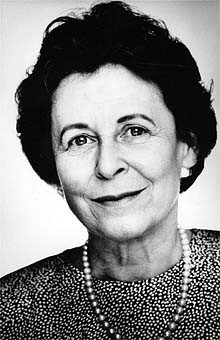
Post Editor, Newsweek Columnist Meg Greenfield Dies
By J.Y. Smith
Special to The Washington Post
Friday, May 14, 1999; Page A1
Meg Greenfield, 68, the Pulitzer Prize-winning editor of the editorial page of The Washington Post and a columnist for Newsweek magazine, died of cancer yesterday at her home in Washington.
An astute and principled observer, Greenfield spent her professional life writing about the events that shaped the second half of the 20th century. She brought to the task a rigorous intellect, a broad insight into the human condition and a conviction that life is not as simple as one would like. She distrusted shortcuts and the idea that it is always possible to reconcile differing points of view. In her world, there were losers as well as winners.
Most of all, Greenfield loved irony -- the disjunction between reality and appearance in this or that bit of the day's news. Nothing pleased her more than pointing out the difference between what actually happened or was proposed in a given situation and the spin with which one interested party or another might describe it. She conveyed her findings to readers with gusto and a fine eye for detail and character.
For more than 30 years, Greenfield helped shape The Post's views on issues ranging from war and peace to home rule for the District of Columbia and the proclivity of some drivers to run red lights. Katharine Graham, a former chairman of the board of The Washington Post Co. and one of Greenfield's closest friends, described her as "independent and uninfluenced by trends or molds. Her judgment is very dispassionate."
Topics that particularly interested Greenfield included nuclear strategy, military preparedness, politics and civil rights.
In a statement issued at the White House, President Clinton said, "Hillary and I were deeply saddened to learn of" her death. "In her work for The Washington Post and Newsweek," the president said, "Meg perfected the art of the newspaper column. Her essays were invariably tightly reasoned, forcefully stated and deeply felt. She called on those who work in government to pursue far-sighted public policy and bipartisan solutions. Her voice of eloquence and reason will be sorely missed."
Although she played one of the defining roles in the Washington drama in which the protagonists are the government and the media, Greenfield was an intensely private person. She avoided the television appearances and interviews by which many of her colleagues were known and limited herself to perhaps three appearances a year, usually in university settings. She disliked talking about herself and believed her job was to understand and record the news, not make it.
A Perfectionist Editor
Greenfield joined The Post as an editorial writer in 1968 and was named deputy editor of the editorial page in 1969. In 1978, she won the Pulitzer Prize for editorial writing for pieces about international affairs, civil rights and the press. She became editor of the editorial page in 1979.
In 1974, she began a biweekly column in Newsweek, which is owned by The Washington Post Co. It dealt primarily with Washington life, a subject that, "contrary to widespread belief," she explained, "does not exclude everything human."
Her work was full of the context and underlying texture of events. She was interested in precedent as well as where an issue would go next. She had a knack for finding the nub of complicated situations. She loved argument and continued a tradition under which Post editorials avoided hortatory calls to action in favor of making points by marshaling facts.
The Post's editorial board represents the publisher, Donald E. Graham, in matters of opinion. It is entirely separate from the news department, whose function is reporting on events rather than commenting on them. In practice, the distinction is sometimes blurred, but The Post's view is that readers should be able to tell at a glance whether they are reading fact or opinion. To this end, the news and editorial staffs at the newspaper are organized into entirely separate hierarchies. Greenfield dominated the editorial function in the same way that Leonard Downie Jr., the executive editor, or Benjamin C. Bradlee, his predecessor, have dominated the news side.
She described the editorial board as a collective tending to middle age and having "the sensibility of 1950s liberals." By that, she meant it was generally conservative on foreign policy and national defense and generally liberal on social issues. She noted that liberals frequently said the paper was too conservative while conservatives at one time called it an arm of the Communist Party.
One of Greenfield's most important tasks took place entirely out of public view. This was presiding over the daily meeting at which the next day's editorials are thrashed out. A small but commanding figure (she was 5-foot-1) at the head of a long table, she was gracious, witty, skeptical and given to the Socratic model of analysis by question. Although she said the process was give-and-take among "intelligent and forgiving friends," it was not really democratic.
She always had the final word.
"People ask questions that tell me they presume something much more exotic, and often sinister, than it is," she told an interviewer. "I don't think it's sinister at all. We try to keep -- without much success -- a certain amount of discretion, because . . . I don't know, Washington being Washington . . . you hear, 'Well, they said this, but the only reason they said this was that she hates that one and the other hates this, and this one lost the argument and the other one wept,' and so on. And all this stuff is almost invariably completely wrong."
The board's decisions were confidential and sometimes, as in the case of endorsing presidential or other political candidates, were guarded with great care until they were published.
Besides editorials, Greenfield was responsible for the letters to the editor; the op-ed page; the "Free for All" page on Saturdays, which carries letters from readers; and the "Close to Home" page on Sundays, which carries longer local pieces by readers.
As her staff could attest, she was a perfectionist and a ferociously hard worker. Nothing got on her pages without her approval. When she traveled, she would have material faxed or read to her over the telephone. She once called in changes from Saudi Arabia. The only exception to her sway was Herblock, the cartoonist, who is regarded at The Post as a kind of force of nature. He reports to no one.
Greenfield was always on the lookout for interesting new writers. Among those she brought to the op-ed page were the columnists George Will, whom she encouraged to abandon academia for a career in journalism, and Charles Krauthammer, a psychiatrist turned commentator.
Will recalled in a column how he had once telephoned Greenfield to say he couldn't get to the matters of state he usually wrote about because he had to baby-sit. She told him to write about what it was like to stay home from work and care for a child. The resulting piece drew a wide response from readers.
The Power of the Pen
Although the influence of Post editorials is hard to gauge at any given time, it has been a factor in some local elections. Local politics also illustrate the editorial board's willingness to change its mind about candidates and issues.
In 1978, for example, The Post backed Marion Barry, a council member and former civil rights leader, for mayor over the incumbent, Walter E. Washington, who had previously had the paper's support. The endorsement followed meetings between the editorial board and each candidate and a review of records, positions, qualifications and other material. Barry won handily.
The Post also endorsed Barry in 1982 and 1986 with decreasing levels of enthusiasm. By 1988, the editorial page was deploring his "propensity for scandal" and "huge capacity for self-indulgence," characteristics which it said tarnished "the accomplishments of those serious government workers and political appointees who have labored to make the city work."
In 1990, Barry was convicted of a misdemeanor drug violation and sentenced to six months in federal prison. In that year, The Post gave its mayoral endorsement to Sharon Pratt Dixon (she later became Sharon Pratt Kelly), a power company executive who was a newcomer to politics, and she won. Four years later, the paper backed Carol Schwartz, a Republican, in the mayor's race. She lost to Barry, who returned to the mayor's office that year. Barry had been elected to the D.C. Council in 1992.
Greenfield described the extent of The Post's influence in these terms:
"What we tend to notice here is the great number of wise suggestions we make that are rejected at the polls, and in the agencies, and in the U.S. Congress, and in the District school board, and if there's someplace I've left out, remind me -- so that we don't feel the Republic or the environs are in any terrific danger of being [controlled] by the Washington Post editorial page. Much as we try."
On the other hand, she said, "this is a town where people like to say to you, 'I never read editorials,' and then complain in minute detail about one that was in yesterday. This is a town where opinions are in conflict, at war in various ways."
The hazard of editorial writing, she once wrote, is complacency.
"There is a little Mussolini in every editorial writer," she said. "Pompous, meddlesome, pretentious, a figure of fun to everyone but himself . . . issuing grandiose orders that have no effect on anything at all . . . to which an ungrateful nation will reply, 'Oh, knock it off.' "
Early Journalism
Greenfield was born in Seattle on Dec. 27, 1930. Her parents were Lewis James Greenfield and Lorraine Nathan Greenfield. Her father ran an antique furniture business. Her mother died when she was 12. She majored in English at Smith College, where she was elected to Phi Beta Kappa and graduated summa cum laude in 1952. She then spent a year at Cambridge University studying the poetry of William Blake on a Fulbright Scholarship.
In the 1956 presidential election, she was director of research for the New York committee of Adlai E. Stevenson, the Democratic candidate. The following year, she joined the Reporter, a magazine of political commentary. She was assigned to its Washington bureau in 1961, and in 1965 she was named Washington editor. She stayed in that job until the Reporter ceased publication in 1968 and The Post hired her.
Making her way in a male-dominated industry was largely a matter of "accidents and non-decisions," she said. She described herself as a wobbly spear-carrier in the feminist march. "I was an English major who couldn't decide what to do," she told an interviewer. "I wasn't trying to strike a blow for sisterhood." Although she supported "what's serious about the [feminist] movement," she resisted suggestions that there is a woman's perspective on general issues.
"For example," she told Shop Talk, the Post employees' publication, "the women in the House of Representatives reflect the whole political spectrum, and my own opinion is often at variance with the female politicians."
Greenfield was equally wary of political correctness. She detested the term "Ms." and preferred to be called Miss Greenfield. She once gave an address in Seattle decrying speech codes and calling on her audience to "fight like tigers against government attempts to substitute its judgment for ours." She added, however, that she regretted opposing efforts in Maryland to outlaw the word "fatso." (She worried about her weight.)
Nothing disturbed her more than suggestions that The Post was open to the blandishments of Washington's vast and well-heeled public relations industry. In 1982, she sent a memo, which was later widely quoted outside The Post, to Bradlee, the executive editor, complaining that PR firms "seem to be promising, among other promises, that they can get The Post to 'help' " their clients.
"The reason for saying no to these wolves is plain and very strong," she continued. "Why should we be in their goddam memo traffic as exploitable or exploited 'resources'? Why should we be in their campaign plans as something 'deliverable' by their various agents who can 'reach' us?"
Her solution was to proclaim what she called "the irrational Greenfield rule." This stated that the editorial staff would not accept any manuscript or interview request that came from a "flack firm." It proved unworkable and soon lapsed.
Ethics and Responsibility
Over the years, Greenfield frequently made working trips with Katharine Graham, and in the course of their travels, they had meetings with a number of world leaders. In 1988, with other Post and Newsweek staff members, Greenfield and Graham interviewed former Soviet President Mikhail Gorbachev in Moscow.
In 1986, Greenfield published a piece describing her observation that humdrum, ordinary life goes on even under extremely repressive regimes. "You don't encounter absolute rule," she wrote, "and it is the fault of a kind of Achtung delusion that you even expect it. For nobody and no group, not even the driven, arrogant Chinese government, can entirely control a nation's life."
Some of Greenfield's most powerful writing concerned ethics and how people respond to life's various imperatives. This was the subject of her first Newsweek column, which dealt with the disgrace of Spiro T. Agnew. The Maryland governor, he became vice president under Richard M. Nixon and a leading administration spokesman against all forms of wrongdoing. He resigned from office after an extensive federal investigation into allegations of bribery and extortion.
The question Greenfield raised was whether he and his like ever were aware of their own duplicity and hypocrisy. "Was it like being a double agent?" she asked. "Do you offer yourself a great crooked wink in the mirror every morning?
"I think not. My speculation is that Mr. Agnew and the other lapsed preachers of our public life didn't make the connection -- didn't make the connection between their own crimes and those committed by other, 'lesser' people."
In a column in 1989, she wondered whether the decline of civility and the growing number of false and unproved accusations in politics weren't dulling the nation's ability to react to real scandal.
"All day long around here, we . . . go around implying that the other fellow is lying, trimming, gouging, feathering his nest, murdering the innocent and otherwise violating everything that upright people hold dear. The effect of this constant play is that we lose the ability to recognize a genuine moral dereliction when we see one."
In a 1998 column, she wrote about public and private behavior and President Clinton's sexual relationship with a White House intern, Monica S. Lewinsky.
"What is real," she said, "and what we have been trying so hard to avoid all these months, is the one overarching question that we keep raising in our arguments and then fleeing because it is so complex and hard: What is the proper relationship of a public figure's personal behavior and private life to his conduct of public business?
"It is a very large part of politics to try to get these relationships right, to rationalize them in a human and practical way to the extent we can -- to know where the lines should be drawn and to draw them. People say we should do this for our children. We should do this for ourselves, for our own self-respect."
At the very least, she said, Clinton should be forthright in taking responsibility for his actions.
In private life, Greenfield had a wide acquaintance in Washington and elsewhere. She loved parties. She was responsible for introducing Warren E. Buffett, the noted investor, to Bill Gates, the founder and head of Microsoft Corp. Buffett was a guest at the house she built on Bainbridge Island near Seattle, and she took him to a party given by Gates's mother, an old friend.
Greenfield described herself as a "passionate, failed gardener." She was a former volunteer at St. Ann's Infant Home in Hyattsville. She swam at Georgetown University and studied Latin for fun. Sometimes she and Katharine Graham would sneak out of the office and go to a movie.
"I read, I fall asleep," she told the Washington Journalism Review. "I realize as I read the newspaper that I lead a really dull life. I gotta tell you I just read in The Washingtonian about a book that's coming out that says Mamie Eisenhower and Buster Keaton were having an affair. These things always make me think, God, you know, I just thought everybody went home and read magazines."
Greenfield was a past co-chair of the Pulitzer Prize board, and she was a member of the American Society of Newspaper Editors. She held honorary degrees from Smith College, Williams College, Georgetown University, Wesleyan University and Princeton University.
She leaves no immediate survivors.
© Copyright 1999 The Washington Post Company