Five Nonfiction and Biography Books to Read This Summer
In the third installment of an occasional series, discover essential beach reading from Pulitzer-winning writers, biographers and scientists.
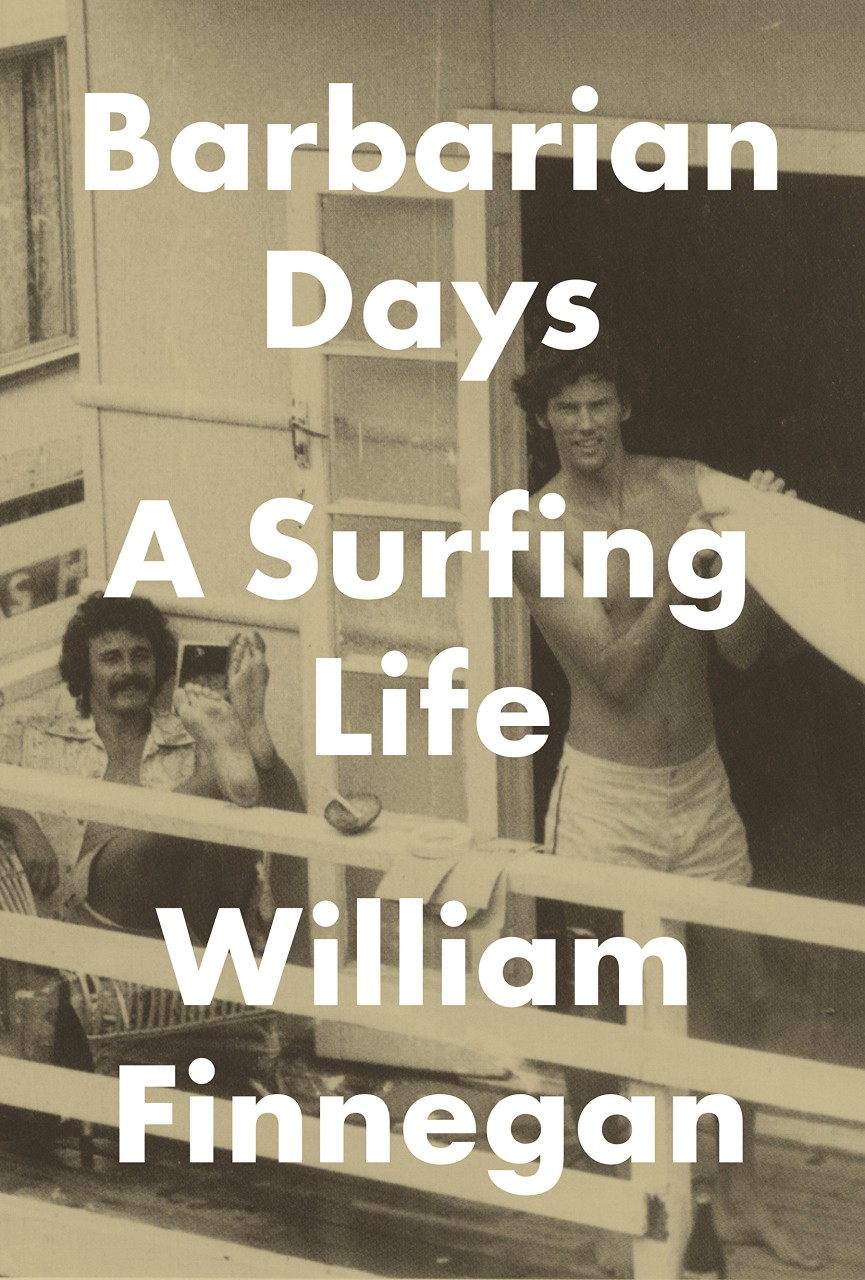
"Barbarian Days" by William Finnegan (Penguin Random House)
Summer brings opportunities to discover new books and revisit favorite literary works, particularly in the vast realm of Pulitzer-winning nonfiction and biography. As the season progresses, the Pulitzers are highlighting a range of Prize-winning books and dramas primed for your beach blanket or e-reader queue. We welcome recommendations for further installments at [email protected] or on our Twitter, Facebook and Instagram pages. Happy reading!
1.
"Stilwell and the American Experience in China, 1911-1945" by Barbara W. Tuchman
Perhaps the most iconoclastic flag officer to serve in World War II, Joseph Stilwell's battlefield intuition and self-effacing informality were offset by his lack of political acumen. In the years before the war, he earned the contrasting nicknames of "Uncle Joe" and "Vinegar Joe." One of the few American military officers to garner significant overseas experience as a "China hand" during the interwar years, Stilwell was reassigned to the China-Burma-India Theater from the lead role in the North African invasion by President Roosevelt (acting on the advice of friend General George C. Marshall) in 1942. Unable to assume full operational control of the theater because of political considerations, including Britain's desire to maintain its colonial interests and the military billet retained by Chinese leader Chiang Kai-shek, he faltered. While "The Hump" (a key Himalayan air supply route) was maintained and the Allies reclaimed Burma in July 1945 (with support from early special operations units, including Merrill's Marauders), relations between Stilwell and Chiang remained desultory at best, with the latter repudiating the former's desire to reorganize the Nationalist government military, potentially incorporating rival Communist forces under the leadership of Mao Zedong. After Roosevelt enjoined Chiang to yield control to Stilwell, he was recalled in October 1944; nevertheless, he retained the respect and friendship of many of his contemporaries, most notably Douglas MacArthur. Stilwell succumbed to a heart attack at what was due to be his last command — the Presidio of San Francisco — on October 12, 1946. An early popular historian and frequent Pulitzer juror, Tuchman's book is a riveting account of an underexplored milieu that played a defining role in shaping postwar history and contemporary affairs. In the years to come, Chiang's friendships with Stilwell rivals Claire Chennault and Albert Wedemeyer played an instrumental role in cementing the alliance between his regime (exiled to Taiwan after the Communist ascendancy of 1949) and the American right, recently explored by 2018 Biography finalist John Farrell in his life of Richard Nixon. However, fans of political dramas will find much to mine in both Tuchman's evocative style and the dizzying intersectionality of the theater. "He made the maximum effort because his temperament permitted no less: he never slackened and he never gave up," Tuchman writes. "Yet the mission failed in its ultimate purpose because the goal was unachievable."
2.
"American Prometheus: The Triumph and Tragedy of J. Robert Oppenheimer" by Kai Bird and Martin J. Sherwood
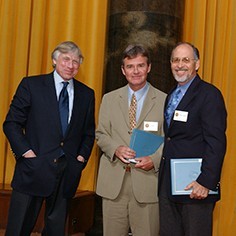
More than 50 years after his death, Robert Oppenheimer remains one of the most enigmatic figures in American history. A multilingual, Upper West Side-reared polymat, he was admitted to graduate study in physics as a freshman at Harvard, "Oppie" (derived from his nickname of "Opje" at the University of Leiden, where he lectured in Dutch). A tendency toward mathematical prolixity, a lack of interest in publishing and a cult of personality placed the theoretical physicist on a collision course for the Los Alamos directorship that would define his career — and the atomic bomb that would be tested at Trinity on July 16, 1945. Almost immediately remorseful following the detonations at Hiroshima and Nagasaki, Oppenheimer worked diligently to steer the course of atomic development over the next decade. Amid the post-Rosenberg Red Scare, however, his prewar leftist political associations and profligate personal life came to light, resulting in the revocation of his security clearance days before its expiration in 1954. Working from decades of research and interviews conducted by co-author Martin J. Sherwin, Oppenheimer emerges as a man defined by his curiosity and and willingness to take risks. Whether it was learning Sanskrit for its own sake, attaining political consciousness in the aftermath of a Great Depression, or riding horses in the summer on his New Mexico ranch — to list but a handful of his more benign pursuits — Oppenheimer was constantly searching for new terrain. The illuminative nature of his quest radiated explosively through his personal relationships. Unwilling to conform to the era's cultural standards, his wife, Kitty, was mired by destructive alcoholic binges in her later years. His relationship with his brother, experimental physicist Frank Oppenheimer, vacillated as he retreated to Colorado at the height of the Red Scare. And his schismatic, "frenemy"-like interactions with fellow Los Alamos veteran Edward Teller provided the impetus for the clearance revocation. "He was," the authors conclude, "an immensely human figure, as talented as he was complex, at once brilliant and naïve, a passionate advocate for social justice and a tireless government adviser whose commitment to harnessing a runaway nuclear arms race earned him powerful bureaucratic enemies." In "American Prometheus," a biography to be savored over long afternoons, the wonder and frailty of life unfurl with the same ardor.
3.
"Barbarian Days" by William Finnegan
Best known for reportage on the links between racism, politics, and poverty in Africa and Latin America, William Finnegan's "Barbarian Days" is an ode to surfing — a singular pastime that tied the disparate threads of his life together. From eking out his undergraduate degree at the University of California, Santa Cruz (where two of his girlfriends were involved in the sport) to running off to Malibu as an M.F.A. student at the University of Montana to coastline adventures in Indonesia, the "magnificent" waves were always there to undergird his life. "Frustration is a big part of surfing," he concedes, however. "It's the part we all tend to forget — stupid sessions, waves missed, waves blown, endless-seeming lulls." Reared amid the breathtaking vistas of California and Maui (where he briefly worked at an offshoot of Los Angeles' venerable Either/Or Bookstore), Finnegan finds solace as a successful middle-aged writer in the perennially maligned waves of the New York coastline, best experienced in advance of nor'easters amid the dead of winter: "I was in the rotation, permanently on call, dropping everything when the planets (and the buoys) lined up, going alone half the time in borrowed cars." There is a meditative component to surfing, and some of the best writing in "Barbarian Days" concerns Finnegan's spirit guides. In John Selya, the surfer-magus who introduces the writer to the New York scene in earnest, we meet an indomitable force and "old-fashioned craftsman" who "joyfully surfs junk waves that I wouldn't consider leaving my desk for," improving his skills at an age where most throw in the proverbial towel. In an era where nonconformity and the circuitous path are often eyed with circumspection, "Barbarian Days" is a reminder that good work is often conducted under improbable circumstances.
4.
"The Soul of a New Machine" by Tracy Kidder
While San Francisco Bay Area is generally considered America's crucible of tech innovation, hackers with longer memories will recall that the industry came of age in the microcomputer firms of Greater Boston's Route 128. Driven by the presence of the Massachusetts Institute of Technology and the federal government's MITRE Labs, dozens of companies proliferated following the runaway success of Digital Equipment Corporation in the 1960s. Catering primarily to the interests of institutional clients, these companies were not interested in the networking potentialities of the Bay Area scene. What they did offer was the firepower of hardware — and no company better encapsulated the epoch than the Westborough, Mass.-based Data General. Known for its Madison Avenue-style advertising, intransigent corporate identity and hard-line sales quotas, DG emerged from Digital as its main Fortune 500 competitor in the early 1970s before losing much of its market share by the mid-1980s due to mismanagement. On the surface, Tracy Kidder's Prize-winning opus is a look at the gestation of the company's 32-bit "super-mini" MV/8000, developed in secrecy due to a corporate turf war at the turn of the decade by a team led by engineer Tom West. As the action unfolds, readers realize they are privy to the last gasps of a dying era, where the secrecy-driven "mushroom theory of management" and attendant profit margins have subordinated large-scale innovation. Although West draws upon an entrepreneurial spirit and employs devoted undergraduates as programmers, the writing is on the wall. "In many cases, a small and daily growing computer company did not fall on hard times because people suddenly stopped wanting to buy its products," Kidder writes. "On the contrary, a company was more likely to asphyxiate on its own success." And while the MV/8000 would enjoy a brief vogue, the personal computer would begin to render the minicomputer obsolete within a matter of months of the book's publication. A fun, provocative read that will appeal to fans of 1993 finalist Walter Isaccson's biography of Steve Jobs, Kidder's book also resonates with the problems currently afflicting the tech industry, from the gendered biases of male engineers to the profit-driven eschewal of the paradigm shift.
5.
"The Dragons of Eden" by Carl Sagan
Once known for his eccentric ruminations on extraterrestrial life, by the late 1970s astrophysicist Carl Sagan was arguably the most famous scientist in the United States, as likely to be found on Johnny Carson and Dick Cavett's talk shows as in the classroom or observatory. However, the Age of Aquarius-era occult revival and the concomitant UFO phenomenon were unsettling to a rigorous mind trained at the University of Chicago. Beginning in the early 1970s, Sagan spent a good chunk of his time writing essays for popular journals that debunked the unwieldy claims of pseudoscientists such as Freudian "catastrophist" Immanuel Velikovsky and advocated an evidentiary, radio-based model in the search for extraterrestrial intelligence. "The Dragons of Eden," which biographer Keay Davidson characterized as a "crazy salad of ideas about myths, dreams and evolution," begins with a reiteration of his belief in neurophysiology and the functionalist theory of mind. Sagan explores the psychoanalytic theories of Jung and Freud as they pertain to humans' most visceral and intuitive fears. As he posits: "Why should we have two different, accurate and complementary modes of thinking" — rationality and intuition — "that are so poorly integrated with one another?" For Sagan, the answer remains elusive. In fact, Sagan himself soon would return to safer ground despite his Pulitzer and favorable reviews from John Updike and others. Of the material covered in "Dragons," only the "cosmic calendar" (a teaching mnemonic that he employed to convey the history of the universe) would appear in "Cosmos," the 1980 book and PBS miniseries that cemented his legacy. Essential for those who enjoy a little bit of popular science on the beach, "The Dragons of Eden" offers many potential solutions to the enduring mystery of humankind.