Five Fiction Winners to Read This Women's History Month
These Pulitzer winners defied convention — and remain essential reading to this day.
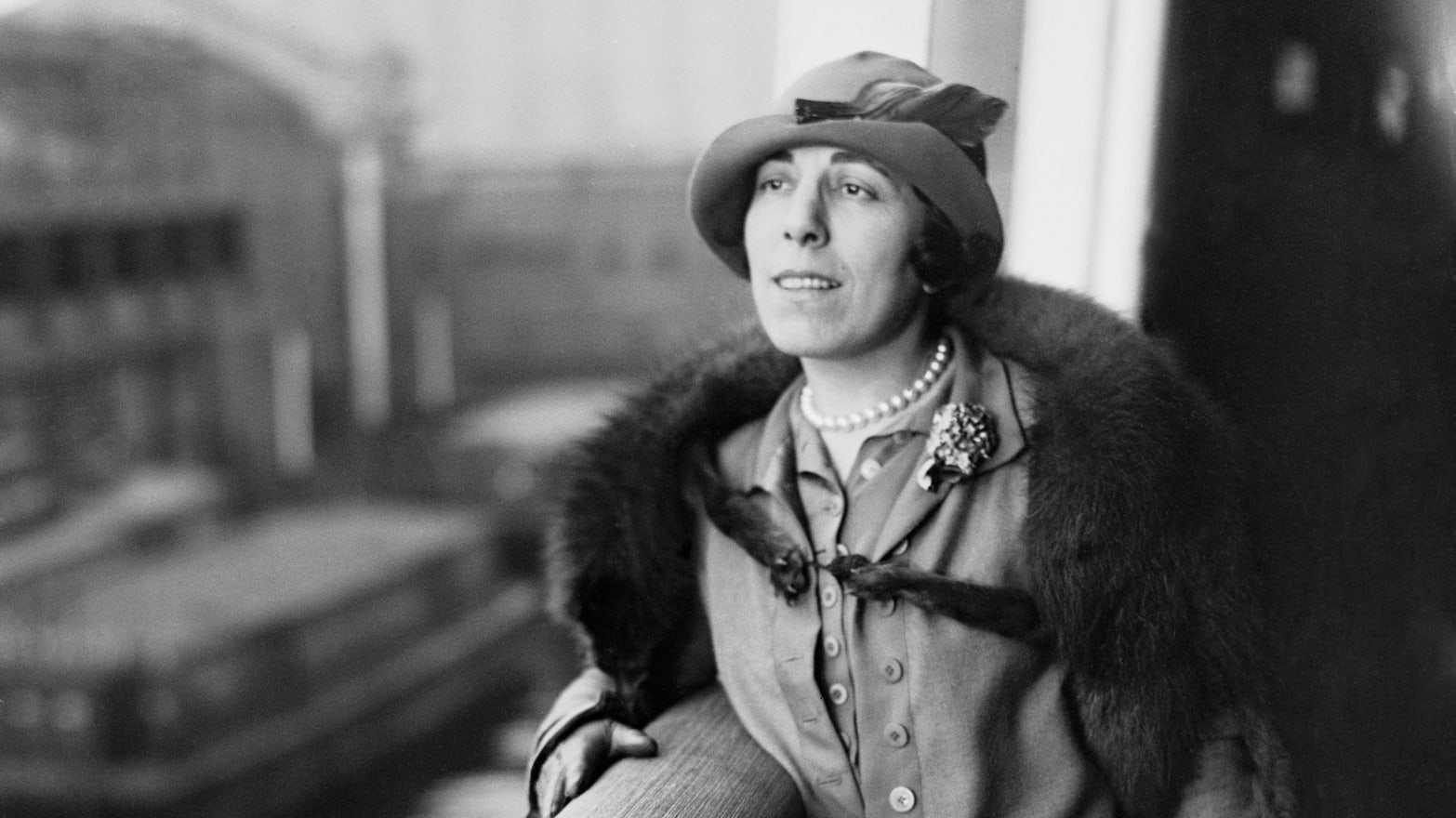
Edna Ferber (File)
For billions around the world, this Women's History Month has been subsumed by the COVID-19 pandemic. Yet throughout the Pulitzer Prizes' history, female writers have used their art to imagine a brighter future. For those seeking solace in these times, revisit the following five Fiction winners.
1.
"One of Ours" by Willa Cather
Cather's breakthrough novel is a semi-autobiographical chronicle of Claude Wheeler, a Nebraskan farmer who eschews a promising university stint to return to the family business when his father initiates an expansion. Following an unhappy marriage, he finds momentary salvation — and virulent scourges — as an Army enlistee in the troopships of World War I. Although a jury chaired by eminent Columbia literary scholar Jefferson B. Fletcher recommended the book "without enthusiasm," citing the "desire that [an] award should be made each year," Cather would remain a leading figure in American letters for the remainder of her career; her next novel, "A Lost Lady" (1923), was cited by F. Scott Fitzgerald as a key influence on "The Great Gatsby."
2.
"The Able McLaughlins" by Margaret Wilson
The winner of the inaugural Harper Prize (for the best novel by an "unnoticed" writer), Margaret Wilson's "The Able McLaughlins" is a cultural study of Scottish Presbyterians on the Civil War-era Iowa frontier. As returning veteran Wully McLaughlin attempts to defend the honor of longtime love Christie McNair against an inimical rapist, McNair's stepmother Barbara gradually acclimates to the "pig's sty" of pioneer life. Recommended in an analogous manner to Cather's work by another Fletcher-helmed jury, Wilson would publish seven more novels, a nonfiction treatise on prison reform (her husband, Oxford don George Douglas Turner, would later serve as warden of Dartmoor Prison) and a young adult book before abandoning her literary career in 1939.
3.
"So Big" by Edna Ferber
Subordinated in the cultural consciousness by Ferber's later works (including "Show Boat," "Cimarron" and "Giant," all of which were adapted into major films or Broadway musicals), the Pulitzer-winning "So Big" was a touchstone, spawning three film adaptations and remaining in print (most prominently in a collected edition alongside the latter two novels) for decades. Characterized by Ferber as a "story of the triumph of failure," the novel primarily is set in the Dutch American agricultural community of South Holland, Ill. in contemporary suburban Chicago; though largely forgotten today, immigrant-owned "truck farms" were common on the periphery of major metropolitan areas prior to postwar suburbanization. There, former schoolteacher Selina Peake De Jong is forced to take on the family farm to give her son Dirk a future when her husband falls ill and dies. But after a tentative career in architecture, Dirk repudiates his mother's passion for art (exemplified by a former pupil, Roelf Pool, who becomes a world-renowned sculptor) to sell stocks amid the largesse of the Roaring Twenties. These forces ultimately come to a crescendo as Dirk's partner, the artist Dallas O'Mara, falls for the returned Roelf. Although Ferber was surprised that anybody "would be interested in a novel about a middle-aged woman in a calico dress with wispy hair and bad teeth, grubbing on a little truck farm south of Chicago," "So Big" anticipated the cultural anomie of the early Depression years "with strong emotional appeal and lively narrative interests," moving even the ever-critical Fletcher in that year's jury report.
4.
"In This Our Life" by Ellen Glasgow
1942 Novel winner Ellen Glasgow was one of the preeminent American writers of her generation. Afflicted by a lifelong heart defect (indeed, the writing process of her Pulitzer-winning book was punctuated midway by a heart attack) and hereditary mental health issues that were dismissed by Victorian medical authorities as "nervous invalidism," the Richmond, Va.-reared Glasgow parlayed her aristocratic pedigree and years of autodidactic study into a literary career that challenged the status quo through depictions of social ills that resonated in the Progressive Era, including the plight of factory workers and the extraordinary difficulties faced by women. Her tumultuous long-term engagement to perennial vice presidential and Supreme Court hopeful Henry W. Anderson inspired many of the vainglorious foils in these books. By the time she began work on "In This Our Life," the liberties of literary modernism enabled Glasgow to take on an idealized vision of a South that had marinated in Lost Cause historiography and an idealized sentimentality, including upper-crust infidelity, insinuations of incest and the Jim Crow-era racial order. The novel takes a detour in its denouement when attorney and patriarch Asa Timberlake delineates the timeless consequences of his daughter Stanley's hit-and-run defense strategy: "It won't be more than a fine for you. [...] But it will mean a long sentence for Parry," the elder Timberlake's falsely accused African American protege. Chosen at the Advisory Board's discretion and far more realized than the subdued John Huston/Raoul Walsh film adaptation that coincided with the announcement of the Prize, the novel (currently in print through an authorized, inexpensive Kindle edition) remains a prescient work some 80 years after its release.
5.
"The Keepers of the House" by Shirley Ann Grau
The last living link to the postwar flowering of Southern writing that encompassed such figures as 1961 Fiction winner Harper Lee, posthumous 1981 Fiction winner John Kennedy O'Toole and Flannery O'Connor, Shirley Ann Grau received the 1965 Fiction Prize for "The Keepers of the House." Written at the apex of the Civil Rights Movement and hailed for its "impeccable sense for words and "glowing visual imagery" by jurors Lewis Gannett and Maxwell Geismar (who also declared Grau to be the successor to two-time Pulitzer winner William Faulkner), the novel explores the relationship between racism and politics at a time when interracial marriage had only been legalized in less than half of the United States. When gubernatorial candidate John Tolliver affiliates with the Ku Klux Klan and makes racist statements, an unknown Seattlelite named Robert Howland makes a startling declaration: Towland's wife, Abigail (who also functions as the narrator), was raised by her white grandfather, William, and Margaret, his secret African-American wife. Although both are long dead, Abigail is forced to defend her property when her husband abandons her and a mob attempts to ransack the property. In 2013, Grau (who prefers to be called Annie and has gone by her married name, Feibelman, for many years) discussed the harassment she faced from Klan members and sympathizers in the wake of the book's release with Erin Z. Bass of Deep South: "It was a hot summer, I was away and my sprinkler hadn’t turned on. The ground was hard as a rock, so they decided to improvise and put it on the ground. It left a lovely mark. The picture I still cherish.” Although Grau (who was married to a Tulane University philosopher) maintained important literary contacts through summering on Martha's Vineyard, where her immediate neighbors were fellow Pulitzer winners Thornton Wilder and John Updike, the sexism of the era foreclosed upon any chance of an academic career in her own right, leaving her all too attuned to the progress that has yet to be made. "There’s a lot of things that look patronizing, like the orthopedist who called me dear,” she told Bass. “He didn’t mean anything by it. It’s just what he would have said to his grandmother or something, but he should mind his manners.”