Five Fiction and Biography Books to Read This Summer
In the fourth installment of an occasional series, discover essential beach reading from Pulitzer-winning writers and biographers.
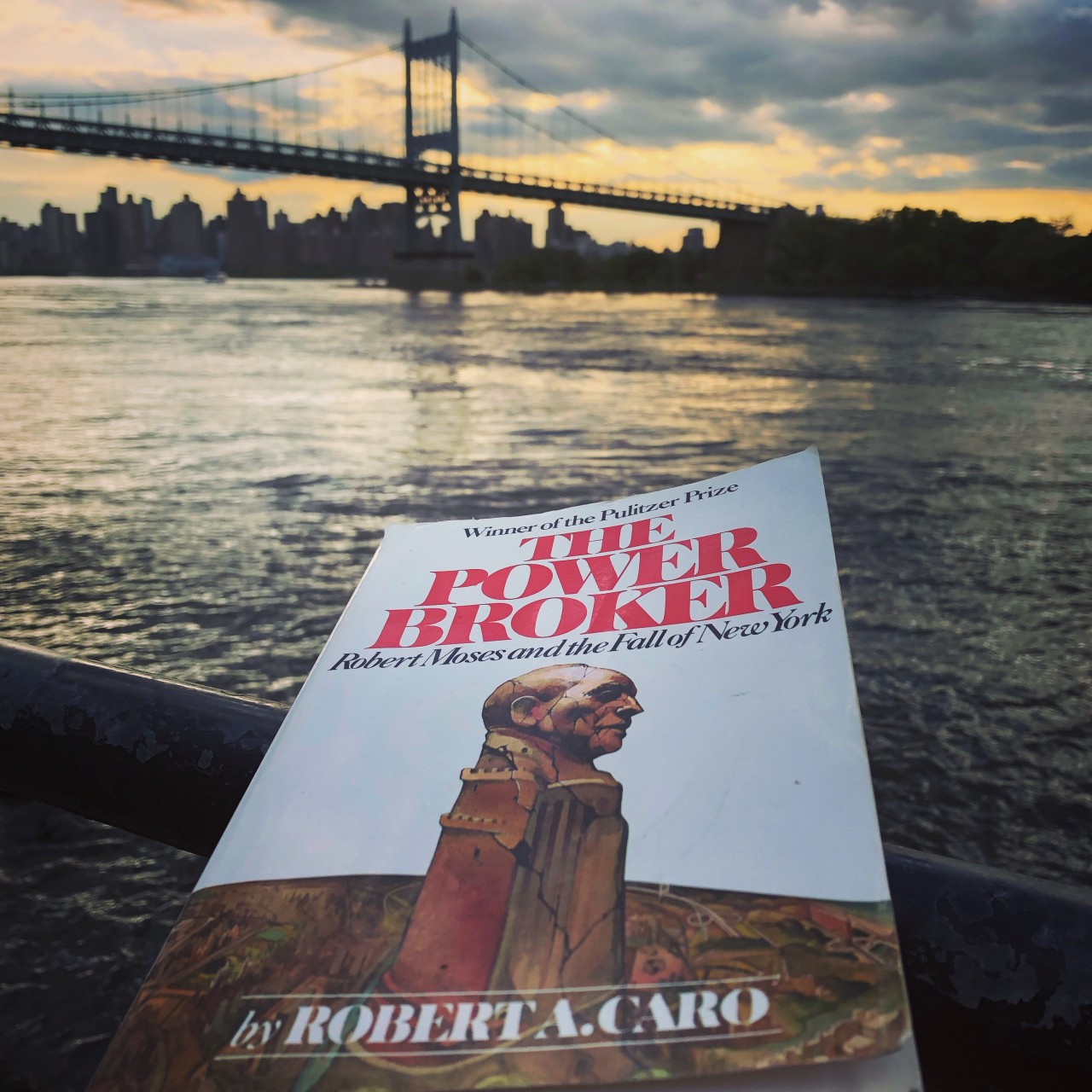
"The Power Broker" set against the Throggs Neck Bridge (Candice DiLavore/Twitter)
Summer brings opportunities to discover new books and revisit favorite literary works, particularly in the vast realm of Pulitzer-winning fiction and biography. As the season progresses, the Pulitzers are highlighting a range of Prize-winning books primed for your beach blanket or e-reader queue. We welcome recommendations for further installments at [email protected] or on our Twitter, Facebook and Instagram pages. Happy reading!
1.
"March" by Geraldine Brooks
A graduate of the Columbia Journalism School and the wife of late 1995 National Reporting winner Tony Horwitz, Geraldine Brooks turned to literary fiction and received the 2006 Prize for "March," a novel that endeavors to answer a vexing question in American literary history: What led the absent Mr. March to a Washington, D.C. hospital (forcing the rapid intercession of family matriarch Margaret "Marmee" March) in Louisa May Alcott's "Little Women"? Much as that novel was derived from Alcott family lore, Brooks turned to the novelist's father, Transcendentalist educator Bronson Alcott, for inspiration. Echoing Louisa's nursing service in Washington during the war, March volunteers as a Union Army chaplain. However, his didactic ardor and vegetarianism (derived from Bronson's pioneering veganism) place him at odds with his compatriots, ultimately sending him back to a plantation — and a liaison with an enslaved nurse, Grace — that had figured prominently in his past life as an itinerant peddler decades earlier. As he endures bloodshed and chicanery while teaching at the plantation, he invariably sends dulcet letters to his family, rationalizing the Gothic horror of his surroundings. March effectively supplants Bronson in the historical record, allowing for interactions with such notables as fellow Concordian Henry David Thoreau and abolitionist John Brown (who, in this telling, is directly responsible for the March family's "genteel poverty"). "March" is a stirring, immersive evocation of a key period in American history.
2.
"A Confederacy of Dunces" by John Kennedy Toole
Before dying by suicide following a mental breakdown in 1969, John Kennedy Toole had been a doctoral student in English at Columbia who seemed poised for a successful academic career. A specialist in Renaissance literature who taught at New York's Hunter College and Dominican College in his native New Orleans, his true passion lay in writing, and the rejection of his second novel by major New York publishing houses in the mid-'60s precipitated the decline that led to his death. However, the discovery of that manuscript by Walker Percy (best known for such works as "The Moviegoer" and "Love in the Ruins") precipitated an amazing series of events that led to the novel's publication by Louisiana State University Press in 1980 — and, a year later, a posthumous Pulitzer Prize for Fiction. Much of its appeal lies in its dithering hero, Ignatius J. Reilly, a slovenly scholar of medieval literature who prefers to live off his mother rather than complete his Ph.D. or teach. Forced to seek employment by his mother (whom he lambastes as an alcoholic), Ignatius embarks on a picaresque quest through his unique city, pontificating endlessly on the likes of Boethius and Piers Plowman as he pines for his putative nemesis: Myrna Minkoff, a Jewish bohemian from the Bronx who had been his only scholarly match at their anonymous university, a stand-in for the venerable Tulane. The singular characterizations of the novel's motley crew (from Ignatius and Myrna to Claude Robichaux, the conservative railroad retiree who pines for Ignatius' mother) has made "Confederacy" terra incognita for the Hollywood that Ignatius disdains (notwithstanding an early 1980s option that would have cast John Belushi as Ignatius), and it remains a decidedly literary pleasure to be relished.
3.
"The Collected Stories of Jean Stafford"
Although she was married to two-time Poetry winner Robert Lowell and legendary New Yorker contributor A. J. Liebling, 1970 Fiction winner Jean Stafford has largely disappeared from the cultural consciousness. However, as many of her contemporaries enjoy resurgences, her oeuvre is well worth revisiting. An M.A. graduate of the University of Colorado, many of her stories are defined by a sclerotic formalism heavily indebted to Britain's 17th-century metaphysical poets; indeed, in "The Tea Time of Stouthearted Ladies," the protagonist, Kitty, is momentarily unable to focus on the work of John Donne in her Renaissance survey book. Liberated from the caustic Chekhovian guns that would dominate the short story's revival in the late 20th century (as best exemplified by two-time Pulitzer finalist Raymond Carver), Stafford preferred to operate in languorous vistas with a fulminous undercurrent, emphasizing characterization and diction for its own sake over the advancement of plot. Written from a feminine perspective, the seemingly semiautobiographical "Bad Characters" is a fine example of this approach, highlighting the awkward social obligations of high school while serving as an early example of the Bechdel test — neither the protagonist nor the comically villainous Lottie are concerned with their personal lives, preferring to plot a shoplifting heist at a five-and-dime in an Anywhere, U.S.A. town that blends elements of Denver and Pittsburgh. Stafford's most enduring story, "The Interior Castle," was directly inspired by a Lowell-induced car crash that forced her to undertake reconstructive plastic surgery. The recurrent banality of the hospital setting blends together with the devitalizing pain until the latter "was the hottest fire, the coldest chill; the highest peak, the fastest force, the furthest reach, the newest time [...] it possessed nothing of her but its one infinitesimal scene: beyond the screen as thin as gossamer, the brain trembled for its life, hearing the knives hunted like wolves outside, sniffing and snapping." While her approach seldom makes for the lightest reading, Stafford always edifies with vigor. Fans of Ingmar Begman and Michelangelo Antonioni will find much to mine in her evanescent gems.
4.
"A Thousand Days" by Arthur M. Schlesinger Jr.
The heir to his father's Progressive Era historical legacy, Arthur M. Schlesinger Jr. joined the faculty of his alma mater, Harvard, as a tenured associate professor upon receiving his first Pulitzer in 1946 for "The Age of Jackson." Written as Schlesinger's de facto dissertation (as a member of the University's Society of Fellows, he was prohibited from seeking a doctorate in favor of more open-ended research) during his wartime service as an intelligence analyst for the Office of Strategic Services, the book would set the tenor for much of the rest of his career, proffering sound scholarship alongside barely veiled political commentary. (Casting the seventh president and Martin Van Buren as the class-oriented progenitors of the New Deal, "Jackson" is very much a work of its time, an implicit defense of Roosevelt's legacy that elides the effects of the Indian Removal Act, the ongoing diminution of women and the perniciousness of slavery during the Jacksonian administrations.) After writing the liberal anticommunist manifesto "The Vital Center" (1950) and the three volumes of his unfinished Age of Roosevelt series (covering FDR's political career from 1919 to 1936), Schlesinger was invited by fellow Pulitzer winner John F. Kennedy to join his presidential administration as a speechwriter and troubleshooter in Latin American affairs. Along with fellow aides Ted Sorensen and Richard Goodwin, the patrician Schlesinger was unable to mesh with Lyndon Johnson's political-operator acolytes and left the White House in the months following Kennedy's assassination on November 22, 1963. Before resuming his academic career at New York's newly-formed CUNY Graduate Center in 1965, he wrote the 1120-page "A Thousand Days" at breakneck speed, eliciting concern from his parents even as it was clear that the book had been fully formed in Schlesinger's head during his federal service. Like "Jackson," it is best read with a degree of circumspection from a historical vantage; while retrospectively characterized by Christopher Hitchens as the "founding breviary of the cult of JFK," the Kennedy that emerges is often characterized by self-abnegation amid fabulously propitious connections, a bootlegger's son who downplayed the effects of his Addison's disease while seeking Aristotelian tutelage in Cold War liberal comportment from Schlesinger and fellow Harvard eminence John Kenneth Galbraith. Because of the president's compartmentalized lifestyle, Schlesinger's work is bereft of the colorful accounts of Kennedy's alleged extramarital affairs and recreational drug use that would become de rigeur in later books, maintaining a stringent focus on policy and intellectual life at the transitory dawn of the '60s. "The Kennedy message — self-criticism, wit, ideas, the vision of a civilized society — opened up a new era in the American political consciousness," Schlesinger reflects, and while the political milieu would evolve in various directions in subsequent decades, this legacy would endure. More akin to a lengthy encomium of opinion journalism than an objective history, "A Thousand Days" is worth visiting, in part because it could be the last presidential memoir of its kind.
5.
"The Power Broker: Robert Moses and the Fall of New York" by Robert Caro
Inspired by the skepticism that arose from Robert Caro's coursework in urban planning as a Nieman Fellow at Harvard's Graduate School of Design during the 1965-1966 academic year, "The Power Broker" was regarded as a touchstone upon its release in 1974. Although his planned five-volume biography of Lyndon Johnson (including the 2002 Biography Prize-winning "Master of the Senate") likely will serve as the lodestar of his legacy, Caro's study of invidious bureaucrat Robert Moses — born from the same cultural firmament as Bob Woodward and Carl Bernstein's contemporaneous Watergate investigation and Francis Ford Coppola's 1972 adaptation of Mario Puzo's "The Godfather" — could not be any more indispensable in a 2019 muddled by fraying national infrastructure and the vagaries of parapolitical power. Over a 50-year career, Moses (a near-native New Yorker and Columbia political science Ph.D. by way of Yale and Oxford) served as the New York metropolitan area's "master builder" through a dozen presidencies and chairmanships of municipal and state agencies, including the New York City Parks Department, the Long Island State Park Commission and the Triborough Bridge and Tunnel Authority. Notably, he never held elective office, instead inuring himself through the conscious negligence of the party functionaries — Democratic and Republican alike — who generally ascended to these positions. As Caro intuited, Moses was not particularly indebted to the academic fields of urban planning and transportation engineering; in his capacities, he implemented the redlining policies formulated by the federal Home Owners' Loan Corporation (placing a surfeit of parkland in Bay Ridge, the only Brooklyn neighborhood awarded an "A" rating in the agency's infamous color-coded map of the city) while developing state parks that were effectively reserved for car owners. Even though his limited-access highways are cited as an antecedent of the federal interstate system, these narrow, winding parkways invariably harkened back to the fin de siècle romanticism of unregulated driving among the Gilded Age gentry. (Moses himself never deigned to drive.) His influence attenuated following disputes with future Vice President Nelson Rockefeller — who, by virtue of his intergenerational wealth, had no stake in what public policy analyst Larry Littlefield has characterized as the metropolitan area's "Omerta" spoils system — Moses largely faded away in the years following the publication of "The Power Broker" and his 1981 death, authoring an article-length remonstration against the biography that amounted to a shrill justification of his actions. But his influence permeates a New York that, though seemingly buttressed by the forces of inner core hypergentrification and widespread outer borough investment from immigrant communities, remains beholden to dysfunctional governance (the controversial MTA board structure was envisaged by Rockefeller as a bulwark against Moses) and the Moses-era roads, including the decrepit "triple cantilever" of the Brooklyn-Queens Expressway and a Gowanus Expressway that is literally patched together at points with corrugated aluminum. The minutiae covered in its 1,336 pages (including evocative vignettes of the havoc wrought by Moses' roads in Brooklyn's Sunset Park and the Bronx's Tremont) may be of passing interest to non-New Yorkers, but Caro's Moses is as prolix, novelistic and indelible as such contemporary television antiheroes as "Breaking Bad"'s Walter White. And when a major infrastructure failure invariably occurs again on one of these highways — indeed, much of Moses' West Side Elevated Highway was rendered unusable after a 1973 collapse — Caro's work will be viewed as remarkably prescient.