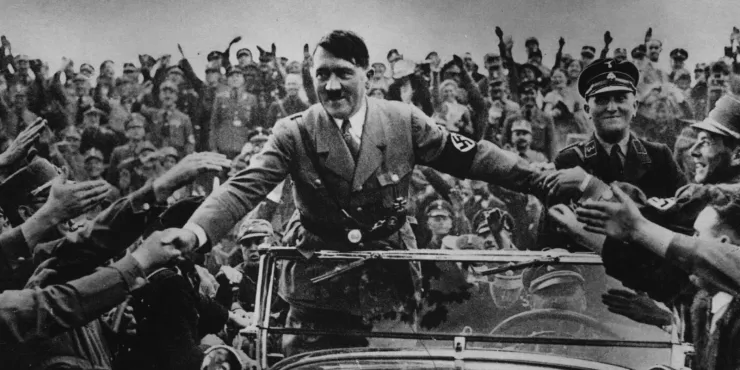
Good writing is often on display in Pulitzer-winning editorials. “Europe’s Emperor,” part of Bart Howard’s winning 1940 entry, is a case in point. Strong verbs, short sentences and alliterative phrases keep the reader in step. A disappointed bitterness seethes beneath the argument.
By the time Howard wrote this editorial for the March 17, 1939, St. Louis Post-Dispatch, Nazi Germany had begun seizing its neighbors. It annexed Austria in early 1938 after Adolf Hitler personally strong-armed that country’s chancellor, Kurt Schuschnigg. Next came Czechoslovakia’s Sudetenland, where the German party leader Konrad Henlein colluded in the takeover. In September at Munich, the British and the French accepted the Sudetenland annexation in exchange for Hitler’s promise of peace.
Howard knew where these events were leading and spelled it out in clear terms.
The Pulitzer Prize was a last hurrah for Howard, a lifelong journalist who had taken a short break early in his career to play professional baseball as a left-handed second baseman. A year after winning the prize, he died at the age of 70.
Europe’s emperor
By BART HOWARD
The massive memory of Bismarck shrivels in the blazing sun of Adolf Hitler’s conquests. The former won by “blood and iron” utilizing intrigue as a preface. The latter wins by strategy of conference, fortified by force, to be sure, and punctuated by the threat of marching armies.
Schuschnigg is summoned to Berchtesgaden for an afternoon in the torture chamber, and Austria is expunged from the map while Vienna becomes Berlin’s scrubwoman.
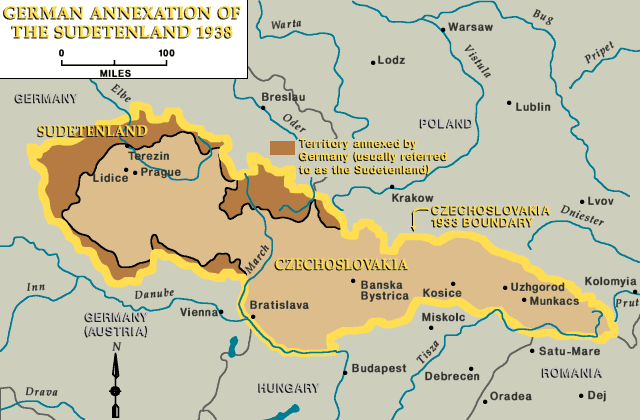
Map showing Germany's 1938 annexation of the Sudentenland
How many a plotting hour ticked secretly across the clock as Hitler suggested and Henlein acquiesced may only be surmised. But at last the Sudeten Germans, under superb coaching, were letter-perfect in their parts, and the Reich was ready to rescue their brothers from the tyranny of “ruthless Czecho-Slovakia.” What would the neighbors say — the great Powers pledged to safeguard that one green isle of democracy in stormy Central Europe? France was explicitly committed; Russia conditionally; England impliedly. Chamberlain made his pilgrimage to the Fuehrer’s mountain retreat, and later, with Daladier, consented to the pillage of the little Republic at Munich’s midnight.
With Austria and the Sudetenland securely possessed and the plunder respectably approved, Herr Hitler’s hunger was satisfied, rapacity was foresworn, there would be no more raids in Europe. “The Sudetenland,” said Hitler at the Berlin Sportspalast on September 26, 1938, “is the last territorial demand I have to make in Europe.” And in an earlier September speech at Nuremberg, he said he had given the guaranty to Chamberlain: “We do not want any Czechs any more.”
England believed, officially. So did France. Russia refused to be deceived, distrusting Hitler’s vow and subsequently impugning the motives of both Chamberlain and Daladier. Russia’s suspicions have been frightfully vindicated, and today London and Paris join with Moscow in pronouncing worthless the word of Hitler. And Mussolini’s Rome, at the other end of the paper axis, sees in the once barred doors of the Brenner Pass an open gateway for a Colossus in growing pains.
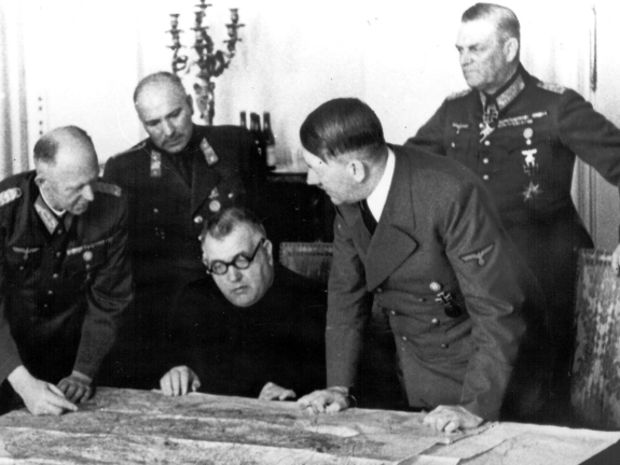
Jozef Tiso, seated, with Adolf Hitler, right, and others.
In Dr. Tiso of Slovakia [Josef Tiso, prime minister of Slovakia and head of Slovakia’s delegation to the Munich Conference], Hitler seems to have found a craftier confederate than Henlein of the shriekingly managed Sudeten affair. Or perhaps Der Fuehrer has acquired a more polished technique. Surely the consummate skill of this latest coup, that caught the world flat-footed, may not be denied. Machiavelli could write it. Hitler does it. The revolt of Slovakia, inspired, promoted, and directed in Berlin, is a masterpiece of statecraft. Moralists may deplore. Lights may burn in sleepless chancelleries. The thing is done. A fait accompli, in the language of diplomacy, and the architect of the German Empire awakes in the historic castle of centuries-old Prague to breakfast contentedly and to count his gains.
He counts his gains realistically. Slovakia’s independence lived but a day. Tiso, the politician, may now turn back to the priestly beads he seemingly had forsaken. The swastika is his country’s flag.
What a vulturous Ides of March for the ravished, murdered homeland which Masaryk’s genius has guided into the stature of a fine nation. The swastika flies over Bohemia and Moravia, and Hungary comes up from the south to seize Carpatho-Ukraine, with Poland ghoulishly hurrying to the feast of death.
The German Empire, territorially, is mighty today, and Hitler has inventoried the spoils with barbaric gusto.
The continental balance of power, deftly maintained, with grave lapses, of course, by Britain’s ministerial jugglery, trembles under the tread of Europe’s Emperor.
Source: Pulitzer Prize Editorials: America’s Best Writing, 1917-2003 (Third Edition), William David Sloan, Laird B. Anderson (eds.), Iowa State Press, 2003, pp. 75-77.