For the Record


Neil Young Demands Spotify Remove His Music Over Joe Rogan’s Vaccine Comments

Young Initiates Spotify Removal:


Canadian American singer-songwriter Neil Young's music has been removed from Spotify after he articulated objections to content in Joe Rogan's podcast, Anne Steele of The Wall Street Journal reported Wednesday. In an earlier article, Steele and Gareth Vipers reported that Young "demanded that Spotify remove his music due to what he says is vaccine misinformation spread by" the podcaster on the streaming service. The eclectic performer (whose career runs the gamut from the bestselling "Harvest" [1972] to his decades-long collaboration with hard rock ensemble Crazy Horse) "and his record label were in discussions over the matter Tuesday, according to people familiar with the matter." Earlier Tuesday, Young posted a now-deleted letter to his manager and longtime record label Warner/Reprise on his website criticizing Rogan and Spotify. "I am doing this because Spotify is spreading fake information about vaccines—potentially causing death to those who believe the disinformation being spread by them," he said. Young did not respond to a request for comment. Hosted by the eponymous comedian, actor and UFC commentator, "The Joe Rogan Experience" currently tops Spotify and Apple's podcast charts. In 2020, Rogan "signed an exclusive podcasting deal with Spotify worth more than $100 million," according to people familiar with the agreement. "With an estimated 11 million listeners per episode, JRE, which is hosted exclusively on Spotify, is the world's largest podcast and has tremendous influence," Young wrote. "Spotify has a responsibility to mitigate the spread of misinformation on its platform. I want you to let Spotify know immediately TODAY that I want all my music off their platform […] They can have Rogan or Young. Not both." Although Warner Records "is the licensor to Spotify and may legally have control over how and where his music is distributed, it is typical for a record company to take an artist's wishes into account," especially as Young's key albums (including "After the Gold Rush" [1970], "Tonight's the Night" [1975] and "Rust Never Sleeps" [1979]) continue to be regarded as foundational contributions to the 20th century popular music canon. "If a decision is reached to remove the music, Spotify could take it down in a matter of hours," Steele and Vipers added. Rogan "has regularly used his podcast to discuss Covid-19 vaccines and restrictions, railing against vaccine mandates for indoor events and suggesting that young, healthy people shouldn’t be vaccinated," they continued. Spotify CEO Daniel Ek has remained circumspect in assessing Rogan's stances on other matters (including perceived anti-transgender material) in the past, noting that "the ambition to make Spotify the 'largest audio platform in the world' involves embracing diverse voices and differing opinions as the company chases scale in podcasting." Earlier this month, a group of 270 healthcare professionals alleged that Rogan "has repeatedly spread misleading and false claims on his podcast, provoking distrust in science and medicine." Young (whose ardent penchant for audiophile-quality iterations of his oeuvre culminated in the unsuccessful Pono portable digital media player and music download service) briefly pulled his music from Spotify in the mid-2010s, citing "the worst quality in the history of broadcasting or any other form of distribution." He continues to maintain the Neil Young Archives, a digital subscription service centered around previously unreleased recordings.

Sarah Palin’s defamation trial against New York Times delayed by positive coronavirus test

Palin Defamation Trial Delayed by Positive Coronavirus Test:


2008 Republican vice presidential nominee Sarah Palin has tested positive for the coronavirus, temporarily delaying a "long-awaited showdown in a Manhattan courtroom" between the former Alaska governor "and the New York Times over a 2017 editorial she says defamed her," Sarah Ellison of The Washington Post reported Monday. The trial "was expected to begin with jury selection Monday morning, but U.S. District Court Judge Jed S. Rakoff told his Manhattan courtroom that he had learned Sunday night that Palin had tested positive on an initial test." Following an additional test early Monday, the trial was rescheduled to February 3. The crux of the case (which is the "first libel case against the Times to go to trial in the United States in 18 years") is "an unsigned 2017 editorial that Palin alleges libeled her by linking an ad from her political action committee in 2011 to a mass shooting that same year in Arizona that killed six people and wounded 12 others, including Gabby Giffords, then a Democratic member of Congress." Ellison added: "While Palin as public figure faces a high hurdle to prove libel, the Times’s editorial was clearly wrong before it was corrected, and the case was expected to reveal embarrassing details about journalistic processes gone awry within one of the nation’s most prestigious news organizations. The Times's lawyers will say that its journalists made an innocent mistake that was soon corrected, said David McCraw, the Times's deputy general counsel. But Palin’s team plans to argue that James Bennet, the paper’s former editorial page editor, had it out for the former governor since years before he joined the Times and that he disregarded his own editors and even his own paper’s previous news coverage to make a libelous argument about Palin. Whether the Times wins or loses the case, it could set in motion a series of appeals that could undercut the media’s ability to report aggressively on public figures in the U.S." Although Rakoff initially dismissed the case, it was subsequently upheld by an appellate court. While the judge "noted that the trial could move forward this week with Palin’s consent, and that she could testify through a videoconferencing link," Palin's lawyers have indicated that she wishes to be physically present.

Board of WBEZ parent company approves acquisition of Sun-Times

Chicago Public Media Board Approves Sun-Times Acquisition:


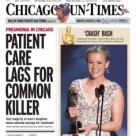
The board of Chicago Public Media has approved the acquisition of the Chicago Sun-Times, "taking a major step forward in a deal to create one of the largest nonprofit news organizations in the country," the newspaper's David Roeder reported late Tuesday. Althoug the "noncash transfer will not be final until contracts are approved (estimated to occur "on or about January 31"), under the agreement, the Sun-Times "would become an independent operation" of the company "and convert from for-profit to nonprofit status." In addition to owning flagship station WBEZ and two additional stations (including the jazz-based WRTE), the broadcaster originated such programas as "This American Life" and "Wait Wait... Don't Tell Me!". Although their news operations will remain distinct, "the combination will allow content to be shared on different platforms and gain a larger audience," according to executives from both outlets. "This is an important step to grow and strengthen local journalism in Chicago," said Matt Moog, chief executive of Chicago Public Media. "A vibrant local news ecosystem is fundamental to a healthy democracy, informed citizens and engaged communities. Together WBEZ and the Chicago Sun-Times aim to tell the stories that matter, serve more Chicagoans with our unbiased, fact-based journalism and connect Chicagoans more deeply to each other and to their communities." Sun-Times CEO Nykia Wright added: "This is an extraordinary opportunity for our collective news community and for the future of the hardest working paper in America, which counts some of the best storytellers in Chicago among its ranks. We are excited about the possibilities that lie ahead for this unique model of nonprofit news and raising the bar for supporting, preserving and strengthening local journalism." Under the agreement, Wright will report to Moog (who will continue to serve as chief executive) as a member of the executive team. The venture also has the backing of several nonprofit and private equity entities, including Sun-Times investor Michael Sacks, the John D. and Catherine T. MacArthur Foundation and the Pritzker Traubert Foundation. A separate board (encompassing Moog, Adrienne King of Bain & Co., Lerry Knox of Sovereign Infrastructure Group, Kristen Mack of the MacArthur Foundation and Aretae Ortiz Wyler of The Atlantic) will oversee the Sun-Times' operations. "With a combined employee total of close to 300, the WBEZ-Sun-Times venture could be the largest nonprofit journalism organization in the nation, based on data from the Institute for Nonprofit News," said Roeder. "It also appears to be the largest with a traditional print newspaper as part of its operations." As part of the transition to nonprofit status, the Sun-Times can no longer endorse political candidates. Descended from the 1844-founded Chicago Evening Journal, the Sun-Times has won eight Pulitzers, including the late Roger Ebert's 1975 Criticism Prize, while longtime editor and publisher James F. Hoge Jr. went on to serve on the Pulitzer Prize Board from 1982 to 1991.

Exclusive: The Arena Group to acquire Parade

Arena Group Acquires Parade:


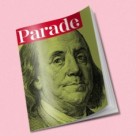
Digital publishing company The Arena Group "plans to acquire AMG/Parade, the parent company to the storied American magazine Parade, in a $16 million cash and stock deal," Sara Fischer of Axios reported Tuesday. The venerable Sunday newspaper magazine (which was founded by investment banker and department store heir Marshall Field III in 1941 and remained one of the most widely read magazines in the United States into the 2010s, retaining distribution to this day at such major metropolitan newspapers as The Atlanta Journal-Constitution, The Baltimore Sun and The Boston Globe) "will anchor The Arena Group's new push into lifestyle content and will boost its sports vertical, per Ross Levinsohn, CEO of The Arena Group." AMG AMG (Athlon Media Group) also "includes a professional sports magazine arm called Athlon Sports and Parade Media Group, which includes Parade Magazine as well as the cooking outlet Relish and the wellness outlet Spry Living," according to Fischer. Although the Alliance for Audited Media "hasn't counted its distribution since 2014, [...] Parade notes it has a circulation of 22 million, which would technically still make it one of the most widely-circulated magazines in the country," she continued. "[W]e believe our collective relationships with local publishers will drive new opportunities, audience and revenue for the combined properties," Levinsohn said. Previously operating as The Maven, The Arena Group "struck a deal to operate and license Sports Illustrated's media business in 2019" before acquiring TheStreet for $16.5 million in cash. The company has raised more than $129 million (including $20 million in equity "alongside the acquisition of sports website The Spun for $11 million" last June) and "[plans] to uplist its shares to the New York Stock Exchange from the smaller OTCQX exchange."

Gannett to stop Saturday print editions at 136 newspapers nationwide

Gannett Stops Saturday Print Editions at 136 Newspapers:


Gannett "is discontinuing Saturday print editions starting March 5 at more than half of its newspapers nationwide, saying it will instead offer 'new, additional benefits' including expanded access to online editions," Don Seiffert of the Boston Business Journal reported Wednesday. In an internal email, the publisher said that it is "introducing a new Saturday experience in 136 of our markets which transitions from delivering the Saturday print edition to providing exclusive access to the full Saturday e-Edition." According to its most recent filing, it operates 253 daily newspapers across the country. Although sources told the Business Journal that some of Gannett's largest newspapers (including The Providence Journal and the Worcester Telegram and Gazette) will not be affected, Saturday service will likely be discontinued at such smaller papers as the Cape Cod Times, the Fall River Herald News and the New Bedford Standard Times. In a statement, spokesperson Lark-Marie Anton said that Gannett is “committed to the sustainable future of local news," adding: "Our business — just like any other — is adapting to a competitive digital world. With more of our readers engaging with our content online, we are embracing our digital future with this evolved Saturday experience while ensuring our subscribers have unlimited access to the news, sports, events and information they value most." Subscribers also will receive additional benefits to compensate for the change, including "universal access to hundreds of e-Editions throughout the USA Today Network in cities across the country, as well as ad-free, 24/7 access to our USA Today crossword puzzle."

Times Higher Education acquires Inside Higher Ed

Times Higher Education Acquires Inside Higher Ed:


British-based Times Higher Education (THE) "has acquired the U.S.-based business Inside Higher Ed, in a deal that brings together two of the leading providers of insights and data in global higher education," the former publication announced Monday. In a statement, THE Chief Executive Paul Howarth said the acquisition "followed a period of 'rapid organic growth' for the business, and that Inside Higher Ed was 'an ideal partner' that 'shares THE's values and mission to support excellence in higher education.'" Inside Higher Ed "provides news, analysis and services to universities and colleges across the US, and is based in Washington, D.C., while THE is headquartered in London, with offices in Australia, the U.S. and Singapore." Together, both outlets anticipate reaching a global audience of 50 million primarily comprised of "university leadership, faculty, professional staff and students, as well as policymakers." Founded as The Times of London's higher education supplement in October 1971, THE is best known for its worldwide university rankings. It was relaunched as a discrete magazine in 2008 and most recently acquired by Inflexion Private Equity Partners in March 2019. In December 2020, the publisher and Inflexion acquired The Knowledge Partnership, a higher education consultancy. "The rapid organic growth that THE has seen in recent years has been driven by its evolution into a powerful, global data business," Howarth continued.  "Now, with the backing of our investors at Inflexion Private Equity, we are in a position to further strengthen our position in the market through strategic acquisitions. We see Inside Higher Ed as an ideal partner as we continue to extend our reach and the services we offer. It is a business that shares THE's values and mission to support excellence in higher education, and we look forward to working with [Inside Higher Ed’s co-founders and editors] Scott Jaschick, Doug Lederman, CEO Dari Gessner and the wider Inside Higher Ed team, so that together we can do even more to support universities and colleges across the U.S., and the rest of the world." Under the agreement, Inside Higher Ed will continue to operate as an independent publication. "We have often collaborated with THE and this new chapter in our relationship will allow us to be more effective than ever at informing the world about higher education, while also expanding our ability to provide essential tools and services to help organizations and professionals be more effective," said Jaschick.

Biden shied away from news conferences, interviews in Year 1

Biden Eschews News Conferences, Media Interviews in First Year:


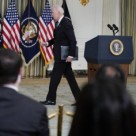
Since his inauguration in January 2021, President Biden "has held fewer news conferences than any of his five immediate predecessors at the same point in their presidencies, and has participated in fewer media interviews than any of his recent predecessors," Aamer Madhani of The Associated Press reported Sunday. "The dynamic has the White House facing questions about whether Biden, who vowed to have the most transparent administration in the nation’s history, is falling short in pulling back the curtain on how his administration operates and missing opportunities to explain his agenda," Madhani continued. Although he "does more frequently field questions at public appearances than any of his recent predecessors" (according to research published by White House Transition Project Director Martha Joynt Kumar, a professor emerita of political science at Towson University) and "routinely pauses to talk to reporters who shout questions over Marine One's whirring propellers as he comes and goes from the White House," these interactions can pose "limitations," Madhani added. "While President Biden has taken questions more often at his events than his predecessors, he spends less time doing so," Kumar said. "He provides short answers with few follow-ups when he takes questions at the end of a previously scheduled speech." Since assuming office, Biden has conducted 22 interviews, nearly half as many as conducted by three of the five immediate predecessors. He also has "has held just nine formal news conferences — six solo and three jointly with visiting foreign leaders," fewer than any president since Ronald Reagan convalesced from injuries sustained in a 1981 assassination attempt. In addition to three print interviews, Biden's 22 media interviews "have included one-on-one sessions with journalists at three of the major television networks, three CNN town halls, an appearance on MSNBC, a trio of regional television interviews via Zoom, as well as conversations with late night host Jimmy Fallon and ESPN's Sage Steele." White House Press Secretary Jen Psaki (who holds daily briefings) has maintained that "a formal news conference with 'embroidered cushions' on journalists' seats is unnecessary since Biden answers questions several times a week," a perspective countered by White House reporters. "Fleeting exchanges are insufficient to building the historical record of the president’s views on a broad array of public concerns. We have had scant opportunities in this first year to learn the president’s views on a broad range of public concerns," said Steven Portnoy, president of the White House Correspondents' Association and a reporter for CBS News Radio. "The more formal the exchange with the press, the more the public is apt to learn about what’s on the man’s mind." Brian Ott, a Missouri State University communications professor who specializes in presidential rhetoric, has speculated that the "scarcity of Biden news conferences and interviews with mainstream news media may help explain why Biden’s approval ratings are near historic lows" even as other polling attests to the popularity of his domestic agenda. "The presidency has always been a predominantly rhetorical enterprise," Ott said. "You can't drive an agenda without vision casting and part of that has to go through the mainstream press."

New York Times Co. Said to Have Reached Deal for The Athletic

New York Times Company Acquires Athletic:


The New York Times Company "has reached an agreement to buy The Athletic, the online sports news outlet with 1.2 million subscriptions, in a deal valued at around $550 million, according to two people with knowledge of the matter," the publication's Lauren Hirsch, Kevin Draper and Katherine Rosman reported Thursday following an initial scoop by Jessica Toonkel of The Information. According to Hirsch, Draper and Rosman, the deal "could help The Times reach 10 million subscriptions ahead of its 2025 goal." Founded by Alex Mather and Adam Hansmann in 2016, the subscription-based outlet "was made for die-hard fans who were not finding the in-depth coverage they craved at a time when newspapers were in decline, Sports Illustrated was sold and ESPN began laying off journalists." After hiring prominent sports journalists from a variety of markets, the publisher was able to offer coverage of "nearly every major professional sports team in North America" and prominent European football clubs alongside podcasts and longform features. 400 members of its 600-person staff work on the editorial side of the publication, "making it the second-largest employer of sports reporters in the country, behind the Disney-owned ESPN." Following a $50 million funding round in early 2020 amid declining subscription growth, the publication began to explore myriad growth options, including "selling a minority or majority stake in the company, with private equity firms and corporations as potential buyers," with discussions between The Times and The Athletic in the summer of 2021 failing to culminate in an agreement. It remains unclear whether The Athletic "will be integrated into The Times's sports coverage or exist as a stand-alone publication under Times ownership," Hirsch, Draper and Rosman added, with Times spokesperson Eileen Murphy declining to comment on the pending agreement.

January 1, 2022, is Public Domain Day

1926 Works, Pre-1923 Sound Recordings Enter Public Domain:


Copyrighted works published in 1926 entered the U.S. public domain on January 1, ensuring that they will be "free for all to copy, share, and build upon," according to Duke University School of Law Center for the Study of the Public Domain Director Jennifer Jenkins. The newly available works include 1953 Fiction winner Ernest Hemingway's "The Sun Also Rises," 1925 Novel winner Edna Ferber's "Show Boat," F. W. Murnau's adaptation of "Faust" and Langston Hughes' "The Weary Blues." Although the works could have entered the public domain as early as 2002, Congress "hit a 20-year pause button and extended their copyright term to 95 years," Jenkins added. While all compositions ("[consisting] of the lyrics and music that you might see on a piece of sheet music") published in 1926 or earlier have entered the public domain, the associated 400,000 sound recordings from before 1923 have also entered the public domain as of January 1 under the terms of the 2018 Music Modernization Act, which set a timeline for pre-1972 sound recordings "to gradually enter the public domain." These range from Kid Ory's "Ory's Creole Trombone" to the Fisk University Jubilee Quartet's "Swing Low, Sweet Chariot" and a range of works featuring Enrico Caruso. "Now that these works are in the public domain, anyone can make them available to the public," Jenkins continued. "This enables access to our cultural heritage—access to materials that might otherwise be forgotten. As mentioned earlier, 1926 was a long time ago and the majority of works from that year are out of circulation. When they enter the public domain in 2022, anyone can republish or post them online. [...] Many more works are waiting to be rediscovered."

E.O. Wilson, a Pioneer of Evolutionary Biology, Dies at 92

E. O. Wilson (1929-2021):


Two-time Pulitzer winner E. O. Wilson died Sunday in Burlington, Mass., according to Carl Zimmer of The New York Times. He was 92. "Ed's holy grail was the sheer delight of the pursuit of knowledge,” said Paula J. Ehrlich, chief executive and president of the E. O. Wilson Biodiversity Foundation. "A relentless synthesizer of ideas, his courageous scientific focus and poetic voice transformed our way of understanding ourselves and our planet." During a peripatetic childhood centered in Alabama and Washington, D.C., Wilson surmounted the divorce of his parents and partial vision loss. He received dual B.S. and M.S. degrees in biology from the University of Alabama in 1950 before leaving for Harvard, where he was appointed to the Society of Fellows and received his Ph.D. in 1955. Continuing a lifelong interest in ants that had entered a new phase with a study in high school, he worked with mathematician William H. Bossert to discover the chemical nature of ant communication via pheromones; at the time of his death, he was widely regarded as the world's preeminent myrmecologist despite disagreements with such figures as Deborah Gordon, who alleged that Wilson shouted objections to her work at a lecture and "really made a lot of effort to keep me from getting a job." (Written in collaboration with Bert Hölldobler, "The Ants" received the 1991 General Nonfiction Prize.) Beginning in the 1960s, Wilson synthesized the work of such contemporaries as British graduate student William Hamilton into a new theory of sociobiology, contending that social behavior the result of evolutionary processes; this culminated in the popular 1975 treatise "Sociobiology: The New Synthesis." According to Zimmer, Wilson "got in trouble for extending sociobiology to humans" by "[inviting] his readers to consider how human nature might be shaped by evolutionary pressures. He warned them that this would not be easy: It would be hard to tease apart the effects of human culture from those of natural selection. Making matters worse, no one at the time had linked any genetic variant to any particular human behavior." Although critics contended that sociobiology marked a surreptitious revival of long-discredited theories of biological determinism and eugenics, Wilson "declared that sociobiology offered no excuse for racism or sexism" and lived to see the paradigm become the bedrock of contemporary primatology. After nominally retiring from Harvard as Pellegrino University Research Professor, Emeritus in Entomology in 2002, Wilson continued to publish more than a dozen books, accepted a secondary teaching appointment at Duke University, and, along with Richard Dawkins, was at the center of a scholarly debate concerning inclusive fitness in the early 2010s. Having returned to ecology and biodiversity throughout his career, he worried about the possibility of an extinction event while remaining sanguine about the future of humanity. "I'm optimistic," he said in 2012. "I think we can pass from conquerors to stewards."