I wrote this letter recently to my friends in the antiwar and anti-nuclear movements. I see it’s being circulated, so I’ve decided to share it here. For all of you working on these issues, thank you, and please keep going!
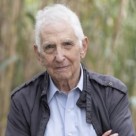
Ellsberg Announces Terminal Cancer Diagnosis:
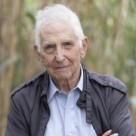
Political activist Daniel Ellsberg has announced that he was diagnosed with inoperable pancreatic cancer in mid-February, potentially leaving him with months to live. "Since my diagnosis, I've done several interviews and webinars on Ukraine, nuclear weapons, and First Amendment issues, and I have more scheduled," the economist said in an open letter posted to his Twitter account. "As I just told my son Robert: he's long known (as my editor) that I work better under a deadline. It turns out that I live better under a deadline! I feel lucky and grateful that I've had a wonderful life far beyond the proverbial three-score years and ten. (I'll be ninety-two on April 7th.) I feel the very same way about having a few months more to enjoy life with my wife and family, and in which to continue to pursue the urgent goal of working with others to avert nuclear war in Ukraine or Taiwan (or anywhere else)." Ellsberg will eschew chemotherapy and "[has] great hospice care when needed." He added that he is "not in any physical pain" and has abandoned a salt-restricted diet following the acquiescence of his cardiologist. Educated at Harvard and Cambridge, Ellsberg initially pursued a career in Cold War-era defense research at the RAND Corporation, where he worked alongside such epochal figures as foreign policy strategist Andrew Marshall, futurist Herman Kahn and fellow economist James Schlesinger (who held several Cabinet and Cabinet-level appointments in the Nixon, Ford and Carter administrations). Following several years in Vietnam under the aegis of the State and Defense Departments (where he was assigned to work with such operators as retired Air Force Major General Edward Lansdale and Agency for International Development official John Paul Vann, who became a close friend), Ellsberg returned to RAND in 1968. As he worked on a top-secret study of the failure of the Vietnam War amid the collapse of his first marriage, Ellsberg began to explore the nascent American counterculture in the context of his personal life; by 1969, he openly attended anti-war rallies and conferred with such figures as Indian peace activist Janaki Tschannerl. The commitment of pacifist and draft resister Randy Kehler inspired Ellsberg and RAND colleague Anthony Russo to disseminate photocopies of the aforementioned study (colloqually known as the Pentagon Papers) to New York Times correspondent Neil Sheehan and the staff of the Washington Post in 1971, leading to the former publication receiving the 1972 Public Service Prize amid lodestar First Amendment litigation. Although Ellsberg was charged with espionage, theft and conspiracy in early 1973 (carrying a potential maximum prison sentence of 115 years), governmental misconduct related to the Watergate scandal precipitated the dismissal of all charges later that year. Since that time, he has primarily worked as an activist and public speaker in addition to publishing several books.